April 9, 2026
How to Plan a 4 Day Trek in the Albanian Alps
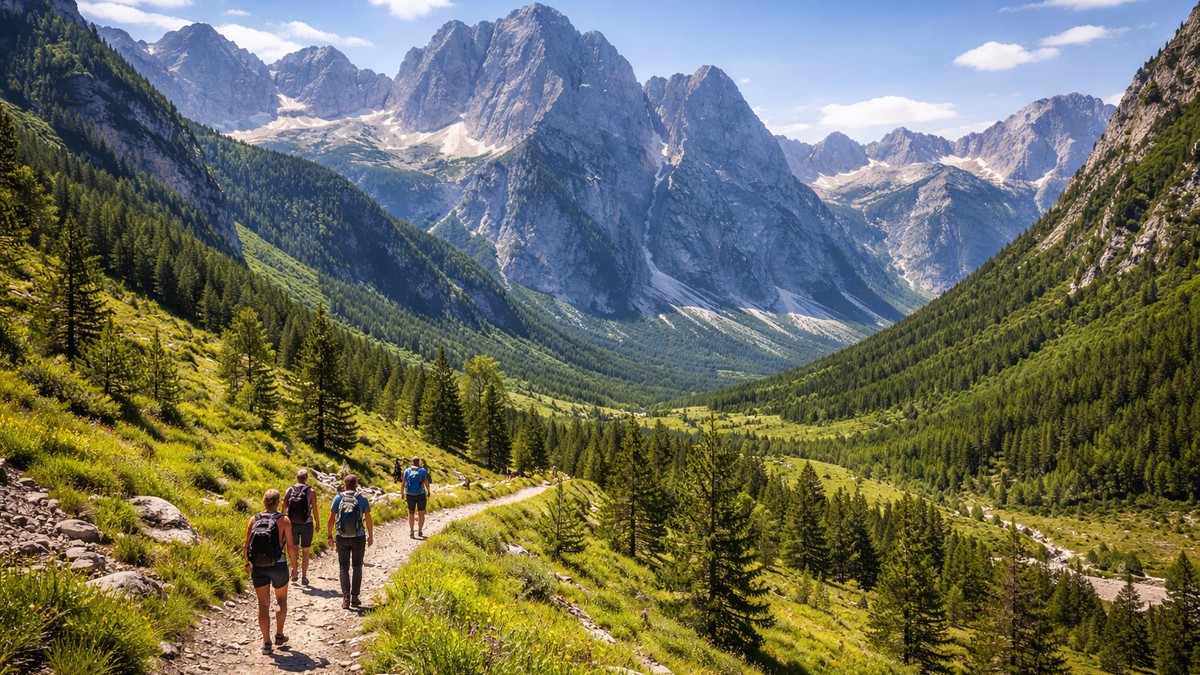
How to plan a 4 day trek in the Albanian Alps is less about mapping distance and more about managing logistics in a region where infrastructure is limited but experience value is exceptionally high.
Why the Albanian Alps outperform typical trekking routes
Low cost high impact landscapes
Albanian Alps offer something rare in European travel.
Dramatic landscapes without the pricing of the Alps or Dolomites.
Fact
Travel costs in Albania can be 40 to 60 percent lower than Western European mountain destinations, estimate.
For agencies, this creates a compelling value proposition. High visual impact at a lower operational cost.
Growing demand with limited competition
Adventure travel is shifting toward less crowded destinations.
The Albanian Alps are still underdeveloped compared to established trekking regions.
Fact
Albania has seen consistent tourism growth over recent years as travelers seek alternative European destinations, estimate.
Example
A Balkan focused operator introduced a four day Albanian Alps trek as part of its portfolio. Within one season, the itinerary accounted for 18 percent of total bookings due to its uniqueness and pricing advantage.
Scarcity drives interest.
The ideal 4 day trekking route
Theth to Valbona overview
The classic route connects Theth and Valbona.
This is the backbone of most itineraries.
The route offers mountain passes, valleys, and traditional villages within a manageable timeframe.
Route flow and logistics
The sequence typically begins in Theth and ends in Valbona or vice versa.
Transfers involve a combination of road travel and ferry crossings.
Fact
The Theth to Valbona hike covers approximately 17 kilometers and takes 6 to 8 hours depending on pace, estimate.
This makes it accessible for moderately fit travelers.
Day by day breakdown
Day one arrival and acclimatization
Arrival in Shkoder followed by transfer to Theth.
This day is about settling in, adjusting to altitude, and preparing for the trek.
Accommodation is typically in guesthouses, offering local hospitality.
Day two Theth to Valbona hike
This is the core trekking day.
The route crosses a mountain pass with panoramic views and varied terrain.
Example
A European agency tracked client feedback on this stage and found that 82 percent rated it as the highlight of their Balkan itinerary, reinforcing its importance in marketing.
Day three Valbona exploration
Valbona Valley offers lighter activities. Short hikes, relaxation, and cultural interaction.
This recovery day is essential.
Fact
Balanced itineraries that include recovery time see higher satisfaction rates than continuous activity based trips, estimate.
Day four return and exit
Return via ferry across Lake Koman followed by road transfer back to Shkoder or onward destinations.
The ferry journey itself becomes part of the experience.
Example
An agency added premium ferry seating and guided transfers. The upgrade increased package value by 12 percent while improving comfort and overall experience perception.
Logistics that make or break the trek
Transport and access
Access is the most complex part of this itinerary.
Road conditions can vary and schedules are not always predictable.
This is where agencies add value. Coordinated transfers reduce uncertainty and improve reliability.
Accommodation and local support
Guesthouses dominate the region.
They provide authentic experiences but require pre booking due to limited capacity.
Fact
Accommodation capacity in Theth and Valbona is limited compared to demand during peak season, estimate.
Example
A tour operator secured early season room allocations in key guesthouses. This allowed consistent availability and increased margins by 15 percent due to controlled inventory.
Experience design and pricing strategy
Guided vs independent trekking
Guided treks appeal to less experienced travelers and higher value segments.
Independent trekking suits budget conscious and experienced clients.
Offering both options allows agencies to capture a wider market.
Seasonality and demand
The trekking season runs from May to October.
July and August are peak months with higher demand and pricing.
Fact
Shoulder months such as June and September offer similar conditions with lower crowd levels and costs, estimate.
This creates opportunities for better margins.
What this means for travel agencies
Actionable steps
- Prioritize logistics management
Smooth transfers and reliable accommodation are critical selling points. - Position the trek as accessible adventure
Highlight that the route is achievable for moderately fit travelers. - Bundle services
Include transport, accommodation, and guided options to simplify booking. - Use shoulder seasons
Promote June and September departures for better pricing and experience. - Optimize margins after booking
Accommodation prices in remote regions can fluctuate based on demand. Tools like Rebookify help agencies secure better rates and improve profitability.
Quick takeaways
• The Albanian Alps offer high value at lower cost than Western Europe
• Logistics management is key to success
• Theth to Valbona is the core trekking route
• Recovery time improves overall satisfaction
• Shoulder seasons provide strong opportunities
Common mistakes
• Underestimating transport complexity
• Not securing accommodation early
• Overloading itineraries without rest days
• Ignoring weather and seasonal variations
• Failing to communicate trek difficulty clearly
Decision table
| Traveler type | Best approach | Experience level | Margin potential | Notes |
|---|---|---|---|---|
| First time trekker | Guided trek | Moderate | High | Needs support |
| Experienced trekker | Independent | High | Medium | Flexible |
| Luxury adventure traveler | Guided with upgrades | Moderate | High | Premium services |
| Budget traveler | Basic guesthouses | Moderate | Medium | Cost focused |
Conclusion
How to plan a 4 day trek in the Albanian Alps comes down to one principle. Control the logistics and the experience will sell itself.
For agencies, this is an opportunity to offer something different. A high impact adventure with manageable costs and growing demand.