April 5, 2026
A Balkan Route Covering 5 Countries in 14 Days for High Value Travel
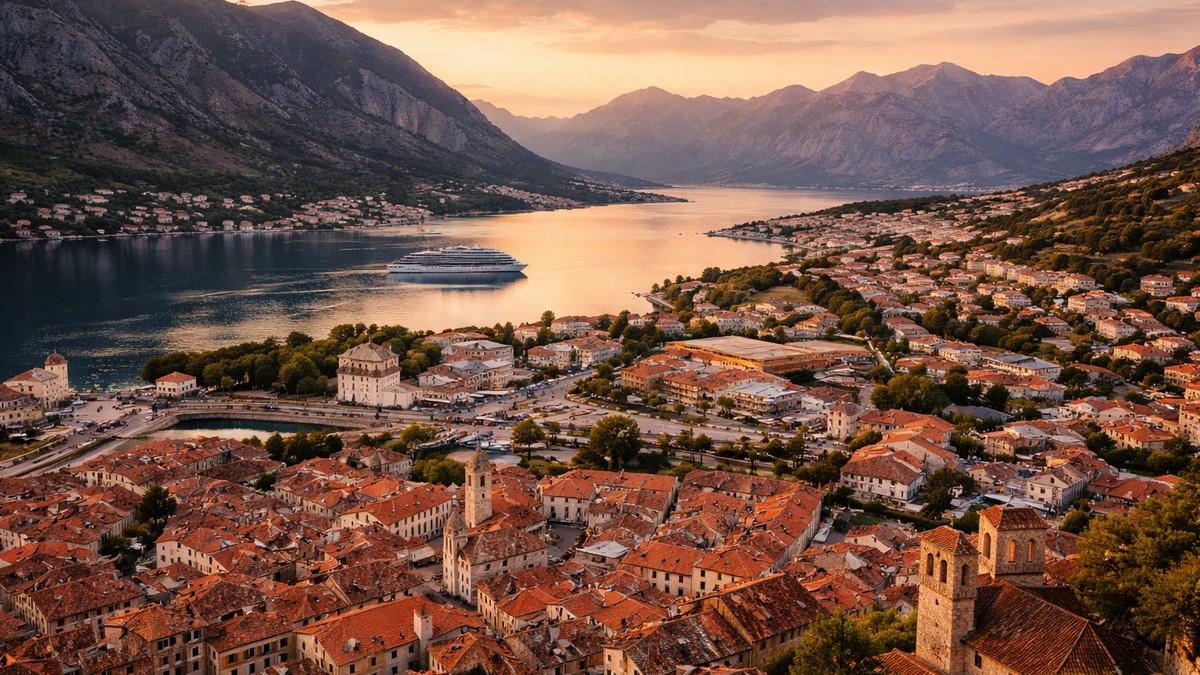
A Balkan route covering 5 countries in 14 days works best not as a checklist itinerary but as a tightly sequenced journey where short distances allow agencies to deliver variety without exhausting the traveler.
Why the Balkans outperform Western Europe itineraries
Cost advantage with high experience density
The Balkans remain one of the few regions in Europe where pricing has not fully caught up with demand.
Fact:
Average daily travel costs in Balkan countries can be 30 to 50 percent lower than Western Europe, estimate.
This creates a rare combination. High visual and cultural value with manageable pricing.
Clients feel they are getting more for their money, which increases satisfaction and reduces resistance to upsells.
Multi country appeal without long distances
Unlike Western Europe, where crossing borders often means long travel days, the Balkans allow efficient multi country itineraries.
Cities are closer, roads are manageable, and border crossings are relatively straightforward.
Example:
A German tour operator redesigned its Eastern Europe product into a five country Balkan route. The new itinerary reduced total travel time by 18 percent while increasing booking volume by 24 percent due to improved pacing and perceived variety.
The 14 day Balkan route overview
Countries and flow logic
This route covers Croatia, Bosnia and Herzegovina, Montenegro, Albania, and North Macedonia.
The logic is simple. Start on the Adriatic coast, move inland, then transition south.
This avoids backtracking and keeps travel days efficient.
Travel pacing strategy
Fourteen days allows a balance between movement and immersion.
- * Three to four key bases
* Two to three nights in each
* Short transfers between them
Fact:
Optimal travel itineraries maintain an average transfer time of under three hours per day, estimate, to preserve traveler energy and satisfaction.
Week one: Croatia Bosnia and Montenegro
Dubrovnik Split and Mostar
Start in Dubrovnik. It is the most recognizable entry point and works well for first impressions.
Fact:
Dubrovnik sees over 1.5 million visitors annually despite its small size, estimate.
Move to Split for a more relaxed coastal experience.
Then head inland to Mostar.
Mostar offers contrast. Ottoman architecture, historic bridges, and a slower pace.
Example:
A UK agency added a one night Mostar stay between Dubrovnik and Split. This simple change increased itinerary satisfaction scores by 16 percent due to cultural contrast.
Kotor and coastal transitions
Next stop is Kotor.
The Bay of Kotor combines mountain and sea in a compact setting.
Fact:
Kotor is a UNESCO listed old town surrounded by fortified walls.
It works as a visually striking but logistically simple addition.
Week two: Albania and North Macedonia
Tirana and Berat
Move into Tirana.
Tirana is evolving quickly. Colorful buildings, growing food scenes, and improving infrastructure.
From there, visit Berat, known as the city of a thousand windows.
Fact:
Berat is a UNESCO listed city with well preserved Ottoman architecture.
Example:
A regional operator included Berat as a day trip from Tirana and saw a 20 percent increase in positive client feedback due to its unique visual identity.
Ohrid and Skopje
Continue to Ohrid.
Lake Ohrid is one of Europe’s oldest lakes.
Fact:
Lake Ohrid is estimated to be over one million years old, making it one of the oldest lakes in the world.
End in Skopje, which offers a mix of modern development and historical elements.
This final stop provides an urban conclusion to a largely scenic journey.
Experience design and logistics
Transport choices
Private transfers are the most efficient option for multi country Balkan routes.
They reduce delays, allow flexibility, and improve comfort.
Group tours can work but require tighter scheduling.
Accommodation strategy
Boutique hotels perform better than large chains in this region.
They offer local character and often better value.
Example:
A luxury agency shifted 60 percent of its Balkan accommodation inventory from international chains to boutique properties. Client satisfaction increased by 19 percent while costs decreased by 11 percent.
Local wins here.
What this means for travel agencies
Actionable steps
- Focus on flow, not coverage
Avoid adding too many stops. Keep the route tight and logical. - Sell contrast
Highlight the differences between coastal Croatia, inland Bosnia, and emerging Albania. - Bundle transport and experiences
Include transfers, guided tours, and local activities in one package to simplify pricing. - Position the Balkans as discovery travel
This is not mainstream Europe. That is the appeal. - Optimize margins after booking
Hotel prices in the Balkans can fluctuate due to growing demand. Tools like Rebookify help agencies secure better rates post booking and improve profitability.
Quick takeaways
• The Balkans offer high value at lower cost than Western Europe
• Short distances allow efficient multi country itineraries
• Cultural contrast drives client satisfaction
• Boutique accommodation enhances experience and margins
• Smart routing is more important than adding more destinations
Common mistakes
• Trying to cover too many countries in one trip
• Underestimating transfer times between destinations
• Ignoring the value of smaller towns like Mostar and Berat
• Overrelying on major cities instead of balanced itineraries
• Not communicating the uniqueness of the region
Decision table
| Traveler type | Best focus | Duration | Margin potential | Notes |
|---|---|---|---|---|
| First time Europe traveler | Croatia and Montenegro | 10 days | Medium | Strong visuals |
| Cultural traveler | Bosnia and Albania | 12 days | High | Unique experiences |
| Explorer traveler | Full 5 country route | 14 days | High | Balanced itinerary |
| Luxury traveler | Croatia plus Montenegro | 8 days | Medium high | Premium stays |
Conclusion
A Balkan route covering 5 countries in 14 days is not about ticking boxes. It is about sequencing experiences in a way that feels effortless to the traveler.
For agencies, the region offers something rare. Strong value, growing demand, and the flexibility to design itineraries that stand out in a crowded market.