March 13, 2026
A Food Only Itinerary Through Bangkok
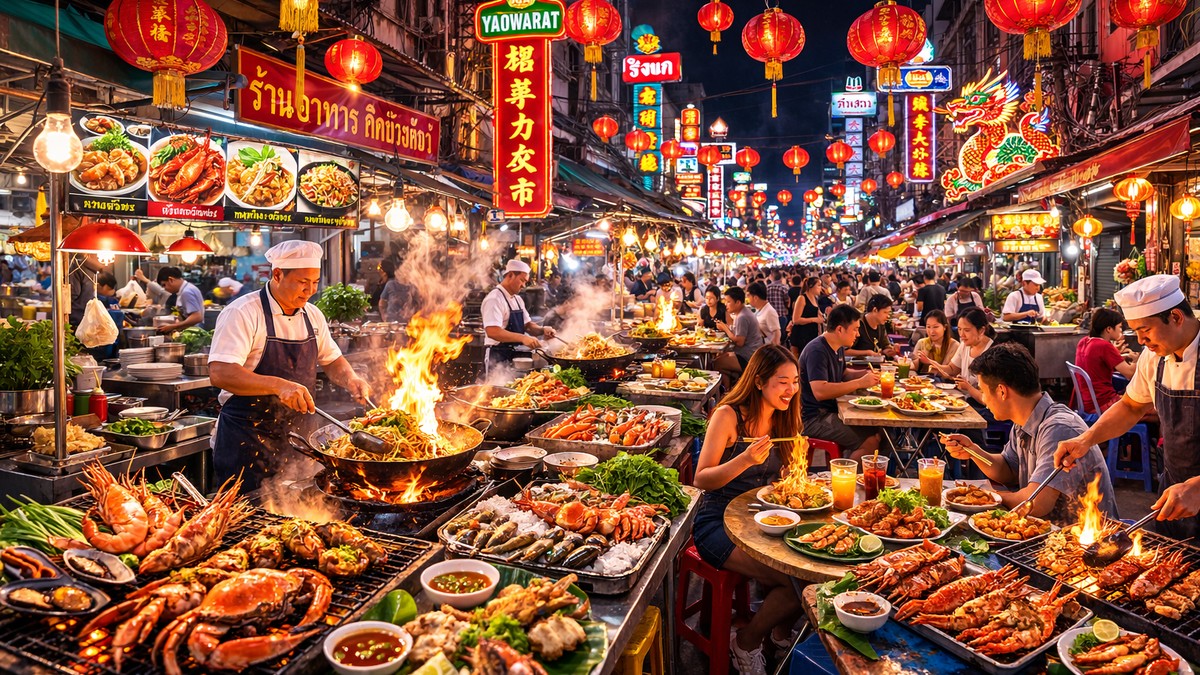
Most travelers visit Bangkok with a long list of temples palaces and shopping districts.
But the smartest way to explore the city is much simpler.
Eat your way through it.
Bangkok hosts more than 100000 street food vendors according to Thai tourism estimates, making it one of the most food focused cities on earth.
The thesis is straightforward.
A Food Only Itinerary Through Bangkok works because the city’s cuisine reflects its neighborhoods history and culture more vividly than any traditional sightseeing route.
From early morning noodle stalls to midnight seafood markets, food reveals the real rhythm of the Thai capital.
Why Bangkok Is One of the World’s Best Food Cities
Street food culture
Street food is not a novelty in Bangkok. It is daily life.
Sidewalk stalls serve everything from grilled pork skewers to elaborate noodle soups.
Many of these stalls operate family recipes passed down for generations.
Real world example
A small culinary travel company launched a four day Bangkok food tour priced around 900 USD per traveler estimate including guided tastings across markets and neighborhoods.
The company reported repeat bookings exceeding 40 percent, showing how powerful food focused travel experiences can be.
Regional Thai cuisine in one city
Bangkok’s population includes migrants from every region of Thailand.
That means travelers can taste northern southern and northeastern Thai dishes without leaving the city.
Signature dishes include:
• boat noodles
• som tam papaya salad
• khao moo daeng roast pork rice
• mango sticky rice
Few cities concentrate such culinary diversity into one place.
Morning Markets and Breakfast Culture
Chinatown morning food stalls
Start the itinerary in Bangkok’s Chinatown.
Yaowarat Road wakes early with noodle vendors dumpling stalls and porridge shops.
Classic breakfast dishes include:
• jok rice porridge with pork
• dim sum baskets
• soy milk and fried dough sticks
These meals are quick inexpensive and deeply satisfying.
Traditional Thai breakfast dishes
Many travelers overlook Thai breakfast traditions.
Popular choices include grilled pork skewers served with sticky rice or bowls of rich noodle soup.
Street stalls near local markets often serve the best versions.
Lunch in Bangkok’s Local Neighborhoods
Boat noodles and market eateries
Boat noodles are one of Bangkok’s most iconic dishes.
Originally served from canalside boats the dish now appears across small restaurants and markets.
The broth is rich and deeply flavored with herbs spices and pork.
Real world example
A neighborhood restaurant near Victory Monument sells over 500 bowls of boat noodles each day priced around 60 baht per bowl estimate.
Locals often order several bowls in a single meal.
Hidden restaurant districts
Some of Bangkok’s best meals appear far from tourist zones.
Neighborhoods such as Ari and Bang Rak feature small restaurants serving exceptional Thai cuisine.
Travelers who venture beyond central tourist districts often discover the most memorable meals.
Afternoon Snacks and Café Culture
Thai desserts and street sweets
Afternoon is ideal for exploring Bangkok’s dessert culture.
Popular sweets include:
• mango sticky rice
• coconut pancakes
• pandan custard desserts
Markets and food streets offer dozens of variations.
Coffee shops and casual bites
Bangkok has also developed a thriving café scene.
Modern coffee shops appear across neighborhoods like Thonglor and Ari.
These cafés blend Thai ingredients with international baking styles creating unique menus.
Night Markets and Late Night Eating
Yaowarat night street food
At night Yaowarat Road transforms into one of Asia’s greatest street food scenes.
Seafood grills noodle carts and dessert vendors fill the sidewalks.
Travelers often find:
• grilled prawns
• oyster omelets
• crab fried rice
The atmosphere feels electric and chaotic in the best possible way.
Riverside and night market dining
Bangkok’s night markets add another layer to the culinary experience.
Markets such as Train Night Market combine food stalls with live music and shopping.
Real world example
A guided evening food tour visiting five night market vendors costs roughly 45 USD per person estimate and typically includes ten or more tasting dishes.
For many visitors this becomes the highlight of their Bangkok trip.
Quick takeaways
• Bangkok hosts one of the largest street food cultures in the world
• Food reveals the character of different Bangkok neighborhoods
• Morning markets offer authentic Thai breakfast experiences
• Night markets provide the city’s most energetic dining scenes
• Food focused itineraries create memorable travel experiences
Common mistakes
• Eating only inside hotels or tourist restaurants
• Skipping morning markets where many local specialties appear
• Avoiding street stalls due to unfamiliarity
• Trying to visit too many neighborhoods in a single day
• Missing Chinatown which hosts some of the city’s best food
What this means for travel agencies
Food tourism continues to grow rapidly worldwide.
Bangkok is one of the easiest destinations for agencies to build culinary itineraries.
Effective strategies include:
• designing guided food walks through Chinatown and local markets
• combining cooking classes with neighborhood tastings
• building multi day culinary themed itineraries across Bangkok districts
• pairing food tours with cultural experiences such as temple visits
Hotel rates in Bangkok can fluctuate significantly throughout the year depending on tourism cycles.
Monitoring prices after booking allows agencies to secure better deals and protect margins. Tools such as Rebookify help agencies track price drops and automatically rebook hotels when lower rates appear.
Conclusion
A Food Only Itinerary Through Bangkok proves that the city’s greatest attraction might not be its temples or skyline.
It is the food.
From morning noodle stalls to midnight seafood grills, Bangkok offers a culinary journey that reveals the city more vividly than traditional sightseeing ever could.
For travelers and travel advisors alike the lesson is clear.
In Bangkok the best way to explore the city is simply to follow the aromas drifting from the next street corner.