March 26, 2026
Canada vs New Zealand Adventure Destinations Face Off
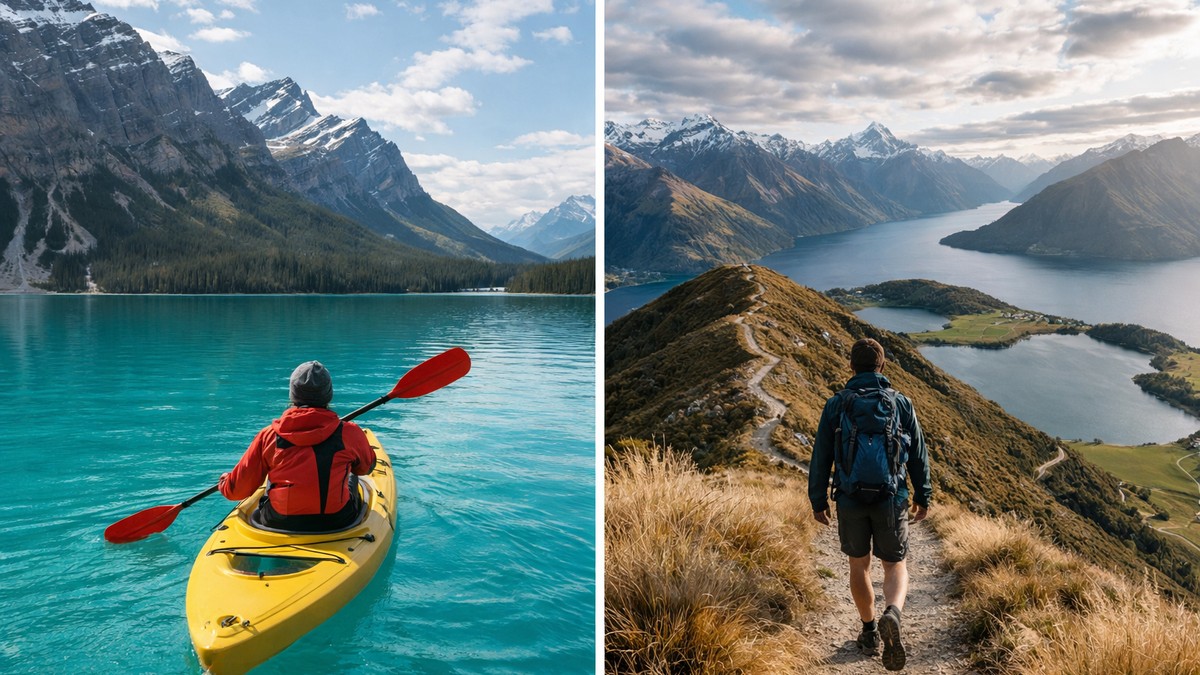
The real difference in Canada vs New Zealand Adventure Destinations Face Off is not about scenery or activities. Both deliver world class landscapes. The difference is structural. Canada is about scale. New Zealand is about intensity.
That distinction matters more than most agencies realize.
When clients choose incorrectly, they do not get a bad trip. They get a mismatched one. The landscapes impress, but the experience feels inefficient or rushed. When the match is right, satisfaction and perceived value increase sharply.
The real difference is scale versus intensity
Canada offers breadth.
New Zealand offers concentration.
That single contrast drives everything.
Key comparison
- Canada spreads experiences across vast distances
- New Zealand compresses experiences into shorter travel times
Estimate
- Internal travel distances in Canada can exceed 300 to 500 kilometers between major sites
- In New Zealand, multiple landscapes can be accessed within a few hours
This shapes itinerary design.
What Canada offers for adventure travelers
Canada is expansive and diverse.
Vast landscapes and variety
The range is unmatched.
Experiences include
- Rocky Mountains
- Coastal regions
- National parks
- Wildlife encounters
Example
An agency designed a Western Canada itinerary
- Covered three major regions over 10 days
- Delivered high satisfaction but required careful pacing
Canada rewards longer trips.
Seasonal advantages
Seasonality plays a major role.
Highlights
- Summer for hiking and lakes
- Winter for skiing and snow experiences
Estimate
- Peak summer months drive up prices by 20 to 35 percent
Season choice impacts both cost and experience.
Logistics and travel time
This is where challenges emerge.
Considerations
- Long travel distances
- Multiple transfers
- Higher transport costs
Example
A multi region itinerary
- Increased travel time by 25 percent
- Reduced time at key locations
Planning becomes critical.
What New Zealand does differently
New Zealand simplifies adventure.
Compact high impact experiences
The country delivers density.
Advantages
- Multiple landscapes in short distances
- Efficient route planning
- Continuous engagement
Example
A South Island itinerary
- Covered mountains lakes and coastal areas within five days
- Maintained high energy throughout
New Zealand maximizes time.
Year round accessibility
Seasonality is less restrictive.
Benefits
- Flexible travel windows
- Consistent experience quality
Estimate
- Shoulder season travel can reduce costs by 15 to 25 percent
This creates pricing flexibility.
Infrastructure and ease
Travel is straightforward.
Strengths include
- Well connected routes
- Strong self drive culture
- Reliable tourism infrastructure
Clients experience fewer logistical challenges.
Matching destination to traveler type
This is where decisions should start.
First time adventure travelers
New Zealand often works better.
Reasons
- Easier navigation
- Higher experience density
- Lower complexity
These travelers value simplicity.
Experienced explorers
Canada offers deeper exploration.
Benefits
- Greater variety
- Larger scale
- More remote experiences
These clients are comfortable with complexity.
Time constrained clients
Time is decisive.
New Zealand wins for shorter trips.
Example
Agency comparison
- Five day New Zealand itinerary delivered more experiences than a similar Canada trip
Efficiency matters.
The economics of both destinations
Costs vary significantly.
Cost structures
Canada tends to be more expensive overall.
Drivers
- Transport costs
- Accommodation pricing in peak regions
New Zealand offers more control.
Estimate
- Daily travel costs can be 10 to 20 percent lower in New Zealand for similar experience levels
Pricing volatility
Both destinations fluctuate.
Factors include
- Seasonality
- Demand spikes
- Availability
Monitoring pricing is essential.
Margin considerations
Margins depend on structure.
Example
Agency comparison
- Canada itinerary margin 14 percent
- New Zealand itinerary margin 18 percent
New Zealand allows tighter packaging.
What this means for travel agencies
Understanding Canada vs New Zealand Adventure Destinations Face Off helps refine offerings.
Product design
Design with structure in mind.
Action steps
- Align itinerary length with destination scale
- Avoid overloading large destinations
- Maximize density in compact ones
Client segmentation
Match destination to traveler profile.
Approach
- Identify experience level
- Assess time availability
- Understand expectations
Avoid one size fits all recommendations.
Margin optimization
Profitability requires discipline.
Approach
- Monitor hotel pricing after booking
- Rebook when rates drop
- Use savings to enhance itineraries
This improves both margins and client satisfaction.
| Traveler type | Best destination | Key benefit | Ideal trip length | Margin potential |
|---|---|---|---|---|
| First time adventurer | New Zealand | Simplicity and density | 5 to 7 days | High |
| Experienced explorer | Canada | Scale and variety | 8 to 12 days | Medium |
| Time constrained traveler | New Zealand | Efficiency | 4 to 6 days | High |
| Premium traveler | Canada | Iconic landscapes | 10 plus days | Medium |
Quick takeaways
- Canada delivers scale and variety
- New Zealand delivers compact high impact experiences
- Traveler intent should guide destination choice
- Logistics shape satisfaction more than scenery
- Pricing optimization improves margins
Common mistakes
- Treating both destinations as interchangeable
- Underestimating travel time in Canada
- Overpacking itineraries
- Ignoring seasonality impacts
- Failing to match destination to client profile
- Missing pricing optimization opportunities
Conclusion
The comparison in Canada vs New Zealand Adventure Destinations Face Off is not about which destination is better.
It is about which destination is better for a specific traveler.
Canada offers space scale and depth.
New Zealand offers efficiency intensity and ease.
For travel agencies the opportunity is clear
- Match destination to traveler intent
- Design itineraries around structure
- Optimize pricing continuously
Get those right, and both destinations become strong performers in your portfolio.