January 1, 2026
Cities Built Around Water: Canals, Riverwalks, Floating Markets
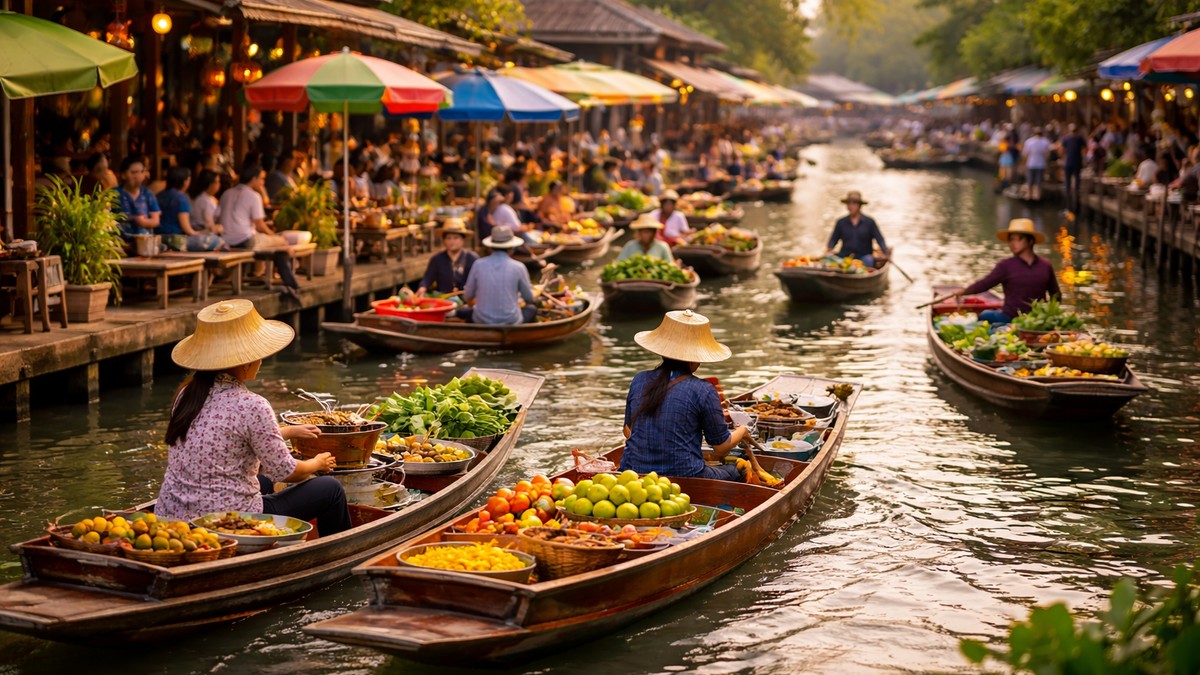
Thesis: Cities built around water don’t just look better—they move people differently, slow decisions, and create travel experiences that feel more human and less transactional.
Water has always shaped cities. But in travel, its role goes beyond aesthetics. Canals, riverwalks, and floating markets quietly solve problems that modern tourism still struggles with: congestion, overstimulation, and disconnection.
For travelers—and for the agencies serving them—cities built around water consistently deliver something rare: calm that still feels alive.
Why water-centric cities feel different
Water naturally regulates pace.
People walk slower near it. They linger longer. They talk more. Cities that integrate water into daily life—rather than fencing it off—benefit from this effect.
Estimate: Travelers spend more time outdoors and cover shorter distances per day in water-centric cities compared to car-first destinations.
This isn’t accidental. Water softens urban design. It creates natural corridors that replace rigid grids.
Canals as urban infrastructure, not attractions
In cities like Amsterdam or Venice, canals aren’t decoration. They’re transit systems, drainage, orientation tools.
Canals:
-
Reduce traffic pressure
-
Create intuitive navigation
-
Naturally distribute crowds
Estimate: Canal-based cities experience more even foot traffic distribution than landmark-centric cities.
For travelers, this means fewer pressure points—and fewer moments of overwhelm.
Riverwalks as social and economic engines
Riverwalks succeed when they’re built for locals first.
Cities that treat riverfronts as public space—not tourist zones—create environments where travelers blend in rather than stand out.
Benefits include:
-
Walkable dining clusters
-
Mixed-use public seating
-
Natural event spaces
Estimate: Travelers in riverwalk cities report higher satisfaction with “spontaneous discovery” than those in car-dominated urban centers.
Floating markets as living commerce
Floating markets aren’t nostalgia. They’re logistics.
They bring food, trade, and daily life directly to the traveler—without the formality of malls or museums.
In places like Bangkok’s surrounding regions:
-
Transactions are small and frequent
-
Interaction is human and direct
-
Exploration feels low-risk
Estimate: Travelers spend more per day across more vendors in floating market environments than in centralized shopping districts.
How water changes traveler behavior
Water reduces decision fatigue.
Instead of asking:
-
“Where do we go next?”
Travelers ask: -
“Shall we keep walking?”
That difference matters.
Waterways:
-
Create natural itineraries
-
Encourage unplanned stops
-
Reduce the need for rigid schedules
This makes water-centric cities especially appealing to:
-
Families
-
Multi-generational travelers
-
Slow-travel and bleisure segments
Real-world examples with real numbers
Example 1: Canal-based city stay
A couple spent 4 nights in a canal-centric European city.
-
Daily walking distance: ~25% lower than prior city trips
-
Dining spend: spread across more small venues
-
Overall satisfaction: higher despite fewer “activities”
Example 2: Riverwalk business travel
A business traveler added one leisure day to a riverwalk city stay.
-
Hotel rate unchanged
-
Dining and local spend increased ~18%
-
Client described trip as “less exhausting”
Example 3: Floating market excursion
A family added a half-day floating market visit.
-
Average spend per vendor: low
-
Total spend: exceeded expectations
-
Engagement level: high across all ages
The operational upside of water-based cities
Water simplifies planning.
These cities often offer:
-
Clear geographic anchors
-
Natural half-day itineraries
-
Flexible pacing
For agencies, that means:
-
Fewer transfers
-
Easier day-by-day planning
-
Less itinerary micromanagement
Water-centric destinations also tend to have stable accommodation demand—making post-booking price monitoring (via tools like Rebookify) particularly effective without disrupting plans.
What this means for travel agencies
Cities built around water are reliability plays.
Actionable steps:
-
Position water as a functional benefit, not just visual appeal
-
Build itineraries that follow waterways, not checklists
-
Recommend longer stays with fewer daily commitments
-
Use water-centric cities for first-time, family, or bleisure clients
-
Monitor accommodation prices post-booking to quietly enhance value
Water doesn’t just sell destinations. It sells confidence.
Decision helper: Is this a strong water-centric city?
| Feature | Strong Signal | Weak Signal |
|---|---|---|
| Water access | Integrated into daily life | Isolated attraction |
| Walkability | Continuous paths | Fragmented zones |
| Commerce | Local-first | Tourist-only |
| Pace | Naturally slow | Forced itineraries |
Quick takeaways
-
Water reshapes how travelers move and decide
-
Canals distribute crowds naturally
-
Riverwalks create organic social spaces
-
Floating markets humanize commerce
-
Water-centric cities simplify trip design
Common mistakes
-
Treating waterways as “add-ons” instead of anchors
-
Over-scheduling water-based cities
-
Ignoring local-use patterns
-
Focusing only on famous viewpoints
-
Underestimating the value of slower pace
Conclusion
Cities built around water don’t demand attention. They earn it.
By softening movement, simplifying decisions, and reconnecting travelers to everyday life, canals, riverwalks, and floating markets create experiences that feel balanced—especially in an era of overstimulation.
For agencies, these cities aren’t just beautiful. They’re dependable. And dependable destinations build long-term travelers.