January 10, 2026
Cruise Dining Explained: From Free Meals to Specialty Restaurants
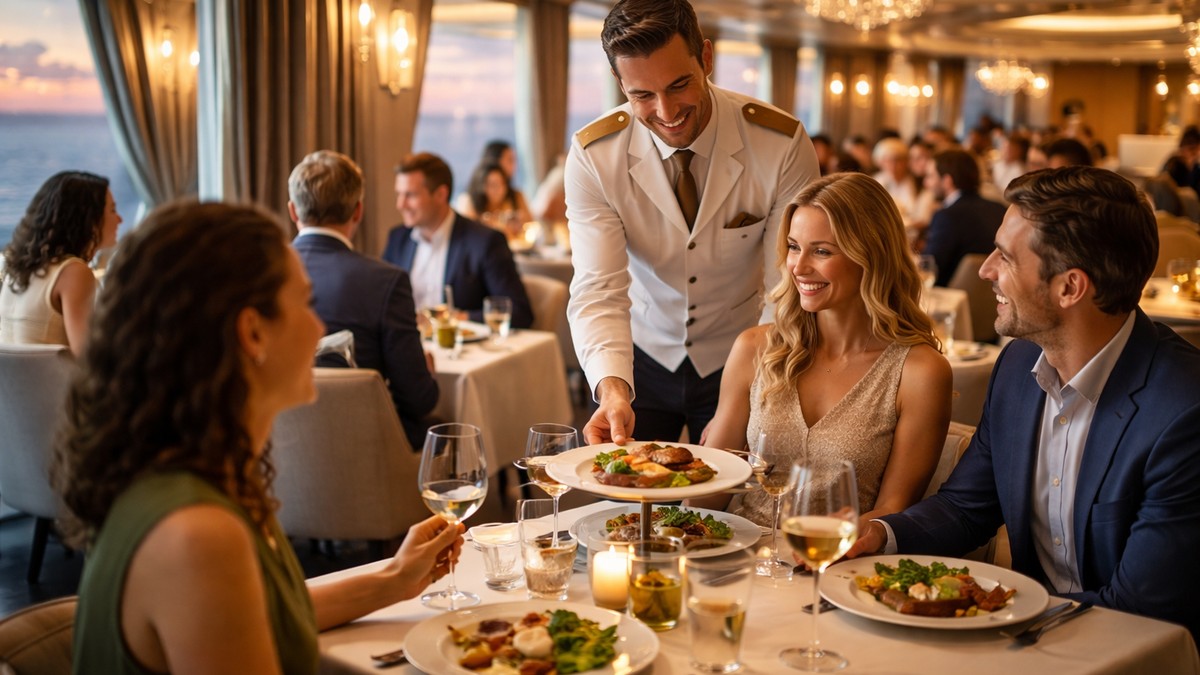
Thesis: Cruise dining is no longer a background perk of the voyage but one of the strongest drivers of satisfaction revenue and repeat bookings.
A decade ago cruise food meant one thing. Buffet trays, fixed dining times and modest expectations.
Today dining is central to how cruise lines compete and how travelers judge value. Guests talk about chefs menus reservation strategies and dining plans with the same intensity they once reserved for cabin categories.
Understanding cruise dining is no longer optional for advisors. It directly affects client happiness complaint rates and upsell success.
The Modern Cruise Dining Model
Complimentary does not mean basic
Most major cruise lines now treat included dining as a brand statement rather than a cost center.
Main dining rooms feature rotating menus multiple course options and dietary customization. Buffets increasingly focus on live cooking stations and regional cuisines rather than mass trays.
Industry data shows that more than 70 percent of cruise guests rate onboard food quality as a primary factor in overall satisfaction estimate. That puts dining ahead of entertainment for many segments.
Specialty dining as strategy
Specialty restaurants exist for two reasons.
First they create premium experiences that differentiate ships.
Second they drive onboard revenue.
Cruise lines report that onboard spending can represent more than 25 percent of total cruise revenue estimate. Dining is a large part of that figure.
This does not make specialty dining a trap. It makes it a designed choice.
What Guests Actually Get Included
Main dining rooms
Main dining rooms offer full service multi course meals with table service. Guests typically can choose between early seating late seating or flexible timing.
On many ships menus change daily and include regional influences. Quality varies by line but expectations should be set at upper casual restaurant level rather than luxury restaurant level.
Buffets and casual venues
Buffets now function more like food halls.
Guests can expect global options fresh stations and extended hours. Many lines also include casual grab and go venues such as pizza counters cafes and street food style counters.
A guest who never books a specialty restaurant can still eat well throughout the sailing.
How Specialty Restaurants Really Work
Pricing structures
Specialty dining usually follows one of two models.
A fixed cover charge per person
Or an a la carte menu where items are individually priced
Typical cover charges range between 25 and 60 dollars per person estimate depending on line and restaurant.
Cruise lines often bundle dining packages that lower the effective price per venue.
Perceived value versus real value
Guests often feel conflicted about paying extra for food on a cruise they already paid for.
This is an expectation problem not a value problem.
When framed correctly specialty dining is closer to dining out in a major city than paying twice for the same meal.
Real World Booking Behavior
Example one family sailing
A family of four booked a seven night Caribbean cruise. The advisor explained included dining clearly and suggested one specialty dinner as a treat.
Total onboard dining spend came to 180 dollars. Client satisfaction scores were high because expectations were set before sailing.
Example two premium couple
A couple sailing on a contemporary line added a dining package costing 210 dollars for the voyage.
They used it four times. The perceived value exceeded cost because the advisor positioned it as part of the experience rather than an add on.
Example three incentive group
A corporate group prepaid specialty dining for two nights as part of the program.
Post event surveys showed dining was ranked as the most memorable element of the trip even above shore excursions.
What This Means for Travel Agencies
One advisors must explain dining before clients board
Most dining complaints come from misunderstanding not from poor food.
Clients who believe everything should be included feel misled when they see premium restaurants onboard.
Clear explanation builds trust.
Two dining influences repeat bookings
Clients who enjoy their onboard dining experience are more likely to rebook the same line.
Cruise lines understand this deeply. Advisors should as well.
Three pricing clarity protects agency credibility
When advisors communicate dining costs accurately they reduce post trip dissatisfaction.
Trust compounds when clients feel fully informed.
This same principle applies beyond cruises. Tools like Rebookify support agencies by monitoring hotel prices after booking and enabling rebooking when rates drop. That type of proactive value reinforces the perception that the advisor is on the client side.
Common mistakes
-
Assuming all food is equal across cruise lines
-
Failing to explain specialty dining before departure
-
Overselling dining packages to guests who will not use them
-
Ignoring dietary preferences in advance
-
Treating dining as secondary to cabin selection
-
Letting clients discover pricing only once onboard
Quick takeaways
-
Dining now shapes cruise satisfaction more than ever
-
Complimentary food quality is higher than many clients expect
-
Specialty dining is designed choice not hidden fee
-
Clear framing improves perceived value
-
Advisors who explain dining reduce complaints
The bottom line
Cruise Dining Explained: From Free Meals to Specialty Restaurants is ultimately about one truth.
Food is no longer a background detail of cruising. It is central to how travelers evaluate value and how likely they are to sail again.
Advisors who understand dining structures can guide clients toward better choices stronger experiences and fewer surprises. That leads to higher satisfaction and stronger long term relationships.
Cruise ships invest heavily in food because it drives loyalty. Agencies that match that understanding will outperform those who treat dining as an afterthought.