January 5, 2026
Destinations Where You Can See Wildlife Without a Safari Budget
Thesis: The biggest mistake in wildlife travel isn’t price—it’s assuming great wildlife requires Africa-level safari infrastructure and Africa-level budgets.
For years, the industry has trained travelers to equate “wildlife experience” with a $7,000 lodge, a private guide, and a 4x4 with a pop-up roof. That framing has been wildly effective—and wildly limiting.
In reality, some of the most reliable, diverse wildlife experiences on Earth sit outside the safari economy altogether. They’re cheaper, closer to major markets, easier to sell, and—crucially—more repeatable for agencies that don’t specialize in ultra-luxury.
This is not about discount wildlife. It’s about smarter geography.
The Safari Myth That Limits Wildlife Travel
How “wildlife” became synonymous with luxury
Classic African safaris are expensive for structural reasons: remote locations, limited beds, imported supplies, regulated guide ratios, and seasonal demand spikes. A mid-range safari in Kenya or Tanzania typically costs $400–$700 per person per night (estimate), excluding international flights.
That price point works—for a narrow audience.
But it has also crowded out alternative narratives. Wildlife, in agency sales decks, often becomes a once-in-a-lifetime indulgence instead of a repeatable travel category.
What travelers actually want
Here’s the quieter truth: most travelers don’t want “the Big Five.” They want guaranteed sightings, proximity, and storytelling.
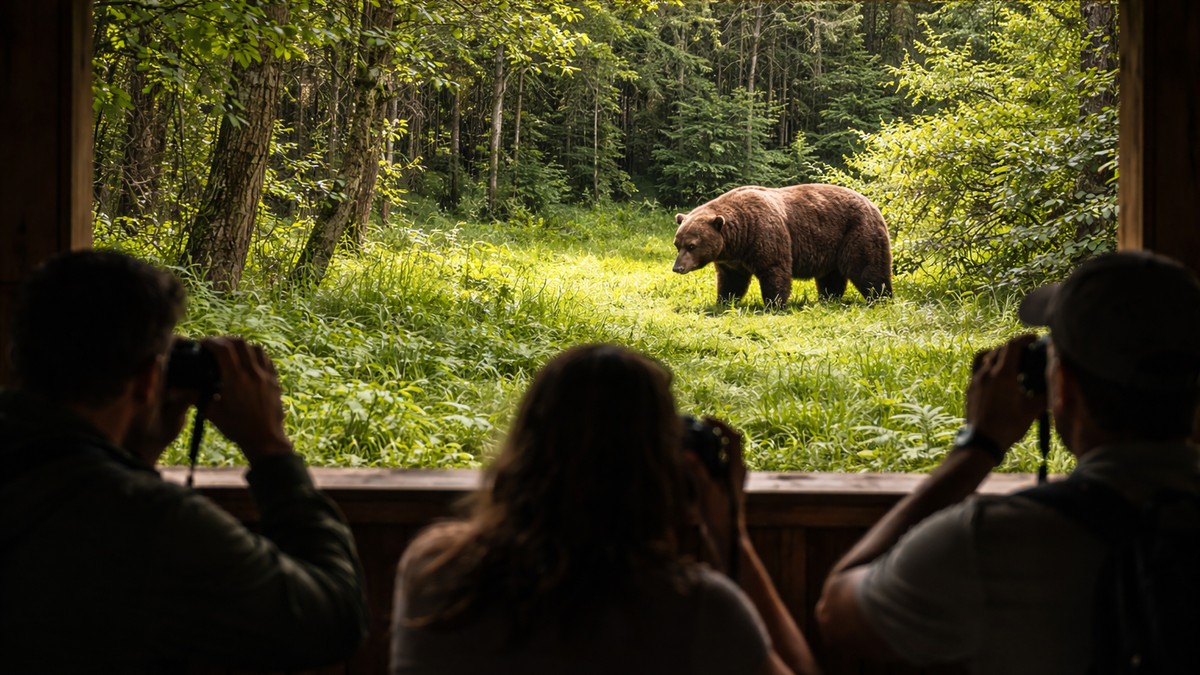
A brown bear seen at 50 meters. Whales breaching from shore. Sloths at eye level. Wolves howling at dusk.
When framed correctly, these experiences outperform safaris on memory-per-dollar.
Five Destinations That Deliver Wildlife at a Fraction of the Cost
Costa Rica: Wildlife as infrastructure
Costa Rica didn’t stumble into wildlife tourism—it engineered it.
-
Over 25% of the country is protected land (fact; Costa Rican government data)
-
Sloths, monkeys, toucans, crocodiles, and sea turtles are visible without private reserves
-
National park entry fees average $10–$20
A 7-night wildlife-focused trip—including guided rainforest walks and marine excursions—can retail for $1,800–$2,400 per person, excluding flights (estimate).
Agency example:
A U.S. agency shifted clients from a planned $6,500 Botswana safari to Costa Rica for a family of four. Total trip cost dropped by 55%. Client satisfaction scores increased due to higher daily activity density.
Sri Lanka: Safari-level density, backpacker economics
Sri Lanka is one of the few places where leopards, elephants, and whales exist in the same country at mass-market prices.
-
Yala National Park has one of the highest leopard densities in the world (fact; conservation studies)
-
Elephant sightings exceed 5,000 wild individuals nationwide (estimate)
-
Whale watching operates seasonally from shore towns like Mirissa
A guided wildlife loop can be built at $180–$250 per day, including driver-guide and accommodation (estimate).
Romania: Europe’s last large mammals
Romania is quietly Europe’s best wildlife secret.
-
Home to 6,000+ brown bears, the largest population in the EU (fact; WWF)
-
Wild lynx, wolves, and bison in the Carpathians
-
Regulated hides and small-group tracking tours
A 5-night bear and forest wildlife trip can cost under €1,500 per person, all-in (estimate).
This sells exceptionally well to European clients who want wildlife without long-haul flights.
Baja California, Mexico: Front-row seats to the ocean
Wildlife doesn’t need jungles.
-
Gray whales migrate so close to shore they can be touched (fact; NOAA)
-
Whale watching season runs December–April
-
Marine safaris cost $60–$120 per outing
An agency can package Baja wildlife trips with boutique hotels for 40–60% less than African marine safaris (estimate).
Slovenia: Small country, big biodiversity
Slovenia is compact, affordable, and biologically dense.
-
Over 60% forest coverage (fact; Slovenian Tourism Board)
-
Brown bears, lynx, alpine wildlife
-
Excellent infrastructure and short transfer times
Perfect for short wildlife extensions attached to European city trips.
The Real Cost Breakdown
Here’s where the economics become undeniable.
| Experience Type | Avg Daily Cost (pp) | Wildlife Reliability | Scalability |
|---|---|---|---|
| East Africa Safari | $500–$700 | High | Low |
| Costa Rica | $250–$350 | High | High |
| Sri Lanka | $180–$250 | High | High |
| Romania | $200–$300 | Medium–High | Medium |
| Baja California | $220–$320 | High (seasonal) | High |
Safari pricing isn’t wrong. It’s just not the only option.
Destinations Where You Can See Wildlife Without a Safari Budget
These destinations work because they break three safari assumptions:
-
Wildlife must be remote
-
Wildlife requires private reserves
-
Wildlife needs luxury pricing to feel valuable
None of those are universally true.
What This Means for Travel Agencies
1. Wildlife can become a volume product
These destinations allow wildlife travel to move from “special request” to core offering.
Shorter trips. Repeat clients. Lower planning friction.
2. Margin protection is easier
Non-safari destinations offer:
-
Higher hotel availability
-
Flexible cancellation policies
-
More rate volatility
This is where tools like Rebookify quietly matter—monitoring hotel prices post-booking can protect margin or improve value without renegotiating the trip.
3. Sell outcomes, not animals
Clients don’t buy species lists. They buy certainty:
-
“You will see whales.”
-
“You will see bears.”
-
“You will be close.”
That’s easier to guarantee outside classic safari zones.
Common mistakes
-
Overselling wildlife density without seasonality checks
-
Treating wildlife as a single excursion, not a narrative
-
Ignoring local guides in favor of generic tours
-
Underpricing trips because they’re “not safari”
-
Forgetting travel time and pacing
-
Failing to communicate conservation impact
Quick takeaways
-
Wildlife travel doesn’t require safari budgets
-
Reliable sightings exist across Europe, Asia, and the Americas
-
These trips scale better for agencies
-
Clients value proximity and certainty over prestige
-
Margin management improves outside luxury safari models
The Bottom Line
Destinations Where You Can See Wildlife Without a Safari Budget are not second-tier alternatives—they’re often better products for today’s traveler.
They’re easier to sell, easier to repeat, and easier to optimize financially. For agencies looking to grow wildlife travel beyond elite price points, this is where the market already is.
If your wildlife offerings still start and end with safari lodges, you’re not selling premium—you’re leaving opportunity behind.
And once those trips are booked, tools like Rebookify help agencies quietly improve margins by catching hotel price drops—because saving money after the booking is still saving money.