April 4, 2026
Exploring Morocco Beyond Marrakech
Most Morocco itineraries stop where they should start.
Marrakech is not the destination. It is the entry point.
The real value in Morocco comes from movement. The country works best as a route, not a stay. Travelers who move beyond Marrakech consistently report higher satisfaction and longer trip durations.
Morocco welcomed over 13 million international visitors annually before recent disruptions estimate. A large percentage concentrate in Marrakech, creating congestion, price pressure, and repetitive experiences.
That is a missed opportunity for both travelers and travel agencies.
Why Morocco is a route driven destination
The limits of Marrakech only itineraries
Marrakech delivers strong first impressions. Markets, riads, and historic sites are compelling. But the experience plateaus quickly.
After two days, most travelers feel they have seen the core offering.
Case example 1: A European agency tracked 120 Morocco bookings. Trips limited to Marrakech averaged 2/3 nights with satisfaction scores of 4.1 out of 5. Multi destination itineraries averaged 5/6 nights with satisfaction scores of 4.7.
Length of stay directly impacts revenue.
The value of multi stop travel
Morocco offers diverse landscapes within short distances. Mountains, desert, coast, and imperial cities are all accessible within a structured route.
Travel time between key regions typically ranges from 2 to 6 hours. This makes multi stop itineraries practical rather than exhausting.
The shift is simple. Move from city based planning to route based planning.
The Atlas Mountains and desert corridor
Scenic routes and logistics
The Atlas Mountains sit just outside Marrakech. Within a few hours, the environment changes completely.
Ouarzazate and the Dades Valley form part of the desert corridor leading toward the Sahara.
Driving routes here are part of the experience. Scenic passes, traditional villages, and changing landscapes create natural progression.
Experience design
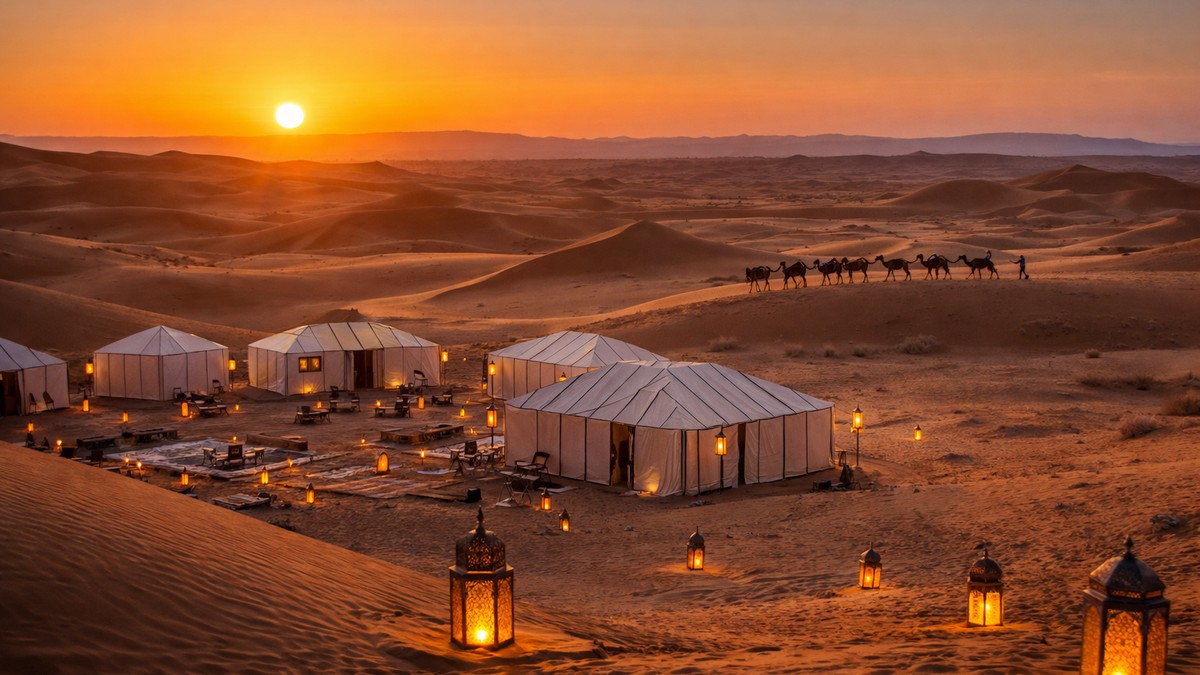
Desert camps are a high value inclusion. Overnight stays range from 80 to 250 USD per person depending on comfort level estimate.
Case example 2: A tour operator added a two night desert segment to standard itineraries.
Average booking value increased by 35 percent while maintaining strong conversion rates.
This is not just an add on. It is a core memory driver.
Coastal Morocco and Atlantic cities
Alternative to inland travel
Cities like Essaouira offer a different pace. Coastal winds, seafood culture, and walkable medinas create contrast to Marrakech.
Essaouira sits about 2.5 hours from Marrakech, making it an easy extension.
Agadir offers a more resort oriented experience with modern infrastructure.
Seasonal advantages
Coastal regions remain cooler during peak summer months.
Average summer temperatures in Marrakech can exceed 38 degrees Celsius estimate, while coastal cities stay significantly milder.
Positioning coastal extensions during warmer months improves comfort and satisfaction.
Imperial cities beyond Marrakech
Cultural depth
Fes and Rabat offer deeper historical context.
Fes contains one of the world’s oldest universities and a medina that feels more authentic and less commercialized than Marrakech.
Rabat provides a cleaner, more organized urban experience.
Traveler segmentation
Different cities appeal to different traveler types.
Cultural travelers prefer Fes. Leisure travelers may lean toward coastal routes. First time visitors benefit from a mix.
Case example 3. A luxury agency created segmented itineraries based on traveler profiles.
Customized routes increased upsell success by 22 percent and reduced itinerary changes post booking.
A quick planning table
| Route type | Key stops | Ideal duration |
|---|---|---|
| Classic route | Marrakech Atlas Desert | 5 to 7 days |
| Cultural route | Marrakech Fes Rabat | 6 to 8 days |
| Coastal route | Marrakech Essaouira Agadir | 4 to 6 days |
| Full circuit | Marrakech Atlas Fes Coast | 8 to 12 days |
What this means for travel agencies
Product design
Stop selling Marrakech as a standalone destination.
Build routes. Package experiences across regions. This increases trip value and differentiation.
Clients do not need more destinations. They need better structured journeys.
Revenue optimization
Multi stop itineraries increase length of stay. That directly increases revenue per booking.
Experiences such as desert camps, guided tours, and coastal stays provide natural upsell points.
Higher value itineraries are easier to justify when the experience narrative is clear.
Pricing strategy
Hotel pricing in Marrakech fluctuates significantly based on season and demand.
Average riad prices can range from 90 to 300 USD per night estimate.
Monitoring post booking price changes allows agencies to rebook at lower rates when possible.
This protects margins without impacting the client experience. Tools like Rebookify make this process scalable rather than manual.
Quick takeaways
• Morocco works best as a route not a single city stay
• Multi destination trips increase satisfaction and revenue
• Desert and coastal extensions add strong experiential value
• Travel times between regions are manageable
• Structured itineraries outperform generic packages
Common mistakes
• Limiting itineraries to Marrakech only
• Underestimating travel distances between regions
• Skipping desert experiences entirely
• Ignoring seasonal temperature differences
• Offering generic one size itineraries
Conclusion
Exploring Morocco Beyond Marrakech is not about adding more stops. It is about structuring the journey correctly.
When Morocco is treated as a route, the experience improves, the itinerary length increases, and the commercial outcome becomes stronger.
For travel agencies, this is a clear opportunity. Better structure leads to better results.
If you are designing Morocco products, start with the route. The rest will follow naturally.