March 6, 2026
Exploring the Villages of Tuscany
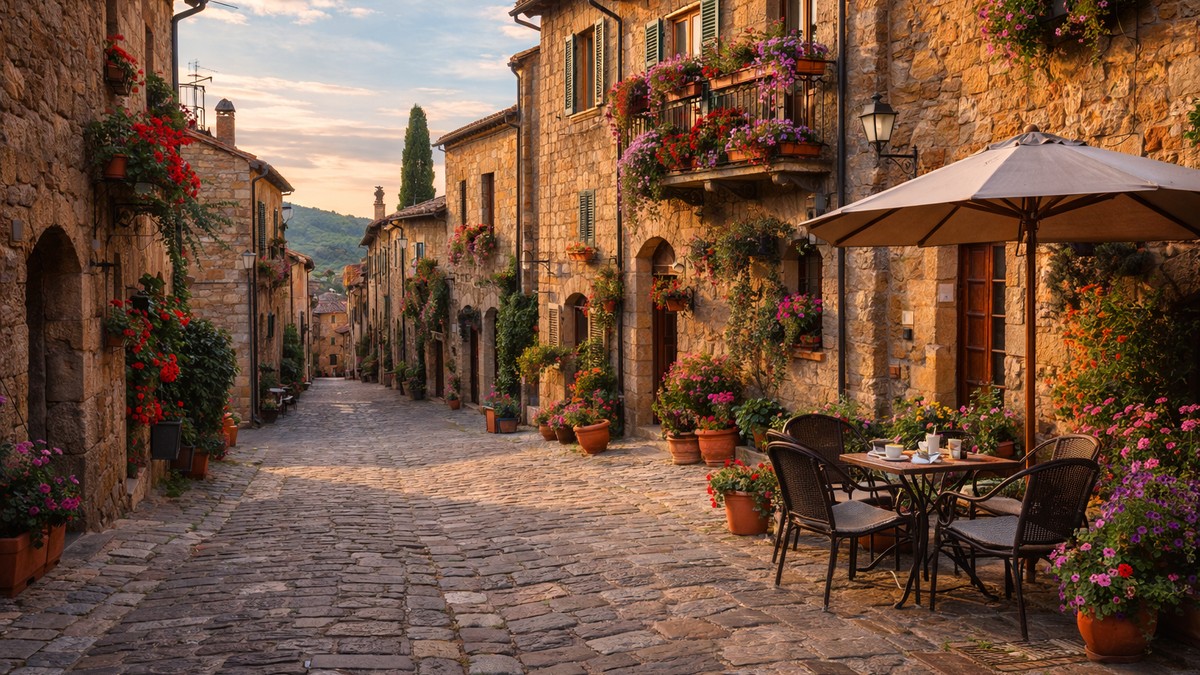
Florence may be Tuscany’s headline act, but it is rarely the memory travelers talk about years later.
Here is the thesis: the emotional core of Tuscany lives in its villages, where architecture, landscape, food, and daily life still operate at human scale.
Exploring the Villages of Tuscany reveals a slower rhythm of travel that clients increasingly seek.
Why Tuscany’s villages matter more than its cities
The power of small scale travel
Italy receives tens of millions of international visitors annually estimate, and Florence remains one of the country’s busiest cultural hubs.
Yet just an hour outside the city, visitor density drops dramatically.
Villages such as Pienza or Montepulciano often hold only a few thousand residents estimate, creating an environment where travelers feel less like tourists and more like temporary locals.
Why rural Tuscany sells emotionally
Rolling vineyards, medieval streets, stone houses, and family run restaurants combine to create the visual language most people associate with Tuscany.
This landscape is not a theme park. It is working agricultural territory where wine, olive oil, and regional cuisine still shape daily life.
Travelers quickly sense the difference.
Exploring the Villages of Tuscany
Montepulciano
Montepulciano rises dramatically on a hilltop surrounded by vineyards producing Vino Nobile di Montepulciano.
Its Renaissance palaces and narrow streets create a cinematic atmosphere.
Example one. A New York agency designed a three night stay in Montepulciano at a boutique wine estate costing roughly 420 euros per night for a couple. The property included vineyard tours and private tastings. A comparable Florence city hotel priced at 390 euros delivered less immersive experiences.
The countryside produced stronger client feedback.
Pienza
Pienza is one of Tuscany’s smallest yet most elegant villages. It was redesigned in the fifteenth century as an ideal Renaissance town.
The village is famous for Pecorino cheese, and small tasting shops line its streets.
Visitors often spend only a few hours here, but the compact layout makes the experience memorable.
Travelers can walk the entire historic center in under an hour estimate, yet every street offers a postcard view.
San Gimignano
San Gimignano stands out for its medieval skyline of stone towers. At one point the town reportedly contained more than seventy towers built by rival families estimate.
Today only fourteen remain, but the silhouette remains iconic.
The town can become busy during midday tour hours. Early morning visits or overnight stays provide a quieter experience.
Montalcino
Montalcino sits south of Siena and is synonymous with Brunello wine.
The surrounding vineyards produce one of Italy’s most respected red wines.
Example two. A small corporate incentive group booked a private Brunello tasting and vineyard lunch priced at approximately 180 euros per person. Participants rated the experience higher than any city museum visit during the same trip.
Wine tourism drives emotional engagement.
Cortona
Cortona overlooks the Val di Chiana valley and gained international attention through travel memoirs and films.
Beyond the publicity, the town offers exceptional views and a relaxed atmosphere.
Stone streets lead to quiet piazzas where cafes overlook wide Tuscan landscapes.
The numbers behind Tuscany tourism
Snapshot of typical costs
| Category | Typical cost estimate |
|---|---|
| Boutique countryside hotel | 280 to 450 euros per night |
| Private wine tasting experience | 90 to 200 euros per person |
| Car rental per day | 60 to 120 euros |
| Guided village walking tour | 120 to 250 euros |
Prices fluctuate with season and location.
Visitor patterns
Spring and autumn remain the most comfortable seasons for exploring rural Tuscany estimate.
Summer attracts the largest visitor numbers but also brings higher temperatures and hotel rates.
What this means for travel agencies
First, structure Tuscany itineraries around a countryside base rather than constant hotel changes. A three or four night stay allows deeper exploration.
Second, encourage clients to rent a car or arrange private drivers. Public transport between villages can be limited.
Third, balance famous villages with lesser known stops. Combining San Gimignano with smaller towns reduces crowd fatigue.
Fourth, monitor hotel rates after booking. Boutique countryside properties adjust pricing frequently with seasonal demand. Tools such as Rebookify allow agencies to track hotel price drops and automatically rebook at lower rates when available, improving margins or delivering savings to clients.
Fifth, incorporate culinary experiences. Cooking classes, vineyard lunches, and cheese tastings transform sightseeing into storytelling.
Quick takeaways
• Tuscany’s villages often deliver stronger memories than major cities
• Small town travel reduces visitor density and increases immersion
• Wine and food experiences anchor many itineraries
• Countryside bases simplify regional exploration
• Hotel rate monitoring protects margins during peak seasons
Common mistakes
• Trying to visit too many villages in one day
• Staying only in Florence and treating Tuscany as a day trip
• Ignoring transportation logistics between towns
• Visiting major villages only during peak midday hours
• Skipping culinary experiences that define the region
Conclusion
Exploring the Villages of Tuscany reveals the region that travelers imagine long before they arrive in Italy.
Stone villages, vineyard landscapes, and slow meals shape experiences that feel timeless.
For travel agencies, building itineraries around Tuscany’s smaller towns transforms a familiar destination into a deeply personal journey.