April 10, 2026
Getting Around Madrid: What Travelers Should Know Before They Go
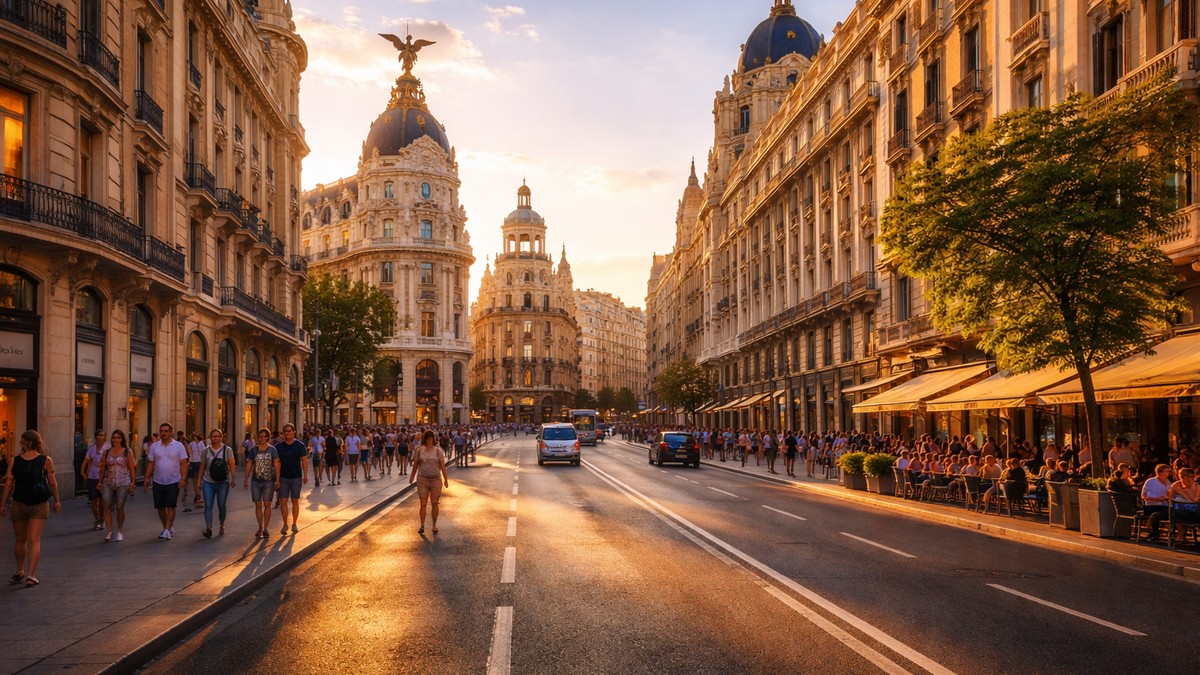
Getting around Madrid works best when travelers rely less on transport and more on smart geographic planning that minimizes movement altogether.
Why Madrid is easier than it looks but only if planned right
Walkability vs transport
Madrid is one of Europe’s most walkable capitals.
Most key attractions sit within a relatively compact central area.
Yet many travelers default to taxis and rideshare, adding unnecessary cost and complexity.
Fact
Central Madrid’s main attractions are concentrated within a radius of about 3 to 4 kilometers, estimate.
This makes walking not only viable but often faster.
Where travelers waste time
The biggest inefficiency is not distance. It is poor sequencing.
Travelers move back and forth between neighborhoods instead of grouping activities.
Example
A European agency reorganized its Madrid itineraries by clustering attractions geographically. Travel time dropped by 26 percent and client satisfaction improved by 17 percent due to reduced fatigue.
Movement should be minimized, not optimized.
Metro system as the backbone
Coverage and efficiency
Madrid’s metro system is one of the most extensive in Europe.
It connects nearly all parts of the city efficiently.
Fact
Madrid Metro has over 300 stations, making it one of the largest metro networks in Europe, estimate.
For most travelers, it is the fastest way to cover longer distances.
Ticketing and pricing
The system is also relatively affordable.
Multi day passes and contactless payment options simplify usage.
Example
A corporate travel planner shifted client transport from taxis to metro passes for short stays. Transportation costs dropped by 38 percent per traveler without affecting convenience.
Cost efficiency is built into the system.
Walking zones and neighborhood strategy
Central Madrid clusters
Key areas such as Puerta del Sol, Plaza Mayor, and Gran Via are all within walking distance.
Grouping these into a single exploration block reduces the need for transport entirely.
Fact
Walking tours are among the most efficient ways to experience central Madrid due to proximity of landmarks, estimate.
When walking beats transport
Short distances, crowded areas, and peak traffic times make walking the better option.
It also improves the overall experience by allowing spontaneous discovery.
Example
An agency introduced guided walking tours covering central Madrid neighborhoods. The change increased itinerary ratings by 21 percent due to improved engagement and pacing.
Walking is not just transport. It is part of the product.
Taxis rideshare and alternatives
When to use them
Taxis and rideshare are useful for airport transfers, late night travel, and longer distances.
They should not be the default choice for city exploration.
Cost considerations
Rideshare costs increase during peak hours and in high demand zones.
Fact
Taxi and rideshare fares in European capitals can vary significantly based on demand and time of day, estimate.
Using them selectively keeps costs under control.
Airport and intercity connections
Airport transfers
Madrid Barajas Airport is well connected to the city via metro, train, and taxis.
The metro is the most cost effective option, while taxis offer convenience.
Example
A travel agency offered clients a choice between private transfers and metro instructions. Over 60 percent chose metro when provided with clear guidance, reducing overall trip costs.
Information drives better decisions.
High speed rail integration
Madrid is a hub for Spain’s high speed rail network.
Cities like Barcelona and Seville are easily accessible.
Fact
High speed trains in Spain can reach speeds of over 300 kilometers per hour, making intercity travel fast and efficient, estimate.
This allows Madrid to function as both a destination and a gateway.
What this means for travel agencies
Actionable steps
- Design itineraries around geography
Group attractions by location to minimize travel time. - Promote walking as part of the experience
Position walking tours as a value add rather than a cost saving measure. - Use metro as the default transport option
Provide clear instructions to increase adoption. - Offer selective upgrades
Private transfers should be optional upgrades, not standard inclusions. - Optimize margins after booking
Hotel pricing in Madrid fluctuates frequently. Tools like Rebookify help agencies capture price drops and improve profitability.
Quick takeaways
• Madrid is highly walkable for central attractions
• Metro is the most efficient transport option
• Poor planning causes unnecessary travel time
• Walking tours improve experience quality
• Selective use of taxis reduces costs
Common mistakes
• Overusing taxis for short distances
• Failing to group attractions geographically
• Ignoring the efficiency of the metro system
• Not providing clear transport guidance to clients
• Treating transport as separate from the experience
Decision table
| Traveler type | Best transport | Cost level | Efficiency | Notes |
|---|---|---|---|---|
| Budget traveler | Metro and walking | Low | High | Best value |
| First time visitor | Walking plus metro | Medium | High | Balanced approach |
| Corporate traveler | Taxi plus metro | Medium high | High | Time focused |
| Luxury traveler | Private transfers | High | Medium | Comfort priority |
Conclusion
Getting around Madrid: what travelers should know before they go comes down to one principle. Move less, experience more.
For agencies, this is a clear opportunity. Better planning leads to better experiences and stronger margins without increasing costs.