April 10, 2026
Greece vs Croatia: Choosing Your Coastal Escape
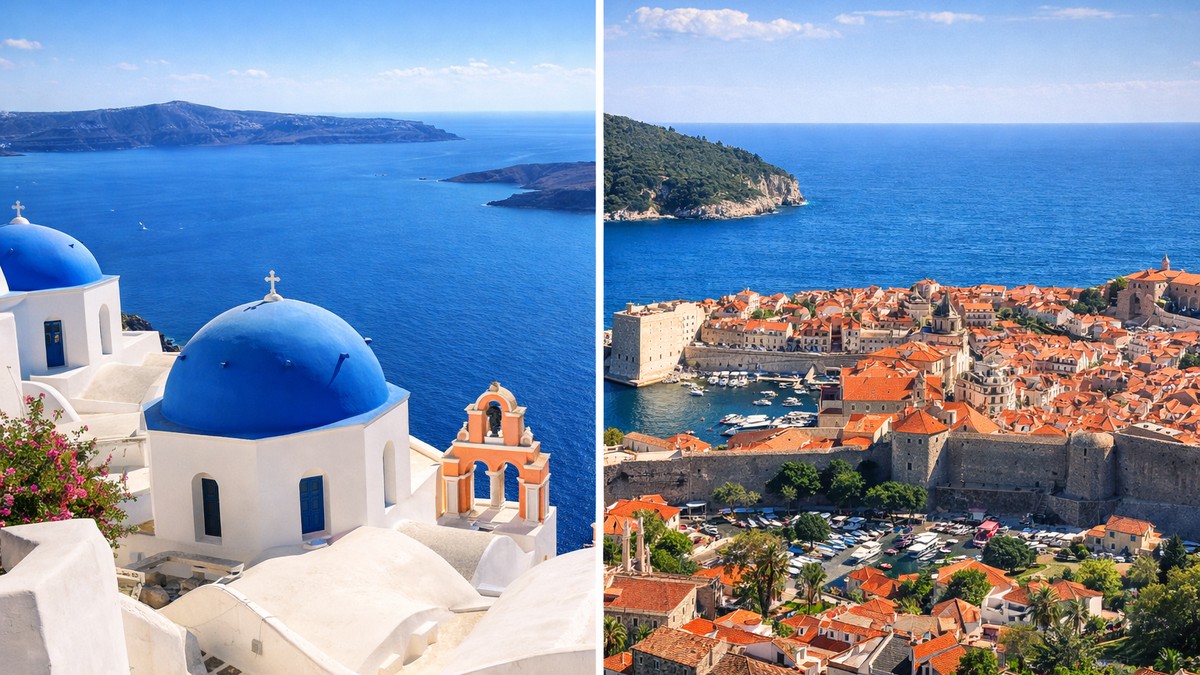
Greece vs Croatia: choosing your coastal escape is not about which destination is better but about which one aligns more precisely with the traveler’s expectations and tolerance for complexity.
Why Greece and Croatia are not interchangeable
Different travel styles
Greece and Croatia are often grouped together as interchangeable coastal destinations.
They are not.
Greece is about islands, variety, and scale.
Croatia is about continuity, structure, and ease.
That distinction shapes everything from itinerary design to pricing.
Expectation mismatch
The biggest issue agencies face is mismatched expectations.
Travelers expecting effortless logistics in Greece may struggle with ferry schedules.
Those expecting endless variety in Croatia may find the coastline more uniform.
Example
A European agency analyzed feedback from 120 Mediterranean bookings. Clients who chose destinations aligned with their travel style reported 27 percent higher satisfaction than those who selected based on price alone.
Fit matters more than cost.
Coastline experience and geography
Greek islands vs Croatian coast
Greece offers hundreds of islands, each with distinct character.
Santorini delivers dramatic views and luxury appeal.
Mykonos focuses on nightlife and energy.
Croatia, on the other hand, offers a linear coastline with historic cities.
Dubrovnik and Split provide consistent architectural and cultural experiences.
Fact
Croatia has over 1,000 islands, but most travel itineraries focus on a few key coastal hubs, estimate.
Greece feels expansive. Croatia feels structured.
Accessibility and logistics
Croatia is easier to navigate.
Road travel connects major cities efficiently. Ferries exist but are less central to most itineraries.
Greece requires more planning.
Island hopping involves flights or ferries, which introduces variability.
Example
A UK based operator found that Croatia itineraries required 18 percent less coordination time compared to Greece due to simpler transport logistics.
Ease has operational value.
Cost structure and pricing dynamics
Accommodation and seasonality
Greece offers a wider range of accommodation.
From budget guesthouses to high end villas.
Croatia leans toward mid to high range pricing in key destinations.
Fact
Accommodation costs in popular Greek islands can vary significantly depending on location and season, estimate.
Experience pricing
Experiences in Greece tend to scale.
Luxury experiences are widely available.
Croatia offers fewer ultra premium options but strong mid range experiences.
Example
A luxury travel agency reported that Greece itineraries generated 22 percent higher average booking values due to premium accommodation and experience options.
Croatia delivers consistency. Greece delivers range.
Crowd management and seasonality
Peak season differences
Both destinations experience peak demand in summer.
However, crowd distribution differs.
Greece spreads visitors across islands.
Croatia concentrates them in key cities.
Fact
Dubrovnik experiences significant crowd density during peak summer months due to its compact size, estimate.
Shoulder season opportunities
Both destinations perform well in shoulder seasons.
May, June, and September offer better conditions and pricing.
Example
A travel agency shifted 40 percent of its Mediterranean bookings to shoulder months. Costs dropped by 24 percent while satisfaction increased by 20 percent due to fewer crowds.
Timing improves both cost and experience.
Experience depth and variety
Culture and food
Greece offers deeper regional variation.
Each island has distinct cuisine and traditions.
Croatia provides a more unified cultural experience with strong Mediterranean influences.
Fact
Food experiences are a key driver of traveler satisfaction in Mediterranean destinations, estimate.
Activities and exploration
Greece supports diverse activities.
Island hopping, beach exploration, nightlife, and cultural tours.
Croatia focuses on coastal exploration, historic cities, and sailing.
Example
An agency introduced sailing based itineraries in Croatia. The niche product achieved a 25 percent higher margin due to strong demand and limited competition.
Different products, different strengths.
What this means for travel agencies
Actionable steps
- Match destination to traveler profile
Greece suits variety seeking travelers while Croatia appeals to those who prefer simplicity. - Position logistics clearly
Set expectations around transport complexity in Greece and ease in Croatia. - Use pricing strategically
Leverage Greece for premium upsells and Croatia for consistent mid range offerings. - Promote shoulder seasons
Both destinations deliver better value outside peak months. - Optimize margins after booking
Hotel prices in both destinations fluctuate with demand. Tools like Rebookify help agencies capture price drops and improve profitability.
Quick takeaways
• Greece offers variety and scale across islands
• Croatia provides simplicity and structured travel
• Logistics are easier in Croatia
• Greece supports higher value luxury itineraries
• Shoulder seasons improve both destinations
Common mistakes
• Treating Greece and Croatia as interchangeable
• Ignoring transport complexity in Greece
• Underestimating crowd density in Croatia
• Selling based on price rather than fit
• Not adjusting itineraries for seasonality
Decision table
| Traveler type | Best choice | Experience focus | Margin potential | Notes |
|---|---|---|---|---|
| Luxury traveler | Greece | Premium island stays | High | Strong upsell |
| First time coastal traveler | Croatia | Easy exploration | Medium high | Simple logistics |
| Adventure traveler | Croatia | Sailing and coast | High | Niche appeal |
| Variety seeker | Greece | Island hopping | High | Diverse experiences |
Conclusion
Greece vs Croatia: choosing your coastal escape ultimately comes down to alignment.
The right destination is the one that fits the traveler, not the one that looks better on paper.
For agencies, that clarity leads to better itineraries, higher satisfaction, and stronger margins.