March 6, 2026
Hidden Gems in Barcelona
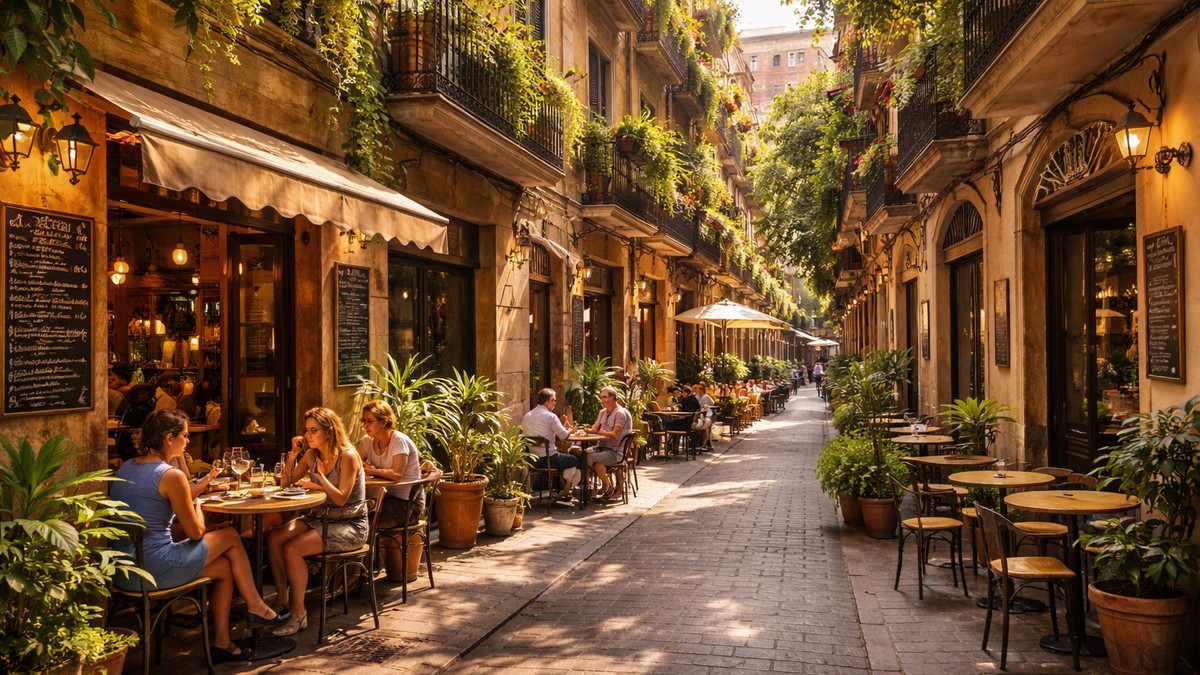
Barcelona rarely suffers from a lack of attention.
Millions of visitors arrive each year to see Gaudi architecture, Mediterranean beaches, and the vibrant energy of Catalonia’s capital. But here is the thesis: the most memorable Hidden Gems in Barcelona are not the headline attractions but the quieter neighborhoods and overlooked landmarks that reveal the city’s everyday character.
Travelers who explore beyond the famous checklist often leave with richer stories.
Why Barcelona’s real magic hides outside its icons
The challenge of overtourism in famous areas
Barcelona receives well over twelve million overnight visitors annually estimate, with even larger numbers arriving on day trips and cruise ships.
The majority concentrate in a small number of districts including the Gothic Quarter, La Rambla, and the Sagrada Familia area.
This density creates predictable patterns. Crowds build by mid morning and peak in the afternoon.
Why travelers crave quieter discoveries
Many travelers today prioritize authenticity over spectacle. They want to see how locals live, eat, and spend their evenings.
Exploring smaller districts and parks often reveals a Barcelona that feels calmer, creative, and surprisingly intimate.
Hidden Gems in Barcelona
Sant Pau Art Nouveau complex
While many visitors head directly to the Sagrada Familia, just a short distance away stands one of Barcelona’s most beautiful architectural sites.
The Sant Pau Art Nouveau complex, a former hospital designed in the early twentieth century, features colorful mosaics, elegant gardens, and ornate pavilions.
The site is recognized as a UNESCO World Heritage location estimate but still attracts far fewer visitors than nearby landmarks.
Example one. A London based travel advisor included Sant Pau as a morning stop before visiting the Sagrada Familia. The group of ten travelers reported that Sant Pau became their favorite architectural discovery despite costing only about 16 euros for entry estimate.
Bunkers del Carmel viewpoint
For one of the best panoramic views of Barcelona, locals head to the Bunkers del Carmel.
Originally built as anti aircraft defenses during the Spanish Civil War, the hilltop location now offers sweeping views across the entire city.
Visitors can see landmarks from the Mediterranean coast to the Collserola mountains.
Sunset is particularly popular.
Sant Antoni neighborhood
Sant Antoni sits just west of the historic center and feels refreshingly local.
The recently renovated Sant Antoni Market anchors the district. Around it, independent cafes, bakeries, and bookstores attract residents rather than tour groups.
Example two. A US travel consultant scheduled a morning food walk through Sant Antoni for a small group of six travelers. The guided tasting experience cost roughly 85 euros per person and introduced guests to Catalan pastries, local cheeses, and neighborhood cafes.
Participants rated the tour as one of the highlights of their stay.
Poble Nou waterfront district
Barcelona’s beaches draw huge crowds near the city center.
Poble Nou offers a different atmosphere.
This former industrial district has evolved into a creative area filled with design studios, modern restaurants, and quieter stretches of coastline.
Visitors can walk along the waterfront promenade or explore converted factory spaces now used by artists and technology companies.
Laberint d Horta park
The Laberint d Horta park remains one of Barcelona’s most peaceful green spaces.
Located in the northern part of the city, the historic garden contains a carefully designed hedge maze surrounded by classical sculptures and shaded paths.
Entry fees remain modest at around 5 euros estimate and visitor numbers are capped to protect the site.
Example three. A family traveling from Canada spent an afternoon exploring the park after visiting the city center. Total travel time from central Barcelona was about thirty minutes by metro and taxi combination. The experience provided a calm contrast to the crowded Gothic Quarter.
The numbers behind Barcelona tourism
Snapshot of typical costs
| Category | Typical cost estimate |
|---|---|
| Four star hotel central Barcelona | 240 to 320 euros per night |
| Entry ticket for architectural sites | 12 to 25 euros |
| Guided neighborhood tour | 70 to 120 euros per person |
| Local restaurant dinner | 25 to 45 euros per person |
Prices vary with season and demand.
Visitor patterns
Summer remains the busiest travel period, while spring and autumn offer more comfortable weather and smaller crowds estimate.
Demand from cruise tourism also influences peak times around central districts.
What this means for travel agencies
First, diversify Barcelona itineraries beyond the famous landmarks. Adding lesser known sites creates balance.
Second, schedule major attractions early in the morning or late in the day to avoid peak crowds.
Third, introduce neighborhood experiences such as food walks or market visits. These moments often become the most memorable parts of the trip.
Fourth, include viewpoints and parks. They offer visual variety and provide breaks from dense urban sightseeing.
Fifth, monitor hotel prices after booking. Barcelona hotel rates fluctuate significantly due to events and seasonal demand. Platforms such as Rebookify allow agencies to monitor price drops and automatically rebook lower rates when available, protecting margins or passing savings to clients.
Quick takeaways
• Barcelona’s best discoveries often sit outside the main tourist zones
• Architectural sites beyond Gaudi remain surprisingly uncrowded
• Local neighborhoods reveal authentic food and culture
• Viewpoints and parks add balance to busy itineraries
• Monitoring hotel rates helps agencies protect margins
Common mistakes
• Concentrating the entire trip in the Gothic Quarter
• Ignoring neighborhoods beyond the central tourist area
• Visiting viewpoints only during peak midday hours
• Skipping local markets and food experiences
• Booking hotels without monitoring price changes
Conclusion
Hidden Gems in Barcelona reveal a city far richer than its most photographed landmarks.
Quiet parks, overlooked architecture, and neighborhood cafes show a side of Barcelona that many travelers miss.
For travel agencies designing thoughtful itineraries, these discoveries transform a popular destination into a layered and memorable journey.