March 28, 2026
Hotel Prices Change Daily Here Is How Smart Travelers Take Advantage
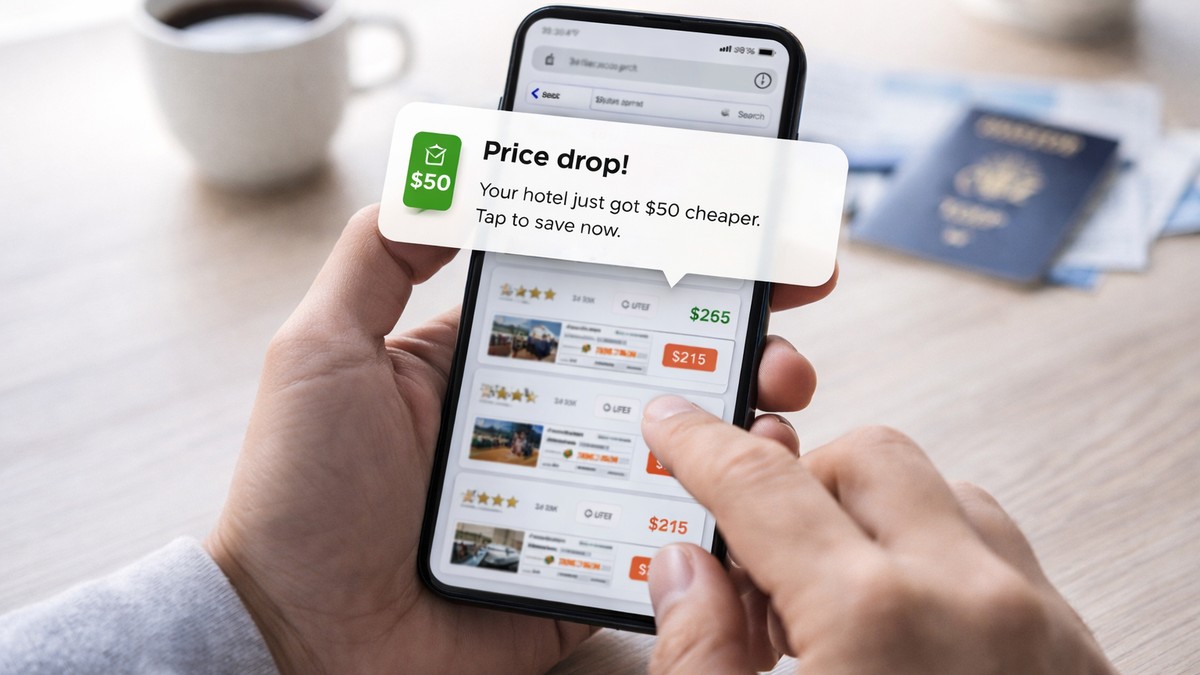
The smartest travelers are not the ones who book the cheapest rate.
They are the ones who keep watching after they book.
That is the core insight behind Hotel Prices Change Daily Here Is How Smart Travelers Take Advantage. Hotel pricing is no longer fixed. It moves constantly based on demand signals, competitor behavior, and algorithms that adjust rates in real time.
Most travelers treat booking as the final step.
In reality, it is just the beginning.
For agencies and travel professionals, this shift creates a clear opportunity to deliver ongoing value rather than one time transactions.
The real opportunity is not booking cheaper it is booking smarter
The traditional approach was simple.
- Compare prices
- Book the best option
- Move on
That model no longer holds.
Estimate
- Hotel prices can fluctuate by 10 to 30 percent between booking and stay date
- Price changes can occur multiple times per week
This means savings often appear after the booking is confirmed.
Ignoring that window leaves money on the table.
Why hotel prices change constantly
Understanding the mechanics is critical.
Demand and supply shifts
Hotel pricing responds to demand signals.
Factors include
- Local events
- Seasonal trends
- Booking pace
As demand rises or falls, prices adjust accordingly.
Algorithm driven pricing
Hotels now rely on dynamic pricing systems.
These systems
- Analyze booking patterns
- Adjust rates in real time
- Optimize revenue continuously
Estimate
- Large hotel chains update pricing several times per day
Pricing is no longer static.
Competitive benchmarking
Hotels monitor competitors closely.
If nearby properties adjust rates
- Others follow quickly
This creates constant movement.
How smart travelers take advantage
The strategy is simple but underused.
Booking early with flexibility
Start with a flexible rate.
Benefits include
- Ability to cancel or modify
- Protection against price drops
This creates optionality.
Monitoring prices after booking
This is where most value is unlocked.
Smart travelers
- Track rates for the same property
- Watch for drops
- Stay informed until check in
Example
A leisure traveler booked a hotel at $220 per night
- Price dropped to $180 within 10 days
- Rebooking saved $160 over a 4 night stay
Rebooking strategically
When prices drop
- Cancel the original booking
- Rebook at the lower rate
Example
A corporate traveler
- Rebooked twice before arrival
- Reduced total cost by 18 percent
This is not rare.
It is repeatable.
The role of technology in price optimization
Manual tracking is inefficient.
Technology changes the equation.
Automated tracking tools
Modern tools monitor prices continuously.
Capabilities include
- Tracking hotel rate changes
- Identifying savings opportunities
- Automating alerts
This removes guesswork.
Alerts and data insights
Real time alerts matter.
They allow travelers and agencies to
- Act quickly
- Capture price drops
- Optimize bookings
Estimate
- Automated monitoring increases savings capture rates significantly
Reducing manual effort
Without automation
- Tracking requires constant checking
With tools
- The process becomes passive
This improves efficiency at scale.
Real world examples of savings
The impact is measurable.
Case study one leisure traveler
A couple booked a 5 night stay.
- Initial rate was $250 per night
- Price dropped to $210
Outcome
- Total savings of $200
- No change in experience
Case study two corporate booking
A business traveler booked a premium hotel.
- Initial cost was $1,200
- Rebooking reduced it to $980
Outcome
- Savings of $220
- Same property same dates
Case study three agency portfolio
An agency implemented price monitoring across bookings.
- Average savings per booking was $110
- Applied across 200 bookings per month
Outcome
- $22,000 in monthly savings
- Increased client retention
These are not edge cases.
They are operational advantages.
What this means for travel agencies
Understanding Hotel Prices Change Daily Here Is How Smart Travelers Take Advantage changes the service model.
Moving beyond static bookings
Booking is no longer the endpoint.
Agencies should
- Treat bookings as dynamic
- Continue monitoring after confirmation
- Stay engaged until check in
This shifts the value proposition.
Creating continuous value for clients
Clients notice ongoing savings.
Benefits include
- Increased trust
- Higher satisfaction
- Stronger loyalty
Example
Clients who received post booking savings
- Were more likely to rebook
Increasing margins through rebooking
Savings can be leveraged.
Approach
- Share savings with clients
- Retain a portion as margin
- Reinforce value
Using platforms that automate this process allows agencies to scale without increasing workload.
| Strategy | Effort level | Savings potential | Client impact | Scalability |
|---|---|---|---|---|
| Manual tracking | High | Medium | Medium | Low |
| Automated monitoring | Low | High | High | High |
| No tracking | None | None | Low | High |
Quick takeaways
- Hotel prices fluctuate constantly
- Booking early with flexibility is critical
- Monitoring after booking unlocks savings
- Rebooking is a repeatable strategy
- Technology enables scale and efficiency
Common mistakes
- Treating booking as the final step
- Choosing non refundable rates too early
- Not monitoring prices after booking
- Missing rebooking opportunities
- Relying on manual tracking
- Ignoring available technology
Conclusion
The reality behind Hotel Prices Change Daily Here Is How Smart Travelers Take Advantage is simple.
Prices move.
Smart travelers move with them.
For travel agencies the opportunity is clear
- Extend value beyond the booking moment
- Use technology to track and act
- Turn price changes into client benefits
Those who adapt will not just save money for clients.
They will build stronger, more profitable relationships over time.