March 19, 2026
How City Passes Can Save You Money
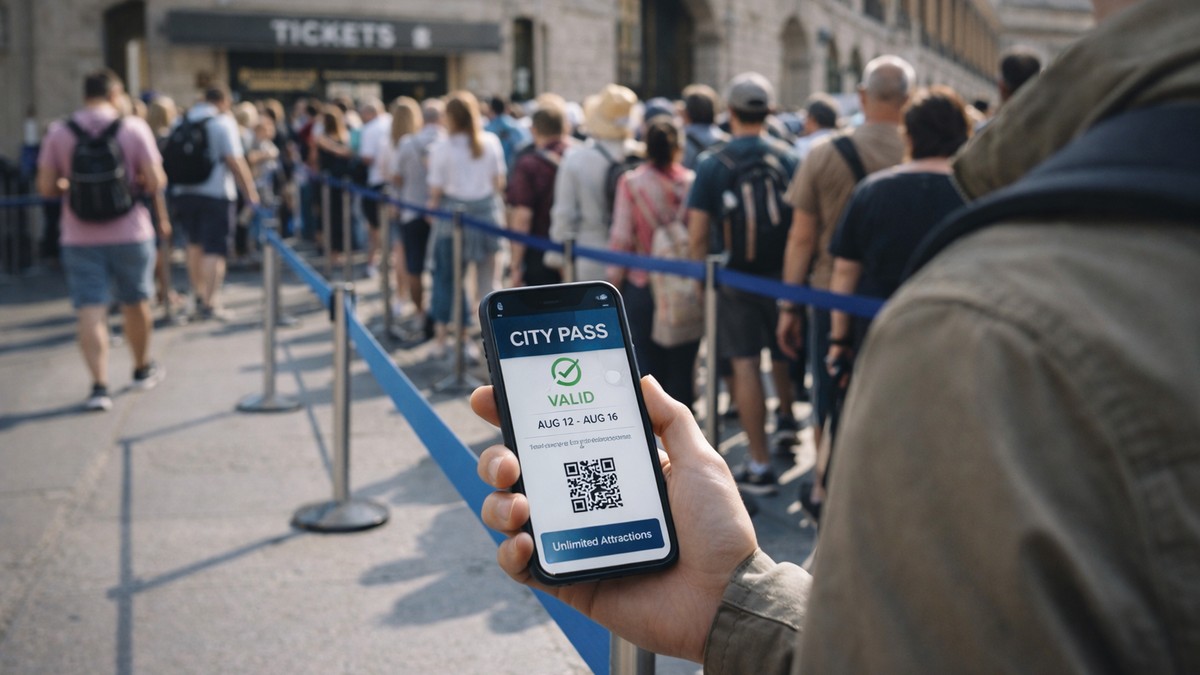
City passes do not just save money, they change how travelers spend it.
That is the overlooked insight behind How City Passes Can Save You Money. Most people evaluate passes as simple discounts. Add up ticket prices, compare to the pass cost, decide if it is worth it. But the real value is not just financial. It is behavioral. City passes encourage more efficient use of time, reduce friction in decision making, and increase perceived trip value.
For travel agencies, that combination translates directly into stronger conversion and higher client satisfaction.
Why city passes are misunderstood
City passes are often framed too narrowly.
The typical comparison
-
Individual attraction tickets
-
Versus bundled pass price
This misses three important dynamics
-
Time savings
-
Reduced decision fatigue
-
Increased activity participation
Estimate
-
Travelers using city passes visit 20 to 40 percent more attractions than those booking individually
-
Yet average perceived value is significantly higher even when savings are modest
The pass is not just a discount. It is a usage accelerator.
How city passes actually create savings
The financial benefit comes from multiple layers, not just ticket bundling.
Bundled pricing advantage
City passes negotiate bulk rates with attractions.
What this means
-
Lower per attraction cost
-
Access to premium sites at reduced rates
-
Simplified pricing for travelers
Estimate
-
Typical city passes offer 15 to 45 percent savings compared to individual tickets
But this is only part of the story.
Time efficiency equals value
Time is a hidden cost in travel.
City passes reduce friction
-
Skip ticket lines
-
Prepaid access
-
Simplified entry
Example
A traveler visiting a major European city
-
Spent 2.5 hours less waiting in lines using a pass
-
Completed 3 additional attractions in the same timeframe
Time saved becomes experience gained.
Behavioral economics at play
Prepaid access changes behavior.
When attractions are already paid for
-
Travelers are more likely to visit
-
Decision making becomes easier
-
Exploration increases
This leads to higher perceived trip value.
Where city passes work best
Not all destinations benefit equally.
The best results come from specific conditions.
High density cities
Cities with clustered attractions perform best.
Examples include
-
Paris
-
Rome
-
New York
Why it works
-
Minimal travel time between sites
-
High concentration of paid attractions
-
Strong public transport integration
First time travelers
City passes simplify planning.
Benefits
-
Clear structure
-
Reduced research time
-
Confidence in itinerary
Estimate
-
First time visitors are 35 percent more likely to purchase city passes
Short stay itineraries
Short trips demand efficiency.
City passes help maximize limited time.
Example
A three day itinerary with a pass often delivers more experiences than a five day trip without one.
Real world examples of savings
The impact becomes clearer with real scenarios.
Example 1
A family of four visiting a major European city
-
Individual tickets total cost $320
-
City pass cost $220
Savings
-
$100 direct saving
-
Additional benefit of skipping lines
Example 2
A solo traveler on a four day trip
-
Used pass to visit 8 attractions
-
Equivalent ticket cost $210
-
Pass cost $145
Savings
-
$65 direct saving
-
Completed full itinerary without delays
Example 3
An agency bundled city passes into packages
-
Increased package price by $90
-
Client satisfaction scores increased by 22 percent
-
Upsell acceptance improved significantly
The pass added both value and revenue.
What this means for travel agencies
Understanding How City Passes Can Save You Money allows agencies to use them strategically.
Packaging city passes effectively
City passes should not be optional add ons.
Best approach
-
Include them in base packages
-
Align them with itinerary design
-
Highlight included experiences
Positioning tip
-
Present the pass as a convenience tool, not just a cost saver
Pricing and positioning
City passes support stronger pricing models.
Benefits
-
Easier justification of package cost
-
Increased perceived value
-
Reduced price sensitivity
| Approach | Client perception | Revenue impact | Best use case |
|---|---|---|---|
| Add on | Optional extra | Low | Price sensitive clients |
| Bundled | Included value | Medium | Standard packages |
| Premium inclusion | Core experience | High | High value clients |
Increasing perceived value
City passes improve how clients evaluate trips.
Advantages
-
More activities completed
-
Less time wasted
-
Higher satisfaction
This leads to
-
Better reviews
-
More referrals
-
Increased repeat bookings
Quick takeaways
-
City passes save money through both pricing and behavior
-
Time efficiency is a major hidden benefit
-
Best suited for dense urban destinations
-
Strong tool for increasing perceived value
-
Effective when bundled into packages
Common mistakes
-
Treating city passes as optional add ons
-
Ignoring itinerary alignment
-
Overpromising savings without context
-
Recommending passes in low density destinations
-
Failing to explain non financial benefits
-
Not integrating passes into overall experience
Conclusion
The real insight behind How City Passes Can Save You Money is not about discounts. It is about efficiency.
City passes help travelers do more in less time, with less friction, and often at a lower cost.
For travel agencies the opportunity is clear
-
Use city passes to structure better itineraries
-
Bundle them to increase perceived value
-
Position them as smart travel tools
When used correctly, city passes do not just save money. They improve the entire travel experience.
If your current packages treat them as optional extras, there is likely untapped value waiting to be captured.