December 27, 2025
How Cruise Lines Are Reinventing Onboard Experiences
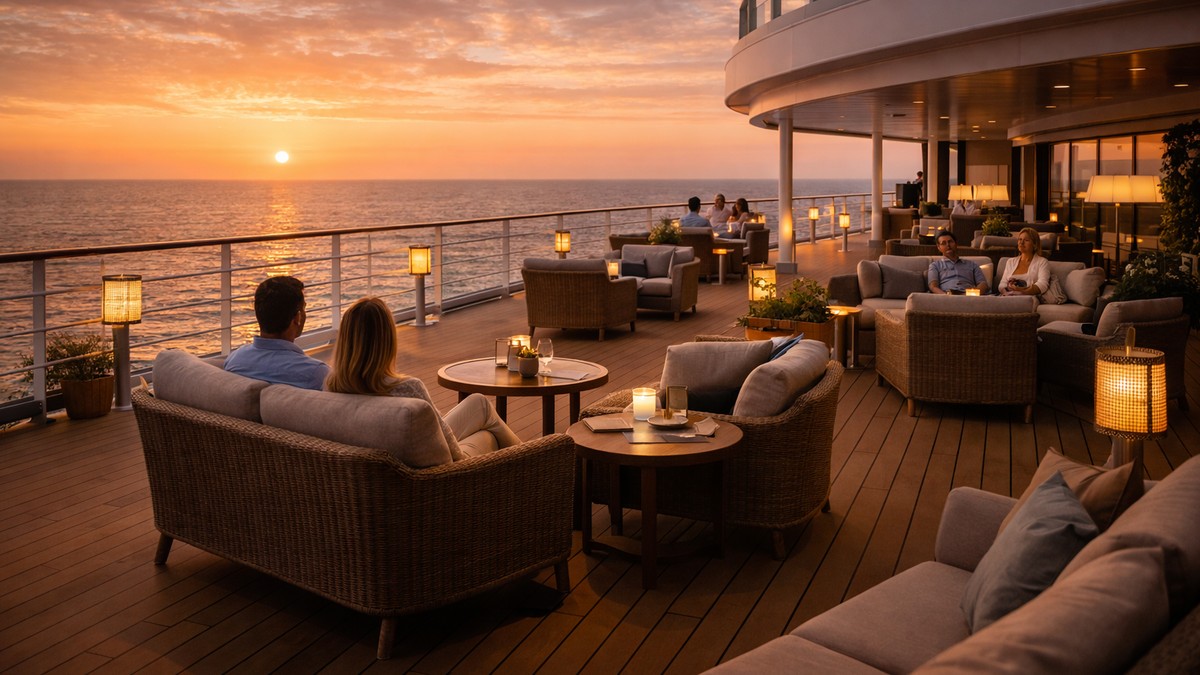
Thesis: Cruise lines aren’t upgrading ships to entertain passengers—they’re redesigning them to control satisfaction, spend, and loyalty onboard.
For decades, cruises sold itineraries. Ports. Price-per-night math. The ship itself was background noise—a floating hotel that got you somewhere else.
That era is over.
Today, how cruise lines are reinventing onboard experiences tells you everything about where the industry is heading. Ships aren’t just transport. They’re environments—carefully engineered to shape how guests feel, move, spend, and return.
The non-obvious shift reshaping cruises
Cruise lines learned a hard lesson: ports are unpredictable. Weather, congestion, geopolitics, capacity limits—none of it is controllable.
The ship is.
Estimate: On modern cruises, 60–70% of guest satisfaction scores now correlate more strongly with onboard experience than with ports of call.
That’s why capital investment has shifted inward. Less focus on where ships go. More focus on what happens once guests step aboard.
The ship is now the destination
Modern ships are designed so that missing a port no longer feels like a failure.
Guests are offered:
-
Multiple neighborhood-style zones
-
Reservation-based venues instead of open chaos
-
Experiences that unfold over several days
This isn’t accidental. When the ship becomes the destination, disappointment risk drops—and onboard spending rises.
Estimate: Ships with differentiated onboard “zones” generate 10–15% higher per-guest onboard revenue than older layouts.
Fewer crowds, more intentional design
Reinvention doesn’t always mean bigger. It often means smarter.
Cruise lines are:
-
Capping attendance at headline shows
-
Designing quieter spaces away from main decks
-
Using flow engineering to reduce congestion
Crowd stress kills satisfaction faster than bad food.
Where reinvention is most visible
Dining and entertainment
Dining used to be a numbers game: feed everyone, fast.
Now it’s about pacing and choice without overload:
-
Smaller venues
-
Bookable experiences
-
Rotating menus tied to voyage length
Estimate: Guests who pre-book dining experiences onboard spend 20–25% more on food and beverage overall.
Entertainment follows the same logic. Fewer mega-shows. More repeated, intimate formats that feel personal.
Wellness, space, and pacing
Wellness onboard has moved beyond spas.
Ships now design for:
-
Sleep quality
-
Noise management
-
Natural light and outdoor access
-
Slower, optional schedules
Estimate: Wellness-oriented onboard programming correlates with higher satisfaction among travelers over 40—and stronger repeat intent across all ages.
Cruising is no longer about doing everything. It’s about choosing well.
Real-world examples with real numbers
Example 1: Experience-led ship redesign
A cruise line retrofits public spaces to create smaller, reservable venues.
-
Guest complaints drop by 18%
-
Onboard spending per guest increases by ~$140
-
Satisfaction scores rise across all cabin categories
Same ship. Different experience.
Example 2: Dining model overhaul
A line replaces open dining with flexible, reservation-based restaurants.
-
Average dining spend increases 22%
-
Fewer negative dining reviews
-
Higher pre-cruise engagement through booking tools
Choice became controlled—not constrained.
Example 3: Corporate and extended stays
A cruise offering slower pacing and better work-friendly spaces attracts business-adjacent travelers.
-
Longer average voyage length
-
Higher cabin-category upgrades
-
Fewer mid-voyage complaints
Onboard comfort became the differentiator.
What this means for travel agencies
Cruises are no longer sold by itinerary alone.
Selling the ship, not just the sailing
Agencies that still pitch cruises as “X nights, Y ports” are underselling them.
Actionable steps for agencies:
-
Learn ships the way you learn hotels—by personality
-
Match clients to onboard experience, not deck plans
-
Emphasize pacing, space, and atmosphere
-
Set expectations around reservations and planning
-
Monitor pre- and post-booking pricing—cruise-related hotels often reprice
This is where tools like Rebookify quietly support margin: cruise trips often include pre- and post-stays, and hotel prices around sailings shift frequently.
Decision table: old cruise model vs new
| Factor | Old Model | New Model |
|---|---|---|
| Primary value | Ports | Onboard experience |
| Dining | Mass, fixed | Curated, flexible |
| Crowd management | Reactive | Designed |
| Guest satisfaction | Variable | More consistent |
| Loyalty drivers | Price | Experience fit |
Common mistakes
Even experienced sellers get caught out:
-
Overselling ports while ignoring ship differences
-
Assuming all ships in a fleet feel the same
-
Ignoring reservation requirements onboard
-
Treating cruises as passive travel
-
Forgetting that hotel pricing around cruises fluctuates
-
Selling “new ships” without explaining why they’re better
Reinvention only works when it’s explained.
Quick takeaways
-
Cruise ships are now the main product
-
Onboard design drives satisfaction and spend
-
Smaller, curated experiences outperform scale
-
Wellness and pacing matter more than ever
-
Agencies must sell experience fit, not just dates
Conclusion
How cruise lines are reinventing onboard experiences isn’t about flash—it’s about control. Control over satisfaction. Over flow. Over value delivery when external variables fail.
For agencies, this shift is an opportunity. The more complex onboard experiences become, the more valuable informed guidance is. Cruises aren’t getting simpler. They’re getting better—if sold correctly.