January 16, 2026
How Cruise Tourism Impacts Local Economies
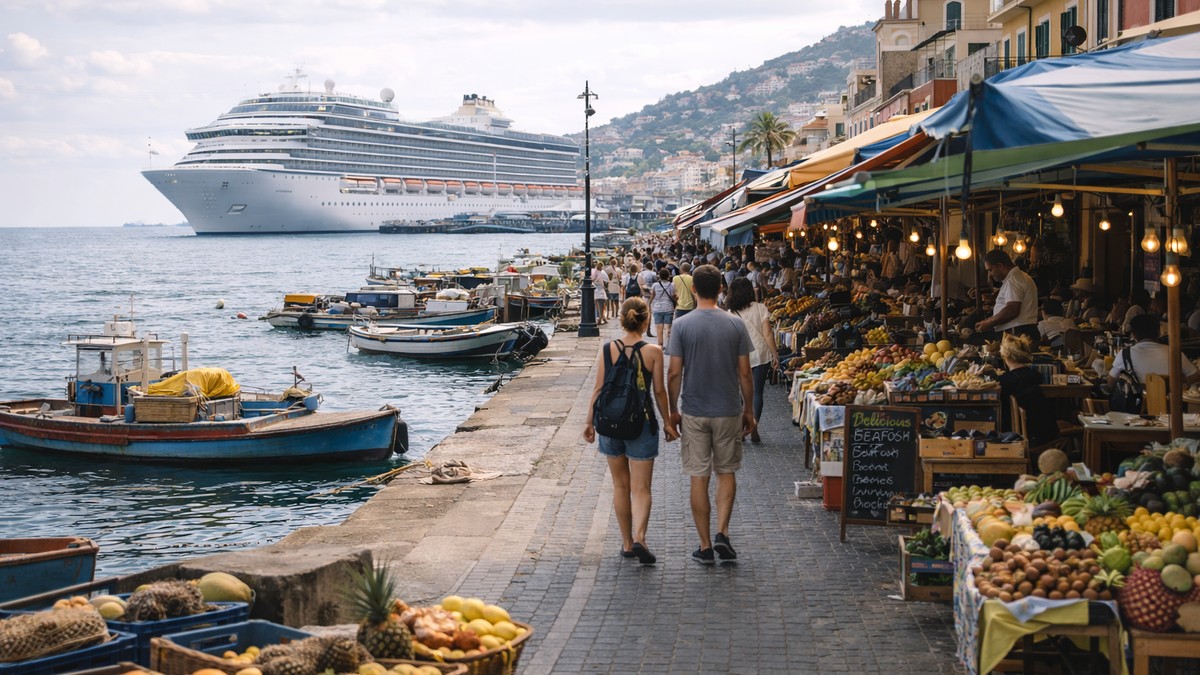
Thesis: Cruise tourism does not fail local economies because it brings no money but because the money flows unevenly and agencies influence where it lands.
Cruise tourism is often discussed in extremes. Either it is portrayed as an economic savior or as an extractive machine that benefits nobody onshore. The truth is less dramatic and far more practical.
Cruise tourism moves significant money into destinations. It also shapes labor patterns infrastructure investment and business behavior. For travel agencies understanding this ecosystem is no longer optional. It affects product quality brand credibility and client trust.
Where Cruise Spending Actually Goes
Passengers ports and payroll
Cruise visitors spend money in three main ways. Port fees paid by cruise lines. Passenger spending onshore. Local employment tied to port operations guiding transport and retail.
Industry research suggests average passenger spending per port call often ranges between 70 and 120 dollars depending on destination and excursion behavior estimate. That is not trivial when multiplied by thousands of arrivals per week.
Cruise operations also employ large numbers of local workers in ports transport services tour operations and hospitality support roles.
The myth of zero local value
The idea that cruise tourism brings no economic benefit to destinations is inaccurate.
The real issue is not whether money arrives. The issue is how much stays local and who controls the spending pathways.
Destinations that develop strong independent shore experiences tend to retain more value than those that rely entirely on cruise controlled excursions.
Who Benefits Most From Cruise Arrivals
Small businesses versus large operators
Local guides independent drivers family run restaurants and craft sellers benefit most when passengers explore beyond the port zone.
However many ports are designed to keep passengers within controlled retail environments. This concentrates revenue within a small group of operators.
Destinations that actively support local supplier networks tend to distribute cruise revenue more widely and sustainably.
The role of shore experiences
Shore experiences shape economic outcomes more than ship size.
A walking tour led by local historians creates different economic impact than a high volume bus loop with one contracted vendor. One builds micro economies. The other centralizes revenue.
Travel agencies that promote authentic shore experiences directly influence this balance.
The Less Discussed Side Effects
Infrastructure pressure
Cruise arrivals place heavy short term demand on roads waste management public spaces and services.
Smaller destinations often struggle to fund this infrastructure using seasonal cruise income. That creates tension between residents and tourism authorities.
Seasonal imbalance
Cruise tourism tends to be highly seasonal.
Local businesses scale up for peak months and struggle during off periods. Employment becomes inconsistent. Income volatility rises.
This is why sustainable cruise growth matters more than raw volume.
Real World Economic Impact in Action
Example one Mediterranean port town
A coastal town received approximately 450000 cruise visitors annually estimate. Local government invested in independent guide training and pedestrian routes.
Average onshore spend per passenger increased from 62 dollars to 89 dollars over three seasons. Small business participation grew by more than thirty percent estimate.
Example two Caribbean island economy
An island heavily dependent on cruise arrivals saw most excursions controlled by offshore companies. Local retention of spend was estimated below forty percent.
After introducing locally certified tour programs and regulating excursion licensing local income from cruise visitors increased while total arrivals remained stable.
Example three Northern Europe river cruise hub
A city along a major river cruise route invested in local culinary experiences rather than souvenir retail. Repeat visitation rose and average visitor dwell time increased by nearly one hour per call estimate.
The result was stronger spending per guest with fewer congestion complaints.
What This Means for Travel Agencies
One understand the economics behind the product
Agencies influence where traveler money flows. Recommending locally owned experiences is not just ethical positioning. It is product differentiation.
Clients increasingly care about impact. Agencies that can explain how their choices support communities build stronger credibility.
Two design itineraries that distribute value
Encourage clients to choose experiences that engage local guides small operators and community based activities.
This improves the quality of the trip while supporting economic sustainability.
Three operational discipline supports responsible margins
Many cruise trips include pre and post hotel stays. Hotel pricing in port cities can fluctuate heavily around sailing schedules.
Tools like Rebookify allow agencies to monitor hotel prices after booking and rebook lower rates when they drop. That protects margin while keeping pricing fair for clients.
Responsible selling and profitable operations are not in conflict. They reinforce each other.
Common mistakes
-
Treating cruise impact as purely positive or purely negative
-
Ignoring how excursions shape local economies
-
Recommending only cruise line controlled experiences
-
Failing to understand community capacity limits
-
Selling volume without considering sustainability
-
Overlooking the economic role of pre and post stays
Quick takeaways
-
Cruise tourism brings real money into destinations
-
The issue is distribution not existence of value
-
Shore experiences determine local economic benefit
-
Agencies influence where client spending goes
-
Responsible selling strengthens both impact and trust
The bottom line
How Cruise Tourism Impacts Local Economies is not an abstract debate. It is a commercial and ethical reality that affects the future of destinations and the credibility of the industry.
Cruise tourism can support thriving local ecosystems when managed thoughtfully. It can also distort local economies when volume replaces strategy.
Travel agencies sit closer to this lever than they realize. The experiences they recommend the partners they choose and the operational discipline they apply all shape outcomes.
Understanding the economics behind cruise tourism is no longer optional. It is part of selling well in a market that increasingly cares about impact as much as enjoyment.