December 31, 2025
How Destinations Are Managing Overtourism
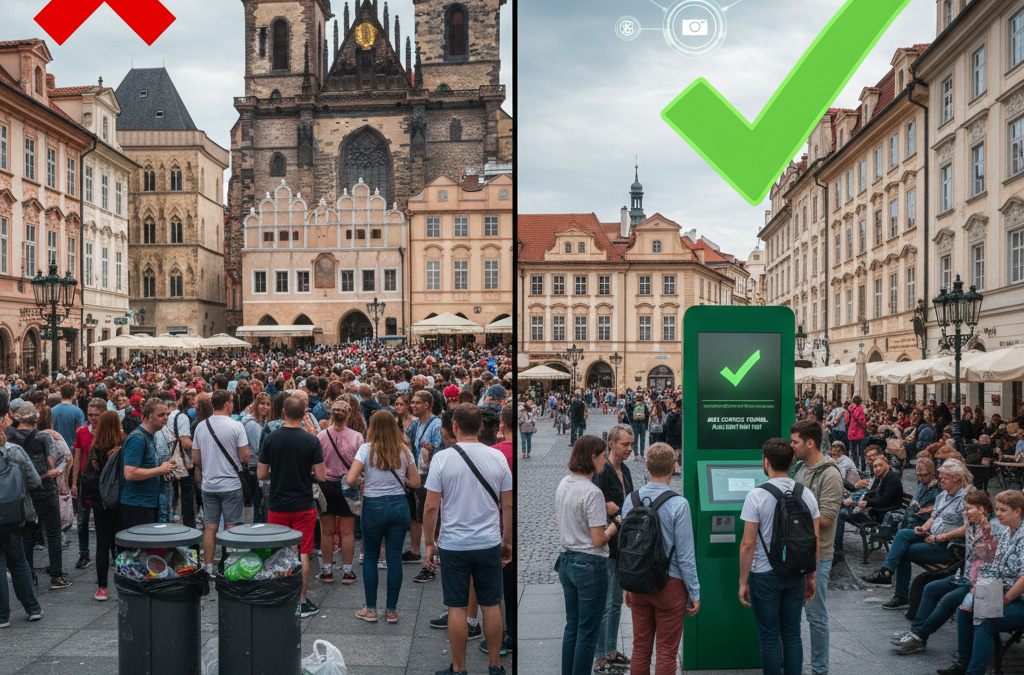
Thesis: Destinations aren’t trying to stop tourism anymore—they’re redesigning it to protect livability, infrastructure, and long-term revenue.
Overtourism used to be discussed like a crisis. Too many visitors. Too much pressure. Too much backlash. The implication was that something had gone wrong.
In reality, overtourism didn’t break destinations. It revealed which ones had outgrown their systems.
Today, the conversation has shifted. The question is no longer “How do we attract visitors?” but “How do we control flow without killing demand?” And that change has major consequences for how travel is sold, planned, and priced.
Overtourism didn’t break destinations—it exposed them
Overtourism isn’t evenly distributed. A handful of iconic places absorb a disproportionate share of visitors—often in narrow time windows and compact geographies.
Estimate: In some high-profile cities, over 70% of tourist foot traffic concentrates in less than 10% of the urban area.
The result isn’t just crowding. It’s strain on public transport, housing markets, local services, and political goodwill. Residents don’t oppose tourism—they oppose losing control over their own cities.
How destinations are managing overtourism today
Limiting access without banning visitors
Blanket bans don’t work. They create backlash and push demand elsewhere.
Instead, destinations are introducing controlled access:
-
Daily visitor caps
-
Reservation-only entry to popular sites
-
Timed admission windows
These systems don’t eliminate tourism—they smooth it.
Estimate: Attractions that move from open access to timed entry reduce peak congestion by 20–35%, without lowering annual visitor numbers.
Spreading demand across time and place
One of the most effective tools isn’t restriction—it’s redirection.
Destinations are:
-
Promoting shoulder and off-season travel
-
Highlighting secondary neighborhoods
-
Incentivizing weekday visits
The goal is simple: fewer people, in fewer places, at the same time.
Pricing as a crowd-control tool
Pricing is no longer just revenue—it’s regulation.
Cities and attractions are experimenting with:
-
Variable entrance fees
-
Higher peak-day pricing
-
Tourist taxes scaled by season
Estimate: Dynamic pricing models can shift 10–15% of demand away from peak periods without reducing total arrivals.
Importantly, this reframes overtourism as a behavioral issue, not a moral one.
Technology, data, and reservation systems
Data has become the backbone of visitor management.
Real-time monitoring now informs:
-
Capacity limits
-
Transport flow
-
Emergency response
Reservation platforms allow destinations to predict, not react.
This is where the travel industry intersects directly with destination policy. Bookings aren’t just commercial transactions—they’re data inputs.
Real-world examples from the front lines
Example 1: Historic city center
A European city introduced a reservation system for its most visited quarter.
-
Visitor volume remained flat
-
Peak congestion dropped by 28%
-
Resident satisfaction scores improved (estimate)
Example 2: Natural attraction
A national park implemented timed vehicle entry.
-
Daily visitor cap reduced by 15%
-
Revenue increased due to premium time slots
-
Environmental damage reports declined (estimate)
Example 3: Accommodation controls
A city tightened short-term rental regulations.
-
Tourist stays shifted toward hotels
-
Average length of stay increased
-
Nightly rates stabilized rather than spiked
This kind of regulation doesn’t reduce tourism—it reshapes it.
What this means for travel agencies
This is where agencies either add value—or get bypassed.
Actionable steps for agencies
-
Sell compliance as confidence
Travelers don’t want to accidentally break rules. Agencies can guarantee access. -
Master timing, not just destinations
When you travel matters as much as where. -
Package secondary experiences
Alternatives are no longer “lesser”—they’re preferred. -
Monitor post-booking price changes
Managed destinations often adjust pricing dynamically. Tools like Rebookify help agencies capture drops without reworking the trip. -
Educate clients early
Surprise restrictions cause dissatisfaction. Transparency builds trust.
Decision Table: Old Tourism vs Managed Tourism
| Factor | Old Model | Managed Model |
|---|---|---|
| Goal | Max volume | Sustainable flow |
| Pricing | Static | Dynamic |
| Access | Open | Regulated |
| Role of agencies | Optional | Strategic |
| Traveler experience | Unpredictable | Structured |
Common mistakes
-
Treating restrictions as negatives instead of signals
-
Ignoring timing when planning itineraries
-
Overpromising access to high-demand sites
-
Assuming popular equals available
-
Failing to monitor price changes after booking
Quick Takeaways
-
Overtourism management is about control, not suppression
-
Pricing and access now shape behavior
-
Data-driven destinations expect structured bookings
-
Agencies can add value through timing and compliance
-
Managed tourism rewards planning over spontaneity
Conclusion
How destinations are managing overtourism tells us something important: tourism has matured.
Growth without control isn’t success—it’s risk. The destinations that thrive long-term are the ones redesigning demand, not fighting it. For travel agencies, this shift creates friction—but also opportunity. Those who understand access, timing, and price dynamics won’t just sell trips. They’ll sell certainty in an increasingly regulated travel landscape.