January 23, 2026
How Hotel Prices Change In Seasonal Destinations And Why It Matters
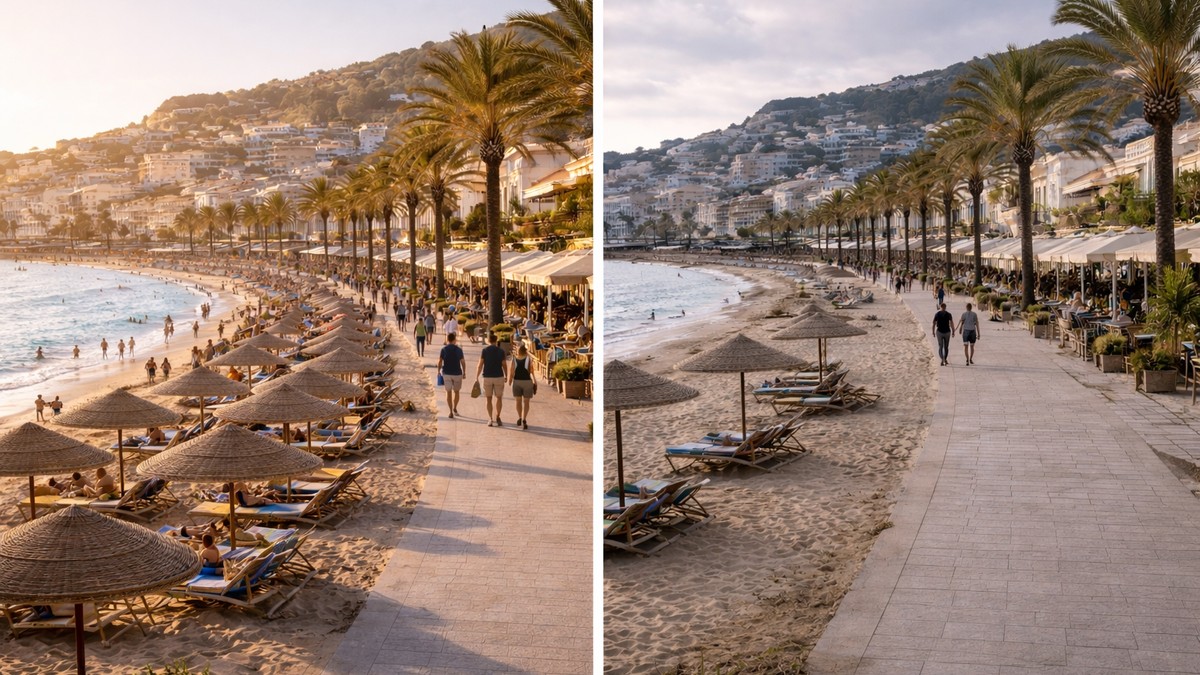
Thesis: Hotel pricing in seasonal destinations is driven less by logic and more by human behavior, which is why timing often matters more than hotel quality.
Anyone who has sold or booked travel to places like Santorini, Aspen, Bali, or the Amalfi Coast already knows the pattern. The same room, the same hotel, the same view can swing dramatically in price depending on the month, the week, or even the day.
Understanding how hotel prices change in seasonal destinations is not just useful knowledge. It is a commercial advantage for travel agencies and a trust builder for clients.
Why hotel pricing in seasonal destinations behaves differently
Demand is emotional not logical
Seasonal destinations are driven by emotional timing. People want beaches when it feels like summer. They want ski towns when it feels like winter. That emotional concentration compresses demand into specific windows and forces prices upward quickly.
Estimate: In high season periods, demand for top coastal and ski destinations can exceed available inventory by two to three times.
Inventory pressure amplifies price movement
Hotels in seasonal destinations have a fixed number of rooms and often operate near capacity during peak periods. When availability tightens, pricing systems respond aggressively.
This is why clients often see sudden jumps rather than gradual changes.
The three pricing phases every seasonal destination follows
Peak season
Peak season is defined by high demand and limited flexibility. Hotels expect strong occupancy and price confidently.
Common characteristics
• Highest nightly rates
• Strict cancellation policies
• Minimum stay requirements
• Limited room type availability
Estimate: Peak season prices in destinations such as Ibiza, Mykonos, and Aspen can be 60 to 120 percent higher than off season pricing.
Shoulder season
Shoulder season is where value begins to appear. Weather remains attractive but demand softens slightly.
Common characteristics
• More flexible cancellation policies
• Increased availability
• Noticeable pricing drops
• Strong balance of experience and cost
This is often the most commercially powerful window for agencies.
Low season
Low season carries the most volatility. Some hotels close. Others drop prices to protect occupancy.
Common characteristics
• Deep discounts at selected properties
• Higher likelihood of flash offers
• Variable service levels
• Weather dependent experiences
What actually drives price changes behind the scenes
Events and local calendars
Festivals, conferences, school holidays, and sporting events can override normal seasonality.
Example
A boutique hotel in Edinburgh raised rates by over 70 percent during August festival weeks compared to early July despite similar weather conditions.
Airline capacity shifts
When airlines increase seat capacity to a destination, hotels often respond by adjusting pricing strategies. More seats mean more potential guests.
Estimate: Destinations that receive new long haul routes frequently experience hotel price increases of 10 to 20 percent within the first high demand season.
Cancellation patterns
Hotels monitor booking pace and cancellation behavior daily. If cancellations rise, pricing often softens closer to arrival.
This is why flexible bookings create opportunity.
Real world examples of seasonal price movement
Mediterranean beach destination
A four star coastal hotel in southern Spain priced at 310 euros per night in mid July. The same room dropped to 185 euros in late September while weather and experience remained nearly identical.
Alpine ski town
A chalet style hotel in Austria priced rooms at 420 euros per night during February school holidays. By mid January, pricing for identical dates dropped to 310 euros following slower booking pickup.
Tropical island market
A beachfront resort in Southeast Asia listed rooms at 260 dollars per night during winter peak. During shoulder season, pricing averaged 170 dollars while occupancy remained healthy.
These examples highlight that pricing is rarely a reflection of quality alone. It reflects demand pressure.
Decision guide for travel advisors
| Booking window | Likely price behavior | Opportunity level | Strategy approach |
|---|---|---|---|
| Far in advance for peak travel | High initial pricing | Moderate | Book flexible rates and monitor |
| Three to six weeks before arrival | Increased volatility | High | Strong rebooking potential |
| Shoulder season travel | Soft pricing | Very high | Promote actively to clients |
| Low season with flexible clients | Discount heavy | Moderate to high | Focus on value positioning |
| Major event periods | Compressed inventory | Low | Lock early and manage expectations |
What this means for travel agencies
Understanding how hotel prices change in seasonal destinations allows agencies to move from reactive booking to strategic booking.
Actionable opportunities
• Educate clients on seasonality rather than only quoting rates
• Encourage flexible rates whenever possible
• Monitor bookings for price drops closer to arrival
• Protect margins by rebooking when prices fall
• Position shoulder season as premium value rather than compromise
Agencies that adopt automated monitoring tools such as Rebookify consistently report stronger margin protection because pricing changes are captured without manual effort.
Quick takeaways
• Seasonal hotel pricing follows behavioral patterns not logic
• Shoulder season consistently offers the strongest value
• Events and airline routes can override traditional seasonality
• Flexible bookings create opportunity when prices soften
• Price confidence matters more than chasing the lowest initial rate
Common mistakes
• Assuming early booking always guarantees best price
• Ignoring local events when quoting accommodation
• Selling peak season as default instead of offering shoulder season
• Booking only non refundable rates in volatile markets
• Failing to monitor bookings after confirmation
Conclusion
How hotel prices change in seasonal destinations is not random. It is patterned, predictable, and exploitable when understood properly.
For travelers, this knowledge builds confidence.
For agencies, this knowledge builds margin.
For both, the result is better outcomes with less friction.
The agencies that win in seasonal markets are not the ones who chase discounts. They are the ones who understand timing.