February 26, 2026
How to Choose Destinations Based on Exchange Rates
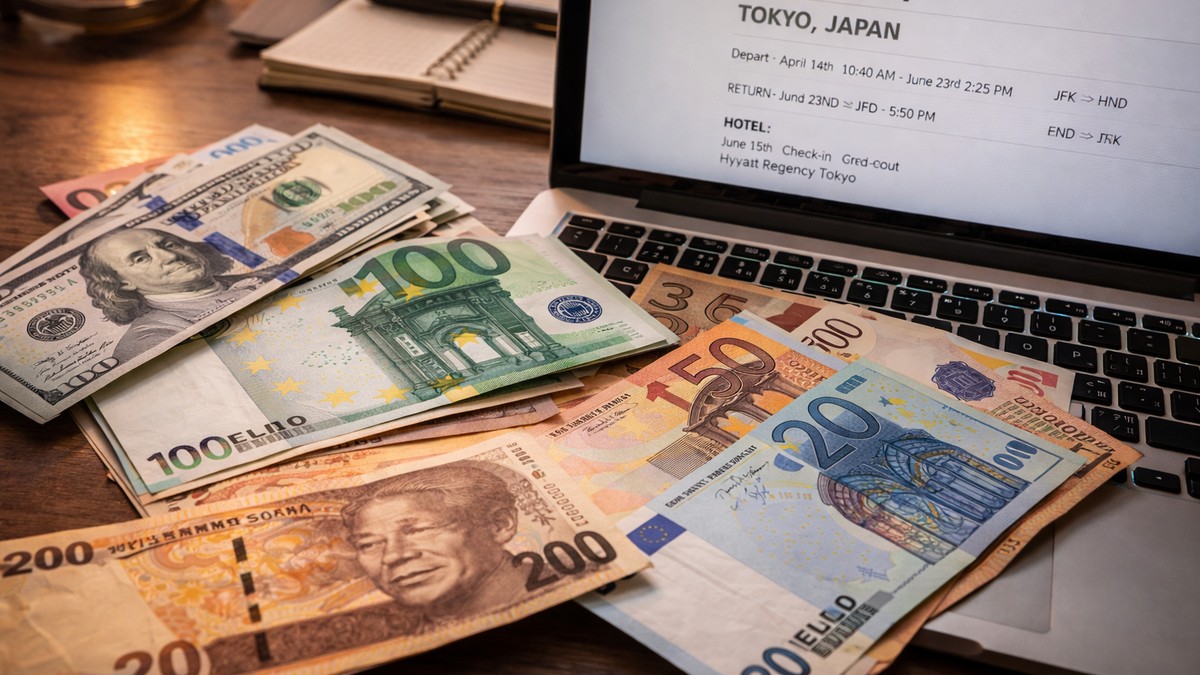
How to Choose Destinations Based on Exchange Rates is not about chasing the cheapest country on a currency chart. It is about identifying where purchasing power creates a luxury illusion without a luxury invoice.
Here is the thesis: exchange rates influence perceived trip value more through daily ground spend than airfare, and agencies that design around that reality can materially increase both client satisfaction and margin.
Currency is not background noise. It is a strategic tool.
Currency is a product lever
Why exchange rates matter more than airfare
Airfare is typically priced in a major currency such as USD or EUR. Exchange rate fluctuations often have less impact there than on hotels, dining, guides, and experiences that are priced locally.
For example, when the US dollar strengthens 10 percent against a local currency, daily spend on food, transport, and tours effectively becomes 10 percent cheaper for the traveler. Over a ten day itinerary, that compounds.
The World Bank and IMF publish regular currency data showing volatility in emerging markets that can exceed 15 to 20 percent annually estimate. That movement is not abstract. It directly affects on the ground cost.
Perception versus purchasing power
Clients do not track currency charts. They track how far their budget goes.
If a 300 dollar per night hotel in one destination feels premium while a 600 dollar per night hotel elsewhere feels comparable, the exchange rate is doing part of the storytelling.
Example one. A US based leisure agency compared a ten night Italy itinerary to a ten night South Africa program during a period when the dollar was strong against the rand.
Italy land cost per couple reached 9,800 dollars.
South Africa with five star Cape Town hotels and private safari lodges came in at 8,950 dollars.
The South Africa trip delivered a higher perceived luxury level at a lower total cost. Booking conversion was significantly higher once clients saw the breakdown.
How to Choose Destinations Based on Exchange Rates
Strong currency versus weak currency strategy
When a client currency is strong relative to a destination, focus on experiential depth. Private guides. Boutique hotels. Culinary tastings.
When a client currency is weak, pivot toward destinations where costs are naturally aligned with their home market or where suppliers price in stable global currencies.
Example two. A UK agency saw pound weakness against the US dollar impact New York bookings. Instead of discounting, they shifted marketing toward Portugal and Turkey, where the pound held stronger purchasing power. Average booking value remained stable while margin improved by roughly 3 percent across the portfolio.
Currency shapes positioning.
Local cost structure matters
Exchange rate alone is not enough. You must understand local pricing.
Japan is a strong example. After the yen weakened significantly against the US dollar in recent periods estimate, US travelers found hotels and dining comparatively affordable. Japan received over 25 million visitors in 2023 estimate, rebounding sharply.
A sushi omakase dinner that might cost 250 dollars in New York could cost 120 to 160 dollars equivalent in Tokyo during favorable currency conditions estimate. That differential changes itinerary design.
But contrast that with destinations where luxury hotels price in USD regardless of local currency. Exchange rate benefit may be limited.
Seasonality and FX timing
Exchange rates move independently of travel seasons. A destination may be in peak season while currency conditions are favorable. That creates rare value windows.
Example three. An Australian operator monitored the yen during a promotional Japan campaign. Over a three month period, the currency moved nearly 8 percent estimate. They locked in land contracts in yen at the lower rate, securing effective savings of approximately 420 dollars per couple on average ten night programs.
Timing matters. Not speculation. Strategy.
Where the math works today
Below is a simplified illustration based on current industry observations and estimates.
| Destination | Local currency trend | Perceived luxury level | Value potential for USD clients |
|---|---|---|---|
| South Africa | Weaker rand | High | Strong |
| Japan | Weaker yen | High | Strong |
| Mexico | Peso volatility | Mid to high | Moderate to strong |
| Eastern Europe | Mixed currencies | Mid to high | Often strong |
These are directional indicators, not investment advice. But they illustrate how FX can widen the experience gap.
South Africa
With favorable exchange rates for dollar and euro based travelers estimate, Cape Town five star hotels and private game reserves often price below comparable European luxury markets.
Japan
The weaker yen has increased US purchasing power for accommodation and dining estimate. High quality business hotels and ryokan stays feel competitively priced relative to other developed markets.
Mexico
Currency volatility creates tactical windows. Boutique hotels in Mexico City or Oaxaca can offer strong design value at mid range pricing.
Eastern Europe
Countries such as Poland and Hungary often provide architectural grandeur and culinary depth at lower price points than Western Europe estimate.
Turning FX into margin
Packaging smarter
When currency conditions are favorable, resist the urge to discount. Instead, add inclusions. Private transfers. Upgraded room categories. Culinary experiences.
Clients perceive added value. Agencies maintain or expand margin.
If a favorable exchange rate reduces local land cost by 7 percent, that margin can be split strategically between client value and bottom line performance.
Protecting value after booking
Currency may influence hotel pricing indirectly. But hotel rates themselves remain volatile.
Even in favorable FX markets, monitoring hotel prices after booking can unlock further savings. A boutique property in Tokyo that drops from 32,000 yen to 29,500 yen per night across five nights yields meaningful incremental savings.
Platforms like Rebookify allow agencies to track hotel rate fluctuations post booking and automatically rebook when advantageous, layering operational discipline on top of currency strategy.
Exchange rate advantage plus post booking optimization is powerful.
What this means for travel agencies
First, integrate FX tracking into destination strategy meetings. Quarterly reviews are sufficient. You do not need a trading desk.
Second, align marketing with currency opportunity. If purchasing power shifts 10 percent in a client’s favor, that is a campaign headline.
Third, educate clients without overwhelming them. Frame it as value optimization, not currency speculation.
Fourth, combine currency advantage with operational rigor. Monitor hotel rates after booking. Protect gains rather than assuming them.
Currency conditions change. Process should not.
Quick takeaways
• Exchange rates affect daily ground spend more than airfare
• Strong client currency creates perceived luxury expansion
• Local pricing structure determines real value impact
• FX timing can create temporary booking windows
• Post booking hotel monitoring strengthens currency gains
Common mistakes
• Choosing destinations solely on exchange rate headlines
• Ignoring suppliers that price in USD regardless of local currency
• Overpromising long term currency advantages
• Failing to lock in favorable local contracts
• Forgetting that hotel rates remain volatile even in strong FX markets
Conclusion
How to Choose Destinations Based on Exchange Rates is not about currency speculation. It is about recognizing when purchasing power creates room to design better itineraries.
Agencies that treat exchange rates as a planning lever rather than an afterthought can deliver higher perceived luxury without higher invoices. Combine that with disciplined hotel rate monitoring and you have a structural advantage.
Currency moves. Strategy should move with it.