March 25, 2026
How to Spend 3 Days in Barcelona Without Rushing
Most three day Barcelona itineraries fail for a simple reason. They treat the city as a checklist.
The smarter approach is this. Barcelona works best when planned by neighborhood, not by landmarks.
That shift changes everything. It reduces transit time, improves traveler satisfaction, and creates space for higher value experiences.
Barcelona welcomed over 12 million international visitors annually before the pandemic estimate, yet the majority concentrate in a few square kilometers. That density creates friction for poorly planned itineraries and opportunity for well structured ones.
Why Barcelona works as a neighborhood city
The problem with attraction based itineraries
Most travelers try to combine La Sagrada Familia, Park Güell, Gothic Quarter, and the beach in a single day. It looks efficient on paper. It rarely works in reality.
Average wait times at La Sagrada Familia can exceed 45 to 60 minutes without timed entry estimate. Add transit and crowds and you lose hours.
A better way to structure 3 days
Barcelona is compact but not small. Its districts function like micro cities.
Gothic Quarter and El Born are walkable together. Eixample and Gaudí sites cluster naturally. The coastline and Montjuïc form a third zone.
Designing around these clusters reduces friction and increases dwell time. That is where satisfaction happens.
Day 1: Gothic Quarter and El Born
Walking routes and pacing
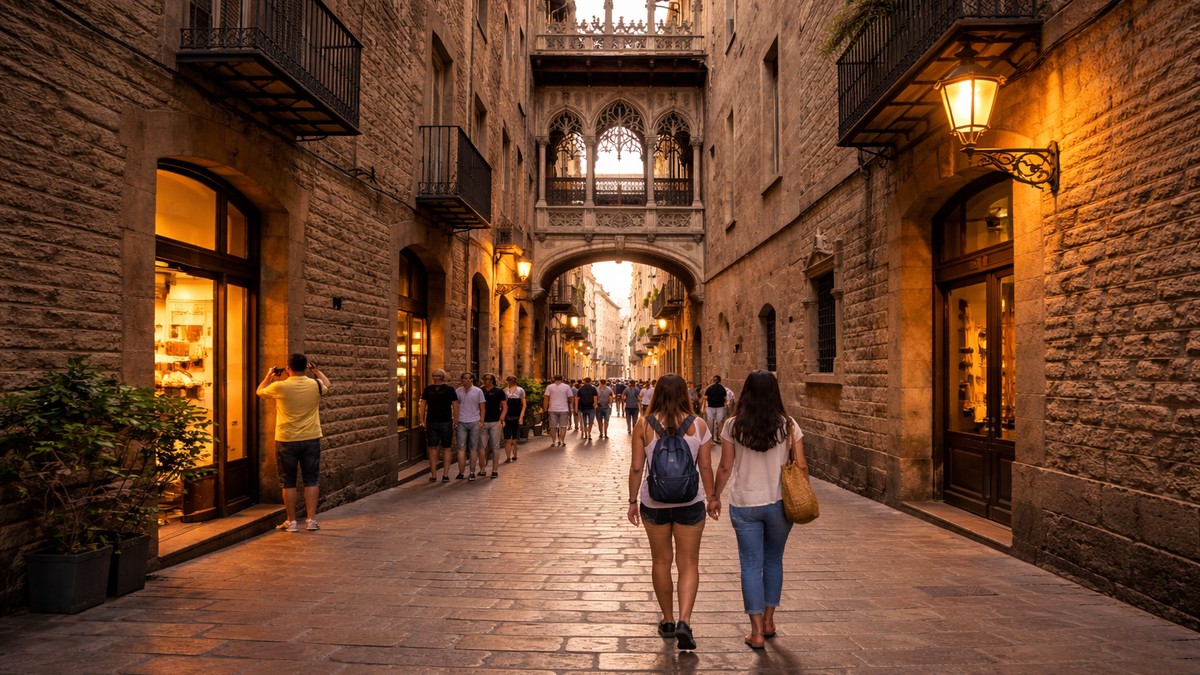
Start in the Gothic Quarter early. Narrow streets, medieval architecture, and minimal traffic make mornings ideal.
Walk through Plaça Reial, Barcelona Cathedral, and the old Roman walls. Everything is within a tight radius.
Move into El Born by midday. The transition is seamless. No transport required.
Food and cultural stops
El Born is where Barcelona’s food culture becomes accessible.
Mercat de Santa Caterina offers a lighter alternative to La Boqueria. Fewer crowds, similar quality.
Case example 1. A mid size agency shifted clients from La Boqueria to Santa Caterina and reduced average wait time by 25 minutes while maintaining satisfaction scores above 4.5 out of 5.
The Picasso Museum sits in this district. Timed entry tickets average 12 euros estimate. Booking ahead avoids queues.
Day 2: Eixample and Gaudí landmarks
Managing Gaudí visits efficiently
Eixample is where Gaudí’s work dominates.
La Sagrada Familia receives over 4.5 million visitors annually estimate. It is the most in demand site in the city.
Park Güell has capacity limits and timed entry. Casa Batlló and Casa Milà operate on similar systems.
The key is sequencing. Start with La Sagrada Familia early morning. Move to Casa Batlló mid afternoon when crowds soften slightly.
Timing and ticket strategy
Case example 2. A corporate travel planner booked staggered entry times for a group of 18.
Average time saved across the day was 2 hours compared to a previous unstructured visit.
Tickets for La Sagrada Familia range from 26 euros for basic entry to over 40 euros with guided access estimate. Upselling guided entry improves both experience and agency margin.
Eixample is also highly walkable. Wide boulevards reduce congestion compared to the old city.
Day 3: Coastline and Montjuïc
Balancing relaxation and views
Barcelona’s coastline stretches for several kilometers. Barceloneta is the most accessible beach but also the busiest.
Moving slightly north or south improves the experience.
Montjuïc offers elevation and perspective. Cable car rides cost around 13 euros round trip estimate and provide strong visual appeal.
Optional experiences
The National Art Museum of Catalonia sits on Montjuïc and offers panoramic views of the city.
Case example 3. A leisure agency added Montjuïc cable car and museum access to a standard itinerary.
Average upsell value increased by 85 euros per traveler. Satisfaction scores improved due to the mix of activity and relaxation.
A quick planning table
| Area | Focus | Time needed |
|---|---|---|
| Gothic and Born | History and food | 6 to 8 hours |
| Eixample | Architecture and Gaudí | 6 to 7 hours |
| Coast and Montjuïc | Relaxation and views | 5 to 6 hours |
What this means for travel agencies
Itinerary design
Stop building Barcelona itineraries around attraction lists.
Cluster experiences geographically. Reduce movement. Increase quality time per location.
Three well structured days outperform five poorly planned ones.
Margin opportunities
Neighborhood based planning opens space for curated experiences.
Food tours in El Born. Guided architecture walks in Eixample. Premium viewing experiences on Montjuïc.
These elements carry higher margins than generic entry tickets.
Hotel pricing strategy
Barcelona hotel prices fluctuate significantly, especially in peak months.
Average four star hotel rates can range from 180 to 320 euros per night depending on demand estimate.
Monitoring prices after booking creates margin protection.
Rebooking at lower rates when availability shifts can improve profitability without changing the client experience. This is where automated monitoring tools become practical rather than optional.
Quick takeaways
• Barcelona works better as a neighborhood based itinerary
• Three focused days outperform overloaded schedules
• Timed entry tickets are essential for Gaudí landmarks
• Walking clusters reduce transit friction significantly
• Smart planning improves both client satisfaction and margins
Common mistakes
• Trying to cover too many landmarks in one day
• Ignoring timed entry requirements
• Underestimating walking distances between districts
• Choosing overcrowded food markets without alternatives
• Booking hotels without monitoring price changes
Conclusion
How to Spend 3 Days in Barcelona is not about squeezing in more. It is about structuring the city correctly.
Neighborhood based planning creates better experiences, smoother logistics, and stronger commercial outcomes.
For agencies, this is not just a design choice. It is a competitive advantage.
If you are refining your Barcelona product, start with structure. Everything else improves from there.