February 18, 2026
Why Island Destinations Beyond the Usual Suspects Win
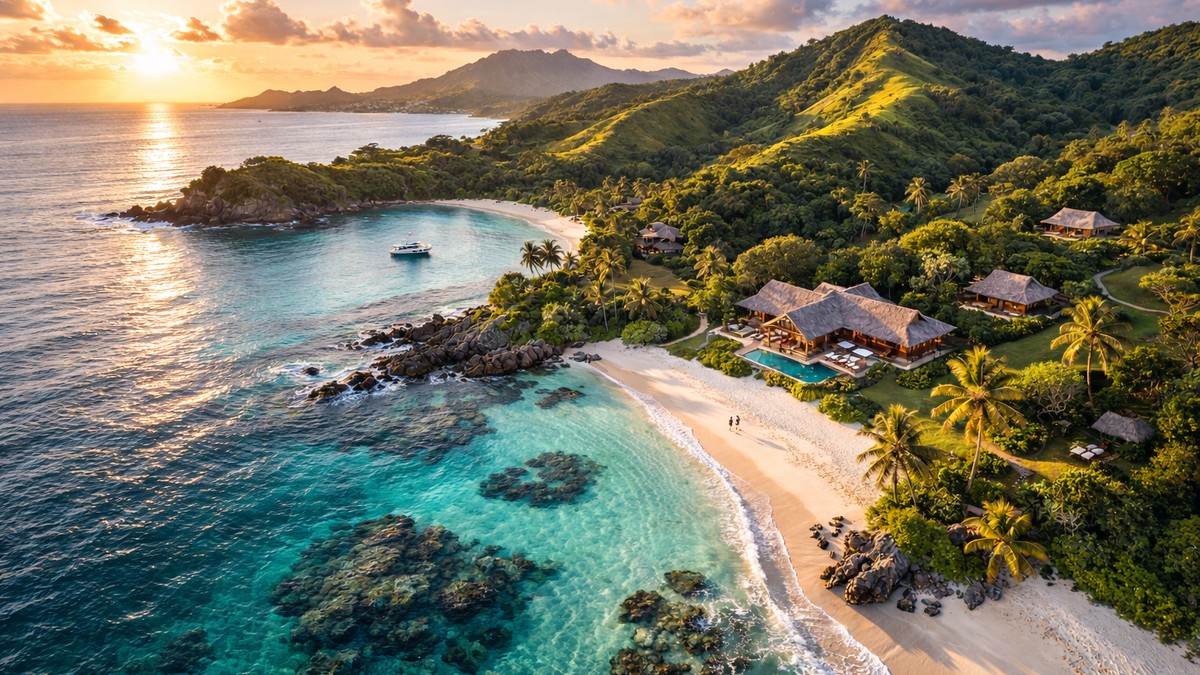
Island Destinations Beyond the Usual Suspects are not a trend play. They are a margin play. The agencies that quietly move clients away from overexposed island icons toward high quality, lower density alternatives will protect pricing power and differentiation over the next five years.
Here is the non obvious thesis: the future of profitable island sales is not in competing inside saturated markets, but in selling scarcity before it becomes mainstream.
Beauty is everywhere. Scarcity is not.
The real business case for alternative islands
Overtourism and margin compression
The Maldives recorded roughly 1.8 million visitors in 2023 according to the Maldives Ministry of Tourism. Bali surpassed 5 million international arrivals in 2023 according to Indonesian tourism data. These numbers are impressive. They are also commercially revealing.
When a destination dominates social media feeds and OTA listings, comparison shopping becomes ruthless. Advisors lose narrative leverage. Rate transparency increases. Margin tightens.
One mid sized UK agency shifted 28 percent of its honeymoon portfolio away from Maldives toward smaller Atlantic and African island destinations over two years. Result: average booking value rose 16 percent and commission yield improved by 4 percentage points because clients compared less aggressively.
Scarcity as a pricing advantage
Lord Howe Island caps visitors at 400 at any given time under Australian regulations. Capacity restriction equals natural pricing power.
Where supply is limited, discounting pressure is lower. Clients commit earlier. Advisors regain control of the conversation.
A Toronto based luxury advisor tested this theory. Five bookings moved from Bali villa resorts to Raja Ampat eco lodges. Average trip length increased from 6 to 9 nights and total package value rose 42 percent. Clients perceived rarity as value.
Story value over status value
According to a 2023 Expedia travel trends report, 63 percent of global travelers expressed interest in visiting less crowded destinations. Estimate based on published industry surveys.
The appeal is not only exclusivity. It is narrative capital. Saying you visited São Tomé carries more curiosity than repeating a well known Instagram island.
Five island destinations worth serious attention
São Tomé and Príncipe
A rainforest covered island nation off West Africa with visitor numbers under 50,000 annually estimate. Boutique eco lodges dominate inventory. Infrastructure is modest but intimacy is high.
Selling angle: raw nature, low density beaches, conservation focused stays.
The Azores
Nine volcanic islands in the Atlantic under Portuguese governance. The Azores region welcomed roughly 2 million visitors in 2023, but spread across islands and seasons density remains controlled.
Selling angle: crater lakes, whale watching, geothermal landscapes within short European flight range.
Raja Ampat
Located in eastern Indonesia, Raja Ampat is often cited by Conservation International as one of the most biodiverse marine regions on Earth, with over 1,500 fish species documented.
Access requires multiple flight segments. That complexity reinforces advisor value.
Selling angle: world class diving, eco exclusivity, limited lodge inventory.
Îles de la Madeleine
A small archipelago in Quebec with red sandstone cliffs and windswept beaches. Visitor numbers remain under 100,000 annually estimate.
Selling angle: cultural immersion, culinary focus, seasonal charm.
Lord Howe Island
Strict capacity controls. Protected ecosystem. Boutique accommodation only.
Selling angle: regulated exclusivity, pristine hiking, marine life encounters.
A structured comparison for agencies
Below is a clearer evaluation grid designed for operational decision making.
| Destination | Annual Visitor Volume | Access Complexity | Accommodation Inventory | Core Positioning | Commercial Advantage |
|---|---|---|---|---|---|
| São Tomé and Príncipe | Under 50,000 estimate | Moderate international routing | Limited boutique lodges | Untouched rainforest and beaches | High scarcity supports pricing |
| The Azores | Around 2 million region wide | Good European and North American access | Growing but controlled | Volcanic landscapes and marine life | Stable rates with seasonal peaks |
| Raja Ampat | Under 200,000 estimate | Complex domestic connections | Small eco lodges and liveaboards | Marine biodiversity | Premium niche pricing |
| Îles de la Madeleine | Under 100,000 estimate | Regional and seasonal access | Small inns and guesthouses | Coastal culture and scenery | Moderate with strong seasonal demand |
| Lord Howe Island | Visitor cap 400 at once | Limited flights only | Highly restricted inventory | Rare ecosystem exclusivity | Strong pricing due to hard capacity cap |
Interpretation is straightforward. Lower visitor volume combined with limited inventory increases narrative value and rate resilience.
Matching island personality to traveler profile
Adventure driven clients
Raja Ampat and the Azores attract active explorers. Diving, hiking, whale watching. These clients accept longer transfers in exchange for unique experiences.
An Australian agency bundled helicopter transfers and private marine guides on Lord Howe bookings. Base accommodation cost was AUD 9,000 for five nights. Final package exceeded AUD 15,000 after curated add ons.
Soft luxury seekers
São Tomé boutique eco properties and select Azorean hotels provide comfort without overt crowding.
A European advisor reported that two of three honeymoon clients extended their São Tomé stays by three nights after arrival. On site experience triggered organic upsell.
Slow travel advocates
Îles de la Madeleine suits clients seeking cultural immersion over resort scale amenities. Lower daily rates can be offset by longer stays.
What this means for travel agencies
First, audit your island mix. If more than 60 percent of proposals default to Maldives or Bali equivalents, you are exposed to comparison driven pricing pressure.
Second, cultivate supplier depth early. In smaller island markets, allocation disappears quickly once broader awareness grows.
Third, market through education. Webinars, content, and curated events centered on Island Destinations Beyond the Usual Suspects position you as forward thinking rather than reactive.
Fourth, protect margin post booking. Even niche island markets experience rate fluctuations. Tools such as Rebookify can monitor hotel pricing after booking and enable rebooking when policy allows. In low volume high value files, recovering even 3 to 5 percent can materially impact annual profitability.
Quick takeaways
-
Scarcity drives pricing power
-
Saturated islands compress margin
-
Narrative differentiation reduces comparison shopping
-
Complex logistics increase advisor relevance
-
Early positioning builds long term supplier leverage
Common mistakes
-
Treating all island destinations as interchangeable beach products
-
Ignoring air connectivity challenges during the sales phase
-
Underestimating seasonality in remote regions
-
Overpromising luxury where infrastructure is intentionally simple
-
Failing to secure flexible rate policies in emerging markets
Conclusion
Island Destinations Beyond the Usual Suspects are not about novelty for novelty’s sake. They are about reclaiming control in a market crowded by transparency and sameness.
The agencies that move early into distinctive, capacity controlled island markets will differentiate more clearly, defend margin more effectively, and tell better stories.
Paradise is abundant. Scarcity is strategic.
If you are reassessing your island portfolio this year, test two alternative destinations alongside your core sellers and measure margin, booking value, and client satisfaction. The data will likely validate the shift.