March 24, 2026
Japan vs South Korea: Which Trip Should You Plan
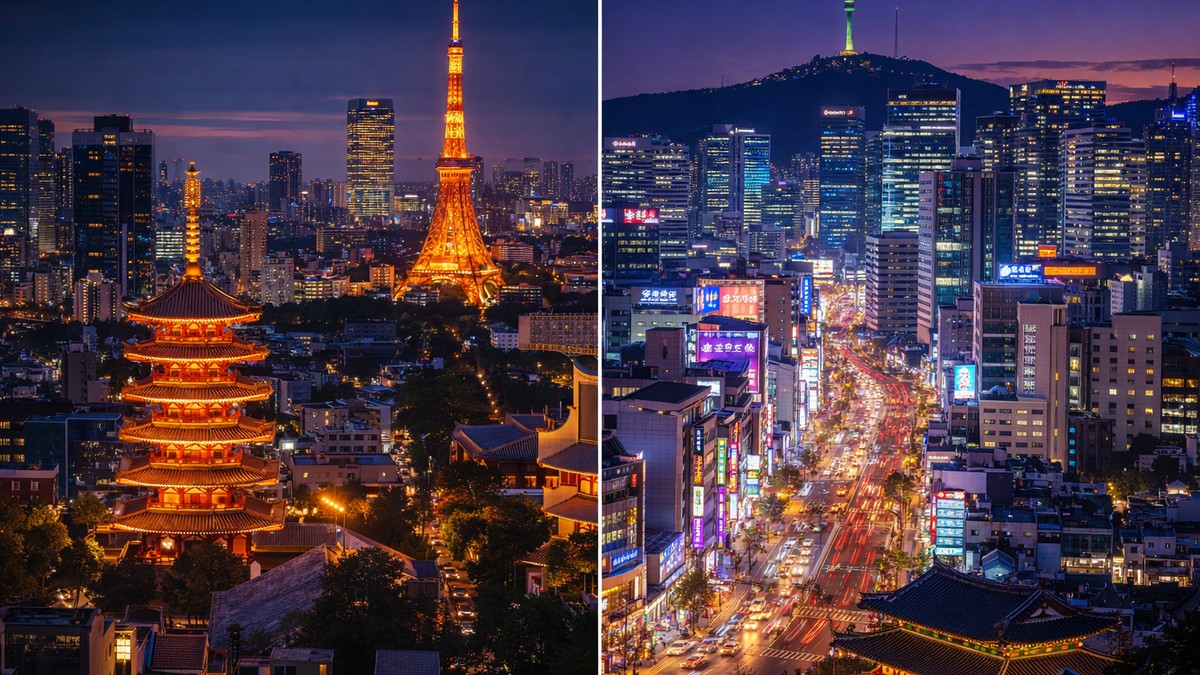
The real difference between Japan and South Korea is not culture, cost, or even food. It is how each destination structures the traveler’s experience.
That is the key insight behind Japan vs South Korea: Which Trip Should You Plan? Japan delivers depth through contrast across regions. South Korea delivers intensity through a highly concentrated urban experience. Both work. But they work differently. For travel agencies, understanding this distinction is what determines whether a trip feels seamless or fragmented.
The wrong match creates friction. The right match creates repeat clients.
The real difference is not what you think
Most comparisons focus on surface level factors.
They miss the structural difference.
Japan offers
- Multi region diversity
- Layered cultural experiences
- Strong regional identity
South Korea offers
- High density urban energy
- Modern culture and technology
- Efficient compact travel
Estimate
- Japan itineraries typically span multiple cities
- South Korea itineraries often focus on one or two core hubs
This difference shapes everything else.
Experience structure Japan versus South Korea
The two destinations require different planning approaches.
Cultural immersion versus urban energy
Japan leans toward immersion.
Experiences include
- Traditional districts
- Historic temples
- Regional variation
South Korea leans toward energy.
Experiences include
- Shopping districts
- Pop culture
- Nightlife
Example
An agency compared two trips
- Japan itinerary across three cities
- South Korea itinerary focused on Seoul
Results
- Japan scored higher on cultural depth
- South Korea scored higher on convenience and pace
Travel flow and logistics
Japan requires more movement.
Key factors
- Intercity travel
- Rail systems
- Structured routing
South Korea is simpler.
Advantages
- Fewer transfers
- Centralized experiences
- Short travel times
Estimate
- Japan trips involve more transit hours overall
- South Korea trips minimize transit
Variety within a short trip
Japan delivers more variety.
South Korea delivers more focus.
Example
A five day Japan itinerary
- Included two cities
- Offered clear contrast
A five day South Korea itinerary
- Focused on one primary city
- Delivered deeper exploration
Both approaches work depending on traveler goals.
Cost and value comparison
Cost is often misunderstood.
Accommodation and daily spend
Japan is generally higher cost.
South Korea is more flexible.
Estimate
- Average daily spend in Japan is 15 to 25 percent higher
- South Korea offers more mid range pricing options
However, value perception differs.
Japan feels premium due to experience quality.
Transport efficiency
Japan’s transport is iconic but adds cost.
South Korea’s system is simpler and cheaper.
Implications
- Japan requires planning around transport passes
- South Korea allows more spontaneous movement
Upsell potential
Japan offers stronger upsell opportunities.
Options include
- Rail upgrades
- Ryokan stays
- Private tours
Example
An agency added a traditional stay in Japan
- Increased package value by $220
- Maintained high conversion
South Korea upsells tend to focus on experiences rather than accommodation.
Where travelers actually spend time
Behavior patterns differ significantly.
Japan itineraries
Typical structure
- Tokyo
- Kyoto or Osaka
- Optional regional extension
Example
A six day Japan trip
- Covered two cities
- Balanced urban and cultural experiences
South Korea itineraries
Typical structure
- Seoul as primary base
- Optional day trips
Example
A five day South Korea trip
- Focused on Seoul
- Included one day trip
Trip duration differences
Japan benefits from longer stays.
South Korea performs well in shorter trips.
Estimate
- Ideal Japan trip length is five to seven days
- Ideal South Korea trip length is four to five days
The economics of selling each destination
Each destination supports different business strategies.
Pricing strategy
Japan supports premium pricing.
South Korea supports competitive pricing.
Approach
- Position Japan as a high value experience
- Position South Korea as efficient and accessible
Margin potential
Japan often delivers higher margins.
Reasons
- Higher base pricing
- More upsell opportunities
South Korea offers volume potential.
Example
An agency comparison
- Japan trip average margin 18 percent
- South Korea trip average margin 14 percent
Both are viable with different strategies.
Demand patterns
Japan has broader global demand.
South Korea is growing rapidly.
Estimate
- Interest in South Korea travel has increased significantly in recent years
This creates opportunity for diversification.
What this means for travel agencies
Understanding Japan vs South Korea: Which Trip Should You Plan? allows for better client matching.
Matching destination to traveler type
Japan works best for
- First time Asia travelers
- Culture focused clients
- Higher budget travelers
South Korea works best for
- Repeat travelers
- Younger demographics
- Short trip clients
Packaging strategy
Design around strengths.
Best practices
- Build multi city itineraries for Japan
- Focus on depth for South Korea
- Highlight key differentiators clearly
| Package type | Destination | Duration | Key feature | Margin potential |
|---|---|---|---|---|
| Cultural journey | Japan | 6 to 7 days | Multi city experience | High |
| Urban immersion | South Korea | 4 to 5 days | City focused exploration | Medium |
| Hybrid Asia | Both | 7 to 8 days | Combined highlights | Very high |
Margin optimization
Operational improvements apply to both.
Approach
- Monitor hotel pricing after booking
- Rebook when rates drop
- Use savings strategically
This ensures consistent profitability.
Quick takeaways
- Japan offers depth and regional contrast
- South Korea offers efficiency and urban energy
- Japan supports higher pricing and upsells
- South Korea performs well for short trips
- Matching traveler type is critical
Common mistakes
- Treating both destinations as interchangeable
- Overloading Japan itineraries
- Underestimating South Korea’s appeal
- Ignoring transport planning in Japan
- Missing upsell opportunities
- Not optimizing hotel pricing
Conclusion
The decision in Japan vs South Korea: Which Trip Should You Plan? is not about which destination is better.
It is about which structure fits the traveler.
Japan delivers layered experiences across regions.
South Korea delivers concentrated energy within a compact space.
For travel agencies the opportunity is clear
- Match the destination to the traveler profile
- Design itineraries that reflect each country’s strengths
- Optimize pricing continuously
Get that right, and both destinations become strong performers in your portfolio.