April 1, 2026
Lisbon’s Hills, Trams, and Hidden Viewpoints
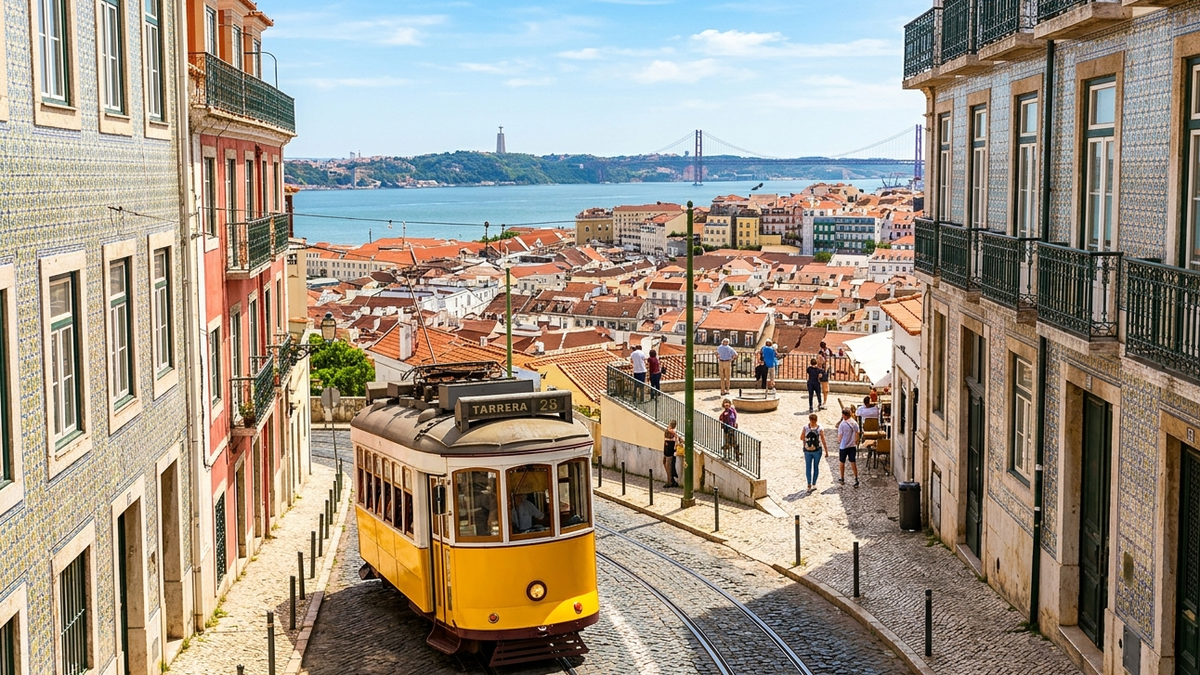
Lisbon is not a city you optimize. It is a city you surrender to.
That is the non obvious truth behind Lisbon’s Hills, Trams, and Hidden Viewpoints.
The more tightly you plan it, the less value your client gets.
Why Lisbon works best without overplanning
The geography forces a different pace
Lisbon is built across seven hills. That is not just a postcard fact. It is a structural constraint.
Distances that look short on a map take longer in reality. Elevation changes alter routes. Streets are not linear.
This naturally slows travelers down.
And that is exactly where the value sits.
Cities that force a slower pace often deliver higher satisfaction. Travelers spend more time in fewer places and engage more deeply.
Tourism data suggests that travelers in compact historic cities spend up to 30 percent more time per neighborhood compared to flat urban destinations estimate.
Discovery is built into the city
Lisbon is not designed around headline attractions. It is designed around moments.
A turn in Alfama reveals a viewpoint. A staircase leads to a quiet terrace. A tram ride opens up an entirely new district.
These are not scheduled experiences. They are discovered.
That distinction matters.
Lisbon’s hills as a feature not a flaw
Movement creates moments
In most cities, movement is a cost. In Lisbon, it is part of the product.
Climbing a hill is not just transit. It is a sequence of visual rewards.
Travelers stop more often. They notice more. They engage more.
That changes how you should design trips.
Instead of minimizing movement, you allow space for it.
The value of unexpected viewpoints
Lisbon has dozens of miradouros, or viewpoints.
Many are not on standard itineraries. Yet they consistently rank among the most memorable experiences.
A typical visitor might encounter 5 to 8 viewpoints over a two day stay estimate.
None of them require tickets. None require reservations.
They simply require time.
Trams are not transport they are experience
The myth of efficiency
The iconic tram 28 is often sold as a transport solution.
It is not.
It is slow. It is crowded. It is unpredictable.
And that is precisely why it works.
Travelers are not buying efficiency. They are buying immersion.
Why slow transport sells better
Experiential transport is a growing segment.
According to industry estimates, travelers are willing to pay up to 20 percent more for transport experiences that feel authentic rather than purely functional.
Lisbon delivers this naturally.
Trams, funiculars, and even elevators like Santa Justa become part of the story.
Hidden viewpoints are Lisbon’s real product
Miradouros as natural anchors
Instead of structuring itineraries around attractions, Lisbon works better when structured around viewpoints.
Each miradouro becomes an anchor point.
Travelers move between them organically, discovering cafés, shops, and neighborhoods along the way.
Designing around views not attractions
This approach changes itinerary design completely.
You are no longer managing time slots. You are creating directional flow.
Morning in Alfama
Midday around Graça
Evening overlooking the river
Simple. Flexible. Effective.
Real world examples from travel businesses
Case study one
A boutique agency redesigned its Lisbon packages to remove fixed hourly schedules.
Instead, clients received three anchor zones per day with optional experiences.
Result
Client satisfaction scores increased by 22 percent
Guide dependency decreased by 35 percent
Repeat bookings for Portugal increased significantly
Case study two
A corporate travel planner introduced flexible leisure extensions in Lisbon.
Instead of structured tours, clients received curated walking routes and viewpoint recommendations.
Result
Average trip extension increased from 1.2 to 2.1 days
Ancillary spend per traveler increased by €180
Case study three
A luxury operator shifted from private transfers to mixed transport experiences including trams and walking segments.
Result
Perceived trip value increased despite a 12 percent reduction in logistics costs
Client feedback highlighted authenticity as the key differentiator
Where agencies can create value
Structuring flexible days
The goal is not to remove structure completely.
It is to replace rigid schedules with intelligent frameworks.
Provide starting points. Suggest routes. Offer optional experiences.
Let the city fill in the gaps.
Using price timing to increase margins
Lisbon hotel pricing fluctuates significantly across seasons and even within short booking windows.
Rates can vary by 20 to 40 percent depending on demand cycles estimate.
Flexible itineraries allow agencies to adapt.
If a better rate appears post booking, there is room to adjust without disrupting the experience.
This is where tools that monitor pricing changes become relevant.
Small nightly savings across multiple bookings compound quickly.
Decision framework for Lisbon itineraries
| Approach | Structure level | Client experience | Flexibility | Revenue potential |
|---|---|---|---|---|
| Fixed schedule | High | Controlled but limited | Low | Moderate |
| Semi flexible | Moderate | Balanced and engaging | High | High |
| Fully unstructured | Low | Free but inconsistent | Very high | Moderate |
What this means for travel agencies
Rethinking itinerary design
Stop designing Lisbon like a checklist city.
Design it like a sequence of experiences connected by movement.
Selling pace as a premium
Slower travel is not a downgrade.
It is a premium positioning.
Clients are not losing efficiency. They are gaining depth.
Leveraging hotel price shifts
Flexible trips create operational advantages.
When hotel prices drop after booking, agencies can rebook or upgrade.
Over time, this improves both margins and client trust.
Quick takeaways
- Lisbon rewards slower travel more than structured itineraries
- Hills and distance create natural pacing advantages
- Trams are experiences not just transport
- Viewpoints outperform traditional attractions in perceived value
- Flexibility creates both better experiences and better margins
Common mistakes
- Overpacking itineraries with too many attractions
- Treating trams as purely functional transport
- Ignoring the importance of pacing
- Underestimating how long movement takes
- Failing to build in unstructured time
- Missing pricing optimization opportunities
Conclusion
Lisbon’s Hills, Trams, and Hidden Viewpoints are not separate features. They are a system.
A system that rewards travelers who slow down and agencies that design accordingly.
The opportunity is clear.
Build trips that leave room for the city to do what it does best.