March 31, 2026
Macau’s Cultural Blend Is More Strategic Than It Looks
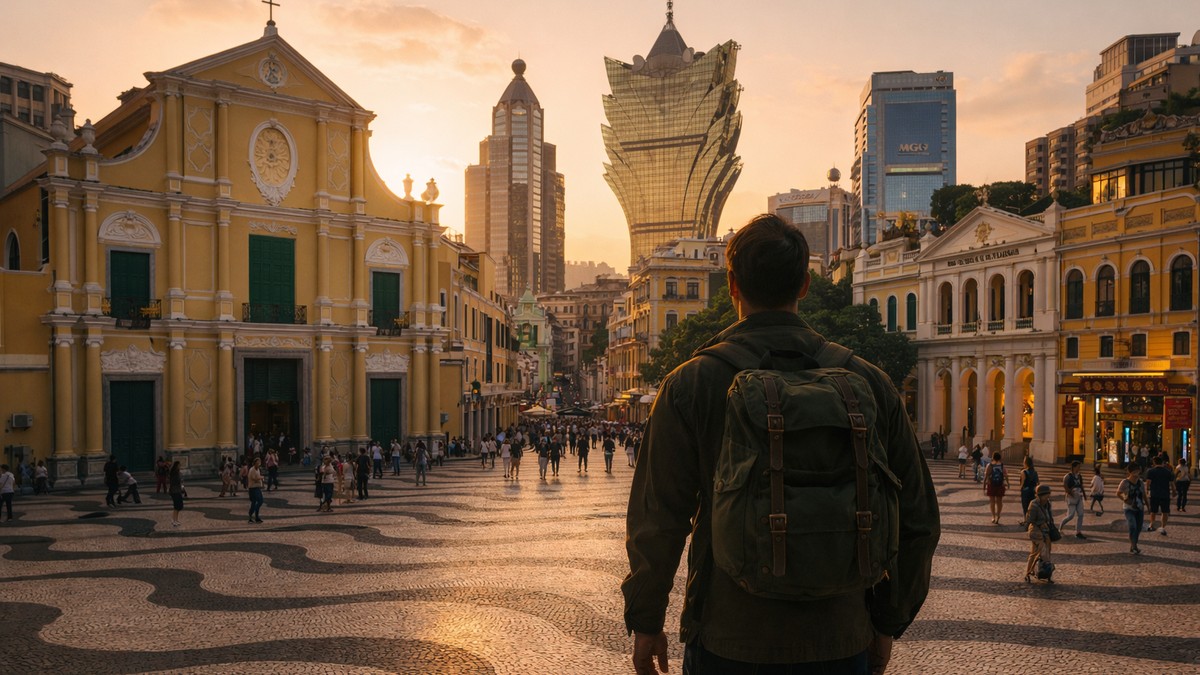
Most travelers think of Macau as a casino destination, but its real advantage lies in how tightly it packages two distinct cultural systems into a compact, high yield experience.
That is not just a storytelling angle. It is a commercial opportunity for travel agencies that understand how to position it.
Why Macau is often misunderstood
The casino first perception
Macau generates over 70 percent of its tourism revenue from gaming related activity according to industry estimates. That statistic dominates perception.
The result is predictable. Travelers either visit briefly as an add on from Hong Kong or skip it entirely if they are not interested in casinos.
Both decisions leave value on the table.
What most itineraries miss
Standard itineraries focus on one side of Macau. Either the Cotai Strip with its large scale resorts or the historic center with its UNESCO listed sites.
The problem is not what is included. It is the lack of integration.
Macau only works when both sides are experienced together. The contrast is the product.
The real story behind Macau’s cultural blend
Portuguese legacy in an Asian context
Macau was under Portuguese administration for over 400 years until 1999. That legacy is visible in architecture, cuisine, and urban layout.
The historic center of Macau is a UNESCO World Heritage Site with over 20 preserved locations. Cobblestone streets, pastel facades, and baroque churches sit alongside Chinese temples and local markets.
This is not a superficial blend. It is structural.
Where the fusion actually lives
The most compelling cultural experiences are not in major landmarks. They exist in transitions.
Walking from Senado Square to a traditional Chinese temple. Eating Macanese cuisine that combines European techniques with Asian ingredients.
These moments create narrative depth. They are what travelers remember.
How to structure a high value Macau itinerary
Compact geography as an advantage
Macau’s size is its strength.
The entire territory covers roughly 33 square kilometers. Most key experiences are within 15 to 20 minutes of each other.
This allows for dense itineraries without the fatigue associated with larger destinations.
A well planned two day itinerary can deliver more variety than a four day trip in a larger city.
Timing and sequencing experiences
Morning is best for historic exploration. Streets are quieter and temperatures are lower.
Afternoon works for cultural transitions. Museums, food experiences, and neighborhood walks.
Evening shifts to the Cotai Strip where lighting and energy create a completely different atmosphere.
Sequencing these correctly transforms the trip from fragmented to cohesive.
Real world examples from the field
Case study one
A Southeast Asia focused agency repositioned Macau as a two night cultural extension instead of a day trip.
Result
Average booking value increased by 22 percent
Client satisfaction scores improved from 7.8 to 9.1
Ancillary spend on dining and guided experiences increased by 30 percent
Case study two
A corporate travel planner added a structured Macau stopover for business travelers visiting Hong Kong.
Instead of a generic overnight stay, the itinerary included a guided heritage walk and curated dining experience.
Result
Average spend per traveler increased by $160
Feedback highlighted cultural contrast as the key value driver
Case study three
A luxury agency combined boutique heritage hotels in the historic center with one night in a premium Cotai property.
Result
Package margins increased by 18 percent
Client perception shifted from “transit stop” to “destination”
Repeat bookings for similar itineraries increased by 25 percent
Where the commercial opportunity sits
Short stay high yield itineraries
Macau excels in short durations.
Two to three night stays generate high experience density. That makes it ideal for add on packages or stopovers.
Shorter trips also reduce price sensitivity. Travelers are more willing to spend on premium experiences when the overall duration is limited.
Pricing dynamics and optimization
Hotel pricing in Macau fluctuates significantly based on events, weekends, and demand cycles.
Rates can vary by 20 to 35 percent within short timeframes according to market estimates.
For example, a five star Cotai property might drop from $220 to $170 per night midweek. Over two nights, that is a meaningful saving.
Monitoring these changes allows agencies to improve margins or deliver added value without changing the product.
Decision framework for positioning Macau
| Approach | Trip length | Experience depth | Client perception | Revenue potential |
|---|---|---|---|---|
| Day trip | 1 day | Low | Surface level | Low |
| Basic overnight | 1 to 2 nights | Moderate | Functional | Moderate |
| Integrated cultural stay | 2 to 3 nights | High | Premium | High |
What this means for travel agencies
Reframing Macau for clients
Position Macau as a cultural contrast destination, not a casino hub.
Highlight the dual identity. European heritage within an Asian context. This narrative differentiates it from other regional options.
Designing profitable short trips
Focus on integration. Combine historic exploration with modern experiences.
Limit unnecessary movement. Use Macau’s compact geography to deliver more within less time.
Leveraging price monitoring
Short stays amplify the impact of price changes.
Tracking hotel rates after booking can unlock savings that improve margins or enhance client value.
Even small adjustments per night become significant across multiple bookings.
Quick takeaways
- Macau’s value lies in cultural contrast, not casinos
- Compact geography enables high experience density
- Two to three night stays outperform day trips
- Cultural experiences drive higher ancillary revenue
- Price fluctuations create optimization opportunities
Common mistakes
- Treating Macau as a quick add on instead of a destination
- Focusing only on casinos or only on heritage
- Overlooking the importance of sequencing experiences
- Ignoring midweek pricing opportunities
- Missing upsell potential in cultural experiences
- Failing to monitor hotel price changes after booking
Conclusion
Macau’s Blend of Portuguese and Chinese Heritage works because it compresses complexity into a small, manageable space.
For travel agencies, that is a rare advantage. It allows for high value itineraries that are easy to sell, easy to deliver, and highly memorable for clients.
Handled correctly, Macau stops being a stopover and starts becoming a strategic addition to any Asia itinerary.