March 12, 2026
How to Experience the Must See Places in Vienna
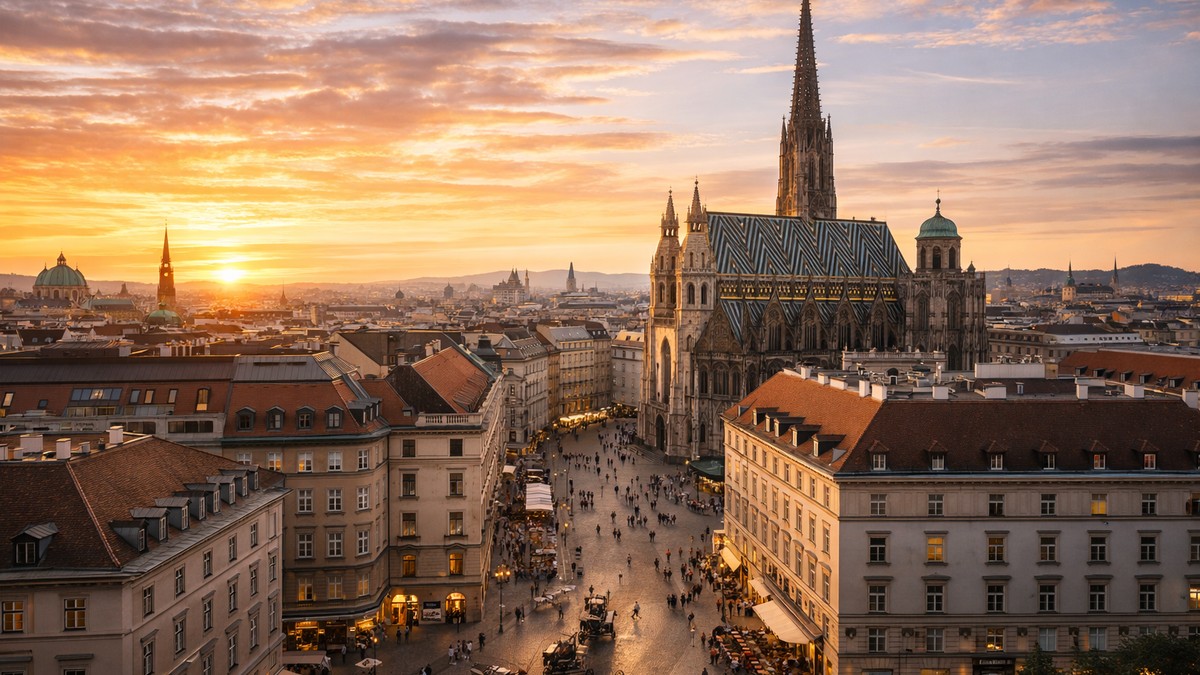
Most visitors approach Vienna like a checklist of palaces and museums. That is a mistake.
The real value of the Must See Places in Vienna comes when those landmarks are experienced as part of daily Viennese life. Palaces connect to imperial history, cafés reveal cultural traditions, and museums show how the city shaped European art and music.
The key thesis is simple. Vienna is not impressive because of a single attraction. It is impressive because extraordinary landmarks sit within a living cultural rhythm that travelers can easily step into.
For travel advisors and planners, this makes Vienna one of the easiest European capitals to design into a memorable itinerary.
Why the Must See Places in Vienna Work Best as Experiences
Vienna’s culture is built around rituals
Vienna is a city where cultural rituals are part of everyday life.
Coffeehouses, opera houses, and historic squares operate less like attractions and more like extensions of the city’s identity.
UNESCO recognized Viennese coffeehouse culture as intangible cultural heritage in 2011.
Visitors who combine landmarks with these rituals understand the city far more deeply than those simply visiting monuments.
Landmarks make more sense in context
Vienna was the center of the Habsburg Empire for centuries.
Many of its most famous attractions were built as symbols of imperial power and artistic prestige. When travelers understand this context, the city’s landmarks become part of a larger story rather than isolated sightseeing stops.
Historic Landmarks That Define Vienna
Schönbrunn Palace
Schönbrunn Palace is Vienna’s most visited attraction with around 4 million visitors annually according to Austria Tourism.
The palace served as the Habsburg summer residence and includes more than 1,400 rooms.
The gardens are equally important. Many travelers underestimate how much time the grounds require.
Real world example
A small tour group booked a half day visit but extended it to a full afternoon after discovering the gardens, Gloriette viewpoint, and historic maze. The change added roughly three hours to their itinerary but became the highlight of their trip.
St Stephen’s Cathedral
Located in the center of Vienna, St Stephen’s Cathedral dates back to the 12th century.
Its colorful tiled roof has become one of the city’s defining images.
Visitors can climb the south tower for a panoramic view of Vienna’s historic center.
Annual visitor numbers are estimated at more than 3 million according to local tourism authorities.
Hofburg Palace
The Hofburg complex served as the winter residence of the Habsburg dynasty.
Today it contains:
• The Imperial Apartments
• The Sisi Museum
• The Spanish Riding School
• The Austrian National Library
Because the complex spans multiple museums and courtyards, visitors often underestimate the time required to explore it.
Museums That Shape Vienna’s Cultural Identity
Kunsthistorisches Museum
This museum houses one of Europe’s finest art collections.
Highlights include works by:
• Caravaggio
• Raphael
• Vermeer
• Bruegel
According to museum statistics, the Kunsthistorisches Museum attracts roughly 1 million visitors annually.
Travel planners often pair the museum visit with nearby Ringstrasse landmarks.
Belvedere Palace and Klimt’s masterpiece
Belvedere Palace contains Gustav Klimt’s iconic painting The Kiss.
The artwork is one of Austria’s most famous cultural symbols.
The museum complex recorded around 1.6 million visitors in recent years according to museum reports.
Real world example
A couple visiting Vienna planned a quick museum stop but spent four hours exploring both Upper and Lower Belvedere after realizing the scale of the collection.
MuseumsQuartier
MuseumsQuartier is one of the largest cultural complexes in the world covering around 90,000 square meters.
It blends contemporary art, architecture, cafés, and outdoor spaces.
Younger travelers often gravitate here for a more modern Vienna experience.
Vienna’s Everyday Experiences Visitors Should Not Miss
Coffeehouse culture
Vienna’s cafés are central to the city’s identity.
Classic locations like Café Central or Café Sperl combine elegant interiors with slow paced social rituals.
The expectation is simple. Order coffee, read the newspaper, and stay as long as you like.
Naschmarkt food scene
Naschmarkt is Vienna’s most famous market.
It stretches for roughly 1.5 kilometers and features:
• Local produce
• International street food
• Viennese specialties
Real world example
A group of business travelers spent €35 per person sampling multiple food stalls rather than booking a formal restaurant dinner. The experience became a cultural highlight of their trip.
Classical music traditions
Vienna has been home to composers such as:
• Mozart
• Beethoven
• Strauss
The Vienna State Opera stages about 300 performances each year.
Even budget travelers can buy standing room tickets for about €10 to €15.
Planning a Smart Vienna Itinerary
The biggest planning mistake is trying to cover too much ground in one day.
Vienna becomes far easier when attractions are grouped by location.
| Area | Key Attractions | Ideal Time Needed |
|---|---|---|
| Historic Center | St Stephen’s Cathedral Hofburg | Half day |
| Schönbrunn District | Palace Gardens Zoo | Half day |
| Belvedere Area | Belvedere Palace | Two to three hours |
| MuseumsQuartier | Modern museums cafés | Two hours |
Vienna’s public transportation system also helps travelers move efficiently.
The metro network carries roughly 1 billion passengers annually according to Wiener Linien statistics.
Quick takeaways
• Vienna’s landmarks work best when paired with cultural rituals like cafés and music
• Schönbrunn Palace requires more time than most travelers expect
• The historic center can be explored comfortably on foot
• MuseumsQuartier offers a modern counterpoint to imperial Vienna
• A well structured itinerary dramatically improves the experience
What this means for travel agencies
Vienna is a particularly strong destination for structured itineraries.
Travel agencies can increase client satisfaction by focusing on experience design rather than just landmark visits.
Actionable strategies include:
• Pairing palace visits with nearby café experiences
• Scheduling opera or concert evenings as cultural anchors
• Designing neighborhood based walking itineraries
• Encouraging longer museum visits rather than rushed stops
There is also a financial opportunity in hotel pricing.
Hotel rates in Vienna fluctuate frequently during peak cultural seasons.
Platforms such as Rebookify allow agencies to monitor hotel rates after booking and automatically rebook when prices drop. In several cases agencies have reported 10 to 18 percent savings on premium city hotels.
Common mistakes
• Trying to visit too many museums in one day
• Underestimating travel time across palace complexes
• Skipping coffeehouse culture entirely
• Visiting Schönbrunn without exploring the gardens
• Booking opera tickets too late during peak travel seasons
Conclusion
The Must See Places in Vienna are impressive on their own. Palaces, museums, and cathedrals rank among the finest in Europe.
But the real magic happens when those landmarks are experienced alongside Vienna’s everyday cultural traditions.
A morning in a museum, an afternoon in palace gardens, and an evening at a café or concert create the rhythm that makes Vienna unforgettable.
For travel professionals, that rhythm is exactly what turns a standard city visit into a standout European itinerary.