March 23, 2026
Norway’s Fjords That Redefine Scenic Travel
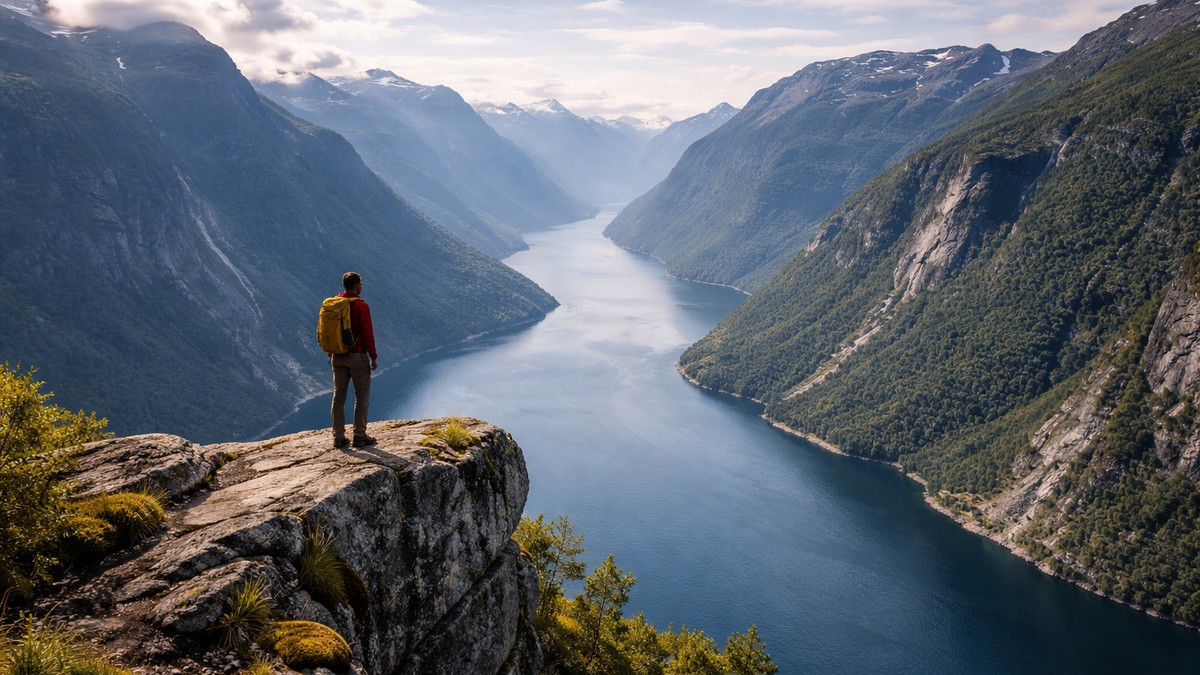
The most valuable travel experiences today are not defined by what you do, but by what you see while doing it.
That is the real insight behind Norway’s Fjords That Redefine Scenic Travel. Scenic travel has shifted from being a passive backdrop to becoming the primary product. In Norway, the journey itself is the experience. Every ferry ride, train route, and winding road delivers continuous visual impact. For travelers, this creates a sense of immersion. For agencies, it creates a product that is easier to justify at a premium price point.
This is not sightseeing. It is sustained visual engagement.
Scenic travel is now a premium category
Scenic travel used to be considered secondary.
Now it is driving demand.
Key shifts
- Travelers prioritize immersive landscapes over packed itineraries
- Slower travel is gaining appeal
- Visual experiences are highly shareable
Estimate
- Scenic and nature based travel demand has grown by over 30 percent in recent years
- Travelers are willing to pay more for visually distinctive destinations
Norway sits at the center of this trend.
What makes Norway’s fjords unique
Not all scenic destinations are equal.
Norway’s fjords deliver a specific type of experience.
Scale and visual impact
The fjords are defined by dramatic scale.
Features include
- Steep cliffs rising directly from the water
- Deep narrow inlets
- Waterfalls visible from multiple vantage points
Fact
- Some Norwegian fjords extend over 200 kilometers inland
The scale creates constant visual engagement.
Accessibility and infrastructure
Despite their remote appearance, the fjords are accessible.
Advantages
- Well developed transport networks
- Reliable ferry systems
- Integrated rail and road routes
Travelers can access remote landscapes without complex logistics.
Experience layering
The fjords allow multiple experiences within one journey.
Examples
- Boat cruises through narrow inlets
- Scenic rail journeys
- Short hikes to viewpoints
This layering increases perceived value without adding complexity.
Where travelers spend time
Understanding how travelers move through the fjords is key.
Fjord cruising
Cruising is a core experience.
Benefits
- Continuous scenery
- Minimal effort
- High comfort level
Example
An agency offered a two day fjord cruise
- Average price $420
- Satisfaction scores exceeded 90 percent
The experience delivers strong value relative to cost.
Rail and road journeys
Scenic transport is central to the product.
Highlights
- Mountain rail routes
- Coastal drives
- Ferry crossings
Example
A combined rail and road itinerary
- Increased package price by $300
- Maintained booking conversion
The journey itself justified the price increase.
Short immersive stops
Travelers do not need long stays in each location.
Approach
- Short stops at high impact viewpoints
- Limited but meaningful activities
- Focus on quality over quantity
This keeps itineraries efficient.
The economics of scenic travel in Norway
Norway is a premium destination, but the value equation works.
High perceived value
Travelers associate the fjords with uniqueness.
Impact
- Higher willingness to pay
- Strong emotional response
- Memorable experiences
Estimate
- Travelers are willing to pay 20 to 35 percent more for iconic scenic destinations
Controlled capacity
The fjords have natural capacity limits.
Implications
- Less overcrowding compared to urban destinations
- Stable demand
- Predictable pricing
This supports premium positioning.
Pricing dynamics
Costs in Norway are high but manageable.
Opportunities
- Package pricing reduces perceived cost
- Bundled experiences improve value perception
- Price fluctuations create savings potential
Estimate
- Hotel and transport prices can vary by 5 to 12 percent within booking windows
Monitoring these changes allows agencies to optimize margins.
What this means for travel agencies
Understanding Norway’s Fjords That Redefine Scenic Travel requires a different approach to product design.
Designing scenic first itineraries
Focus on the journey.
Action steps
- Prioritize routes over destinations
- Build itineraries around scenic segments
- Limit unnecessary stops
Positioning tip
- Sell the continuous experience not individual highlights
Pricing for experience not duration
Value is not tied to length of stay.
Best practices
- Emphasize quality of experience per day
- Bundle transport and activities
- Avoid itemized pricing that reduces perceived value
| Package type | Duration | Key feature | Ideal client | Margin potential |
|---|---|---|---|---|
| Scenic sampler | 3 to 4 nights | Key fjord highlights | First time visitors | Medium |
| Fjord journey | 5 to 6 nights | Multi route experience | Couples | High |
| Premium immersion | 6 to 7 nights | Private and luxury options | High value clients | Very high |
Optimizing cost after booking
Even premium destinations offer pricing flexibility.
Approach
- Monitor hotel and transport rates
- Rebook when prices drop
- Use savings strategically
This allows agencies to maintain profitability without raising client prices.
Quick takeaways
- Scenic travel is now a primary product category
- Norway’s fjords deliver continuous visual value
- Accessibility makes remote landscapes easy to sell
- Bundled experiences justify premium pricing
- Post booking optimization improves margins
Common mistakes
- Treating scenic travel as secondary to activities
- Overloading itineraries with unnecessary stops
- Underpricing premium experiences
- Ignoring transport as a core product
- Failing to monitor price changes
- Not emphasizing the journey
Conclusion
The appeal of Norway’s Fjords That Redefine Scenic Travel lies in their ability to turn movement into experience.
For travel agencies, this creates a clear advantage
- Design journeys where the scenery is the product
- Price based on experience not duration
- Optimize costs continuously
Norway is not just a destination. It is a format for how modern travel is evolving.
Those who understand this will not just sell trips. They will sell experiences that are harder to replicate and easier to value.