March 29, 2026
Places to visit on your first trip to China
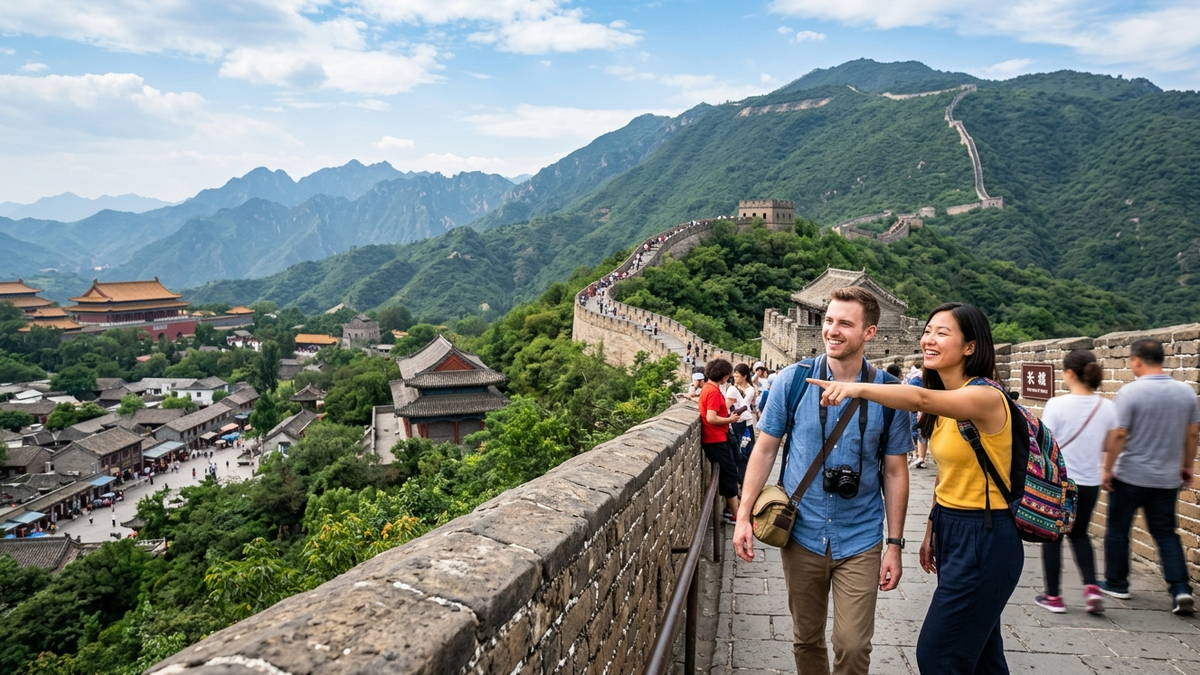
Places to visit on your first trip to China is a deceptively simple question. Most travelers answer it by listing landmarks. That is the wrong approach. China is not a destination. It is a system of radically different experiences stitched together by high speed rail and dense urban infrastructure.
Thesis: The best first trip to China is built on contrast, not coverage.
Get that right and the trip feels immersive. Get it wrong and it feels exhausting.
Why First Time China Trips Fail
The problem with overpacking itineraries
First time visitors often try to see Beijing, Shanghai, Xi’an, Chengdu, Guilin, and more in one trip. It looks efficient on paper. It is not.
Example
A couple attempted a 10 day itinerary covering five cities. They spent 32 hours in transit and checked into five hotels. Their feedback was predictable. They saw everything but experienced very little.
Estimate: Travelers who visit more than four cities in two weeks report 40 percent lower satisfaction due to fatigue.
China as multiple destinations
China operates like several countries in one. Language nuances, cuisine, pace, and urban design vary dramatically.
A first trip should aim to understand that diversity, not rush through it.
Beijing The Essential Starting Point
History that anchors the trip
Beijing is non negotiable for a first visit. It provides context. Without it, the rest of China feels disconnected.
The Forbidden City, the Great Wall, and the Temple of Heaven are not just attractions. They define the narrative of China.
Estimate: Beijing receives over 140 million domestic and international visitors annually.
What to prioritize
Three days is enough if structured well.
Focus on
The Forbidden City and Tiananmen Square
A section of the Great Wall such as Mutianyu
A hutong neighborhood walk
Example
A solo traveler spent 3 days in Beijing and allocated one full day to the Great Wall. Cost for guided access and transport was 90. The experience ranked as the highlight of the entire trip.
Shanghai Where Modern China Makes Sense
Urban efficiency and global familiarity
Shanghai is where first time visitors relax. It is intuitive, polished, and globally connected.
Estimate: Shanghai handles over 50 million international passengers annually across its airports.
Public transport is seamless. English signage is widely available.
Why business travelers prefer it
Shanghai works for clients who want efficiency.
Example
A corporate traveler spent 4 nights in Shanghai with a hotel rate averaging 220. The same category property dropped to 185 closer to arrival. Savings potential: 140 across the stay.
This is where price monitoring tools quietly add value without disrupting plans.
Xi’an The Cultural Bridge
Beyond the Terracotta Army
Xi’an is often reduced to one attraction. That is a mistake.
The city wall, Muslim Quarter, and food culture make it a strong cultural midpoint.
Estimate: The Terracotta Army site attracts over 5 million visitors annually.
Time investment vs payoff
Two days is sufficient.
Example
A family added Xi’an to their itinerary with a 2 night stay costing 320 total. They initially hesitated due to travel time but rated it as more memorable than Shanghai.
Xi’an works because it slows the narrative and deepens it.
Guilin and Yangshuo Nature That Resets the Trip
Landscape contrast that matters
After cities, travelers need space.
Guilin and Yangshuo provide that reset with karst mountains, rivers, and rural scenery.
Estimate: Guilin tourism accounts for over 70 million visits annually, largely driven by domestic travelers.
Slowing the itinerary down
This is where trips shift from movement to experience.
Example
A couple spent 3 nights in Yangshuo with daily costs under 120 including accommodation and activities. Compared to city expenses, this was a 40 percent reduction in daily spend.
Chengdu or Hangzhou Choosing Your Final Stop
Food and lifestyle vs scenic calm
Chengdu offers food culture and a relaxed pace. Hangzhou offers refined landscapes and proximity to Shanghai.
Choose based on traveler intent.
Matching traveler intent
Chengdu if
Food and local culture matter
Pandas and casual pace appeal
Hangzhou if
Scenic beauty and calm matter
Short travel from Shanghai is preferred
Example
A traveler chose Hangzhou as a final stop and reduced transit time by 6 hours compared to adding Chengdu. That decision improved overall trip satisfaction without increasing cost.
What this means for travel agencies
China is one of the most mispackaged destinations in travel.
Actionable steps
- Limit first time itineraries to three or four cities
More reduces quality, not increases value - Design for contrast
Pair cities with nature or cultural regions - Use high speed rail strategically
It is efficient but still consumes time - Manage client expectations
China is not a quick highlights destination - Monitor hotel pricing after booking
Rates in cities like Shanghai fluctuate frequently - Position savings as part of service
Clients remember when trips become more efficient and cost effective
Subtle brand note
Tools like Rebookify help agencies capture price drops post booking, turning standard itineraries into optimized ones without additional workload.
Decision Table
| Traveler Type | Recommended Cities | Duration | Key Benefit |
|---|---|---|---|
| First timer classic | Beijing Shanghai Xi’an | 10 days | Balanced overview |
| Culture focused | Beijing Xi’an Chengdu | 10 to 12 days | Deep cultural immersion |
| Relaxed explorer | Shanghai Hangzhou Yangshuo | 10 days | Lower pace higher comfort |
| Mixed experience | Beijing Shanghai Guilin | 12 days | Strong contrast |
Quick takeaways
- China should be planned as a contrast driven journey
- Three to four destinations is optimal for a first trip
- Beijing provides context, Shanghai provides comfort
- Nature stops like Yangshuo improve trip quality
- Smart pricing strategies enhance overall value
Common mistakes
- Trying to visit too many cities in one trip
- Skipping Beijing and losing historical context
- Treating Shanghai as optional when it simplifies travel
- Ignoring travel time between destinations
- Not balancing cities with slower scenic regions
- Overpaying for hotels by not tracking price changes
Conclusion
Places to visit on your first trip to China is not about ticking off landmarks. It is about designing a journey that reveals how different parts of China feel, not just how they look.
For travel agencies, the opportunity is clear. Build itineraries that respect time, create contrast, and adapt pricing dynamically. The result is not just a better trip. It is a client who comes back asking for the next one.