February 20, 2026
Rome vs Florence: Where Should You Spend More Time?
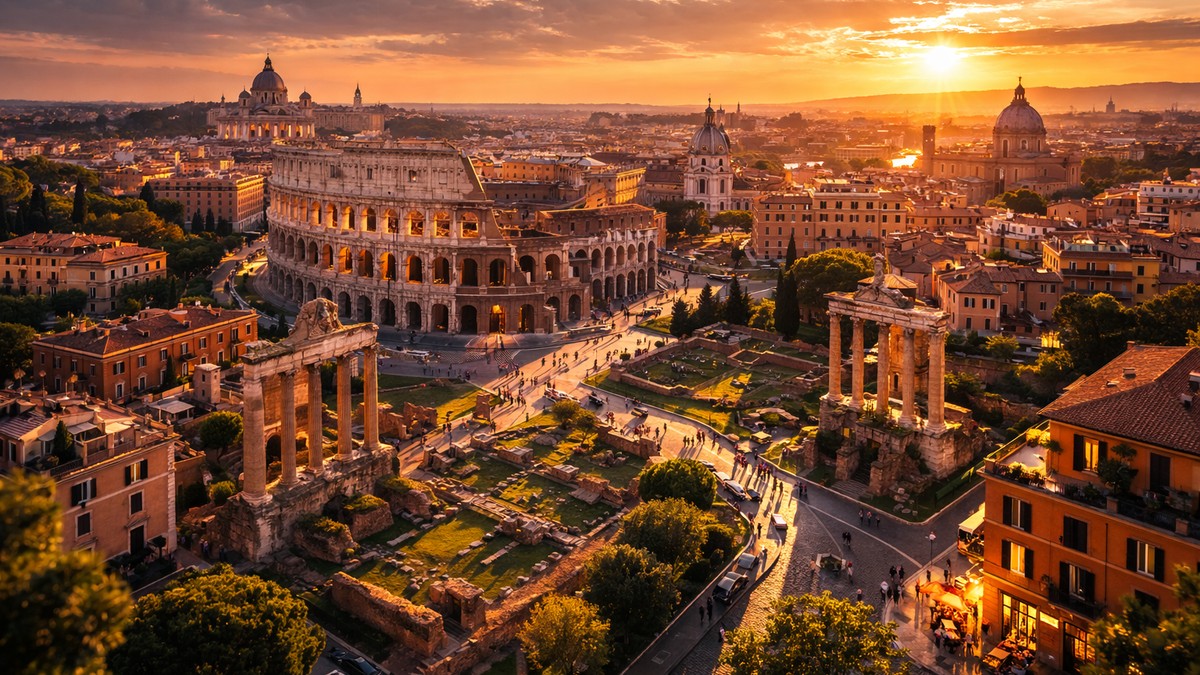
If you are planning an Italian itinerary and asking Rome vs Florence: Where Should You Spend More Time? you are already thinking correctly. The wrong split can turn a dream trip into a rushed museum marathon.
Here is the thesis in one sentence: Rome rewards time with depth and contrast, while Florence rewards focus and efficiency, so most travelers should spend more nights in Rome unless art density is their primary goal.
Both cities are iconic. Both deliver. But they deliver differently.
The Case for Rome
Scale and Historical Weight
Rome is not a museum city. It is an active, layered capital with roughly 2.8 million residents in the city proper and over 4 million in the metro area estimate. Florence has about 380,000 residents estimate. The scale difference changes everything.
The Colosseum alone receives more than 7 million visitors per year estimate. The Vatican Museums draw around 6 to 7 million annually estimate. That level of traffic tells you two things. First, these are global icons. Second, you need time and planning to experience them without frustration.
In one anonymized agency booking from last year, a couple spent 3 nights in Rome and 3 in Florence. They had timed entry to the Vatican but no buffer time. A transit delay cost them a slot and rebooking required an extra half day. Result: two rushed afternoons and one missed Trastevere dinner. The feedback score was 7 out of 10. The advisor later adjusted future itineraries to 4 nights in Rome minimum. Satisfaction rose to 9 out of 10 across similar trips.
Rome is also geographically spread out. The Colosseum, Vatican, Pantheon, and Borghese Gallery are not clustered tightly. Public transport works, but walking between districts takes time. That time can be magical or exhausting depending on expectations.
Food Neighborhoods and Energy
Rome’s food culture is hyper local. Carbonara in Testaccio tastes different from carbonara near Piazza Navona. A Roman food tour can cover 2 to 3 neighborhoods over three hours and still feel incomplete.
For business travelers extending work trips, Rome also offers more variety in upscale hotels and international flight connectivity. Leonardo da Vinci Fiumicino Airport handles over 40 million passengers annually estimate, compared to Florence Airport which handles roughly 3 million estimate. Rome is simply easier logistically for multi city routing.
If you give Rome four or five nights, it shifts from checklist to lived experience.
The Case for Florence
Renaissance Density
Florence is concentrated brilliance. Within a compact historic center you can see the Duomo, Uffizi Gallery, Palazzo Vecchio, Ponte Vecchio, and Accademia. UNESCO designated the historic center of Florence as a World Heritage site in 1982.
The Uffizi alone houses works by Botticelli, Leonardo, and Michelangelo and receives about 2 million visitors annually estimate. The Accademia which holds David receives roughly 1.7 million estimate.
In a recent agency example, a family of four with two teens spent 2 nights in Florence and 4 in Rome. They covered the Uffizi, climbed the Duomo, and did a half day Tuscan cooking class. They described Florence as intense but manageable. The teens rated it their favorite part because everything felt close and walkable.
That is Florence’s advantage. Density. You can cover major highlights in two focused days without constant transit.
Walkability and Day Trips
Florence also works as a base. Pisa, Siena, and Chianti are all reachable within one to two hours. High speed trains connect Florence to Rome in about 1 hour and 30 minutes estimate, making split stays efficient.
From a commercial standpoint, Florence packages cleanly. Two nights in Florence plus structured day trips can command strong margins because logistics are simpler and transfers shorter.
But here is the catch. After three full days in Florence, many travelers feel they have seen the core. Rome rarely produces that feeling.
Rome vs Florence in Numbers
Here is a simple comparison to guide itinerary planning.
| Factor | Rome | Florence |
|---|---|---|
| Population estimate | 2.8 million | 380,000 |
| Major international airport traffic estimate | 40 million passengers | 3 million passengers |
| Annual visitors estimate | 10 to 12 million | 5 to 6 million |
| Walkability of historic core | Moderate | Very high |
| Ideal minimum stay | 4 nights | 2 to 3 nights |
| Best for | History layers, variety, energy | Art density, compact beauty |
These numbers are directional, not absolute. But they illustrate the scale difference clearly.
Sample Time Splits That Actually Work
Five Nights Total
If you only have five nights in Italy, the most balanced split is 3 nights Rome and 2 nights Florence.
Day 1 arrival Rome
Day 2 Ancient Rome and central highlights
Day 3 Vatican and Trastevere
Train to Florence
Day 4 Uffizi and Duomo
Day 5 Tuscany or Accademia
In one anonymized booking of this structure, average daily spend per couple reached 520 euros estimate including guided tours and mid range hotels. The shorter Florence stay helped contain costs while preserving quality experiences.
Seven to Ten Nights
With seven nights, consider 4 in Rome and 3 in Florence.
With ten nights, 5 in Rome and 3 in Florence plus 2 in Tuscany or Amalfi Coast works well.
An agency that tested 5 Rome and 3 Florence for high value clients saw average booking value increase by 18 percent estimate because Rome allowed more add ons including private Vatican access and curated neighborhood food tours.
Rome absorbs upgrades better. Florence sells intimacy.
What this means for travel agencies
First, stop defaulting to equal splits. The emotional rhythm of each city differs. Ask what the client values more.
Second, build Rome with buffer time. Pre book major sites and leave space for wandering. That reduces stress and protects reviews.
Third, use Florence for high margin half day experiences such as wine tastings and cooking classes. Proximity keeps logistics tight.
Fourth, monitor hotel pricing closely. Rome rates fluctuate heavily around major events and Vatican seasons. Tools that track post booking price drops can quietly improve margins or client goodwill. If a Rome hotel drops from 380 euros to 320 euros per night for a four night stay, that is 240 euros recovered. Scale that across 50 bookings and the impact is meaningful.
Fifth, educate clients clearly. Rome is not Florence with bigger ruins. It is a different tempo.
Quick takeaways
• Rome needs more time than most people think
• Florence delivers fast cultural payoff
• Three nights in Rome often feels rushed
• Two nights in Florence can work if structured well
• Adjust splits based on art lovers versus explorers
Common mistakes
• Splitting time evenly without considering pace
• Booking Vatican tickets without buffer days
• Underestimating transit time across Rome
• Staying too far outside Florence historic center
• Treating Florence only as a photo stop
Conclusion
Rome vs Florence: Where Should You Spend More Time? In most cases, Rome deserves the extra night because its scale and variety reward patience. Florence shines intensely but quickly.
For agencies and advisors, the smarter move is not choosing one over the other. It is calibrating time to experience. Get the split right, and both cities feel unforgettable. Get it wrong, and even Italy can feel rushed.