March 8, 2026
Should You Prepay or Choose Flexible Rates
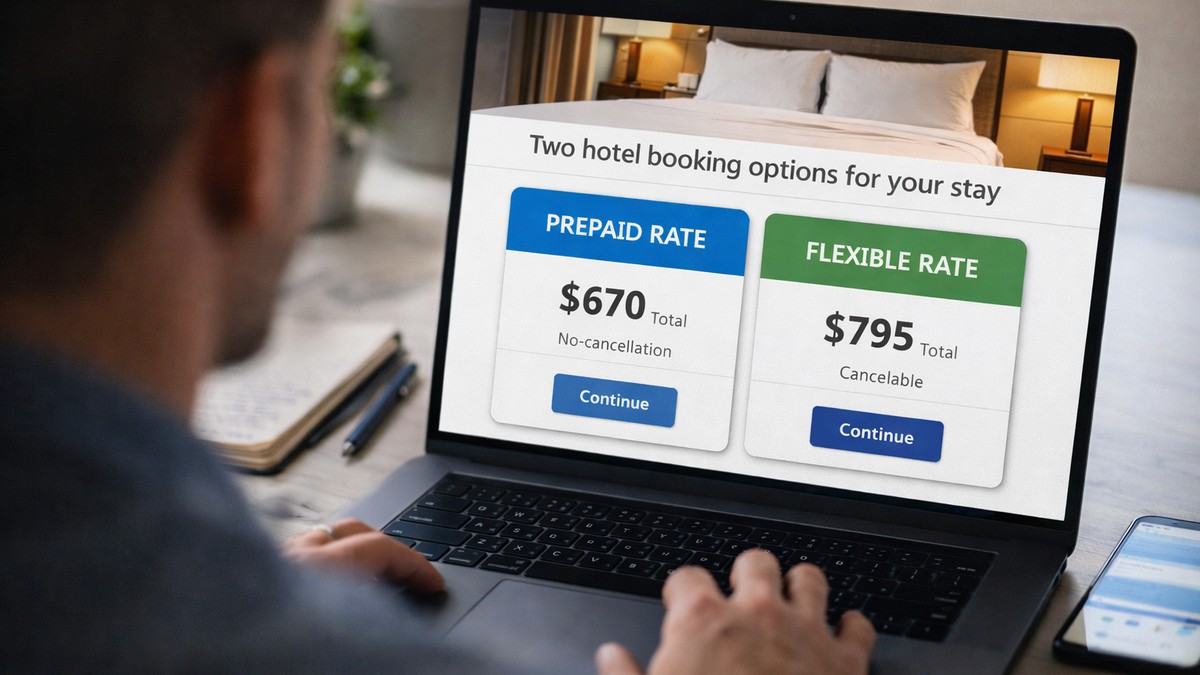
Booking a hotel room seems simple.
Choose the property, compare prices, and reserve the best available rate.
Yet one small decision can dramatically affect the final cost of the stay.
Should You Prepay or Choose Flexible Rates?
Here is the thesis: travelers who assume prepaid rates always save money often overlook how hotel pricing fluctuates after booking, which means flexible rates frequently create greater savings when managed strategically.
Why the prepaid versus flexible debate matters more than travelers think
The hidden economics of hotel pricing
Hotels adjust prices constantly.
Room rates change based on demand, events, seasonality, and competitor pricing.
Airlines operate similarly, but travelers rarely expect hotel prices to move so frequently.
Industry pricing systems can adjust rates multiple times per day estimate.
Why flexibility can sometimes save more than discounts
Prepaid hotel rates typically appear cheaper during booking.
These rates may offer discounts of 10 to 25 percent compared to flexible rates estimate.
However the savings come with restrictions.
Prepaid reservations often cannot be changed or cancelled without penalty.
Flexible rates allow travelers to cancel or rebook if prices change.
In volatile markets that flexibility can become more valuable than the original discount.
Should You Prepay or Choose Flexible Rates
When prepaid rates make sense
Prepaid hotel bookings work best when travel plans are completely fixed.
Vacation packages, conferences, and short leisure trips often fall into this category.
Example one. A traveler booked a prepaid three night hotel stay in Lisbon for 420 euros estimate. The flexible rate for the same room was 495 euros. Because the traveler’s schedule was fixed, the prepaid option delivered immediate savings.
Prepaid bookings also work well during peak demand periods when prices are unlikely to fall.
Major festivals, holidays, and global events often push hotel prices upward.
When flexible rates outperform prepaid deals
Flexible bookings provide a different advantage.
They allow travelers to take advantage of price drops after the reservation is made.
Example two. A business traveler reserved a flexible rate in Amsterdam at 220 euros per night estimate. Two weeks later the same hotel lowered prices to 185 euros. The traveler rebooked the reservation and saved roughly 105 euros across the stay.
In dynamic markets these opportunities appear frequently.
Hotels lower prices when demand slows or when new inventory becomes available.
The timing factor in hotel pricing
Timing often determines whether prepaid or flexible bookings perform better.
Hotels commonly release initial rates several months before arrival dates.
Prices may drop temporarily during slower booking periods.
Example three. A travel advisor booked a flexible rate in Barcelona at 260 euros per night estimate for a four night stay. A month later the hotel reduced rates to 215 euros due to lower demand. Rebooking saved the client about 180 euros overall.
This kind of fluctuation happens regularly in major cities.
How business travelers approach the decision
Business travelers frequently choose flexible rates.
Corporate travel schedules change more often than leisure trips.
Companies value flexibility more than small upfront discounts.
Business travel policies often require refundable bookings for exactly this reason.
Comparing prepaid and flexible booking strategies
| Booking type | Typical discount estimate | Flexibility level | Best use case |
|---|---|---|---|
| Prepaid rate | 10 to 25 percent | Low | Fixed travel plans |
| Flexible rate | Usually full price | High | Business or uncertain plans |
| Hybrid advance rate | 5 to 15 percent | Medium | Moderate flexibility needs |
Choosing between them depends heavily on the traveler’s confidence in their itinerary.
The numbers behind hotel pricing behavior
Hotel pricing systems rely heavily on demand forecasting.
Revenue management software analyzes booking patterns, occupancy levels, and competitor pricing estimate.
Large urban hotels may adjust room prices several times per day estimate.
Global travel demand also influences pricing patterns.
Major cities such as Paris, London, and New York experience seasonal price swings of 20 to 40 percent estimate depending on demand cycles.
These fluctuations create opportunities for travelers who maintain flexible reservations.
What this means for travel agencies
First, agencies should evaluate the certainty of travel plans before recommending prepaid bookings.
Second, flexible reservations provide opportunities to capture savings when hotel prices drop.
Third, monitoring rates after booking can produce substantial cost reductions for clients.
Fourth, prepaid rates remain useful when availability is limited or demand is extremely high.
Fifth, automated monitoring tools change the strategy entirely. Platforms like Rebookify track hotel prices after booking and automatically rebook lower rates when they appear. This allows travel agencies to maintain flexible bookings while still capturing savings that prepaid rates promise.
Quick takeaways
• Prepaid rates offer immediate discounts but limit flexibility
• Flexible bookings allow travelers to benefit from price drops
• Hotel prices change frequently due to demand fluctuations
• Timing strongly influences which strategy performs better
• Automated rate monitoring can combine flexibility with savings
Common mistakes
• Assuming prepaid rates always represent the lowest cost
• Ignoring price fluctuations after the initial booking
• Choosing flexible rates but failing to monitor price changes
• Booking prepaid during uncertain travel schedules
• Treating hotel pricing as static rather than dynamic
Conclusion
Should You Prepay or Choose Flexible Rates depends less on the initial discount and more on how hotel pricing evolves after booking.
Travelers and travel agencies that understand this dynamic often discover that flexibility creates unexpected savings.
With the right booking strategy and tools that monitor rate changes, it becomes possible to combine convenience, flexibility, and cost efficiency.