March 9, 2026
Singapore vs Hong Kong: Asia’s Compact City Showdown
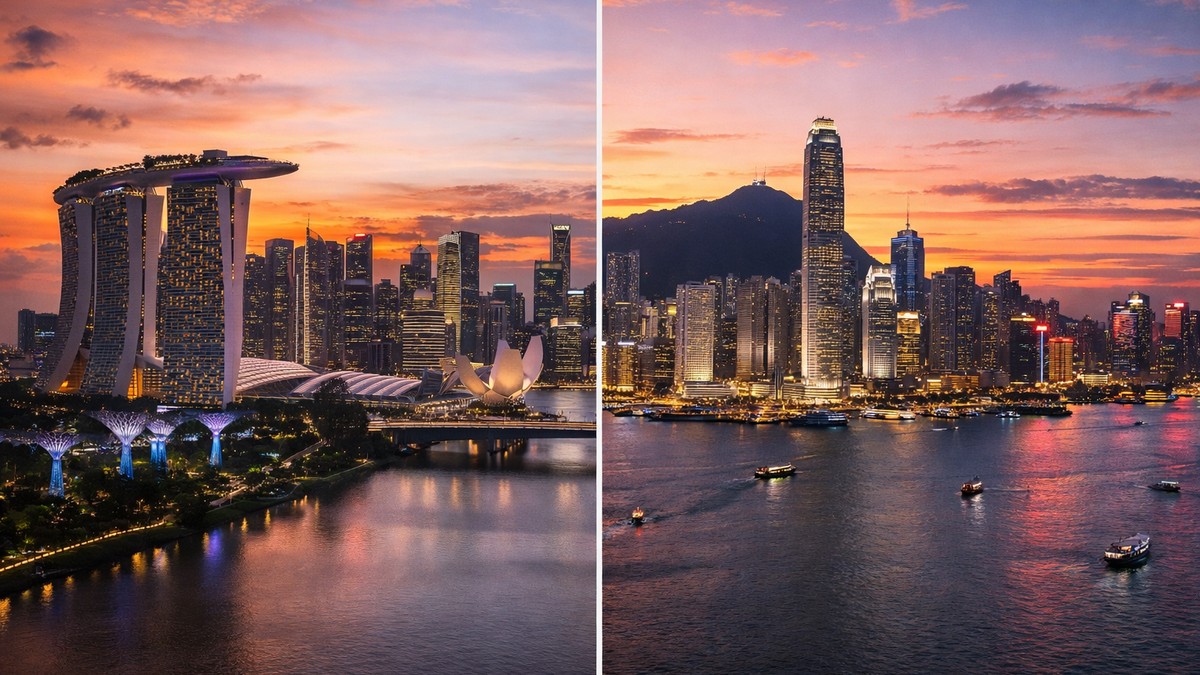
Singapore vs Hong Kong Asia’s Compact City Showdown is less about which city is better and more about which compact metropolis delivers the right travel energy for a visitor’s style, schedule, and expectations.
Both cities are financial powerhouses. Both are aviation hubs. Both compress global culture into a surprisingly small geographic footprint.
Yet the traveler experience differs dramatically.
Singapore feels deliberate, polished, and efficient. Hong Kong feels dense, kinetic, and electric.
For travel agencies planning short Asia itineraries this difference matters enormously. The right match creates a memorable trip. The wrong match can leave travelers feeling overwhelmed or under stimulated.
Understanding the personality of each city is the key.
Singapore The City Designed for Effortless Travel
Urban planning and efficiency
Singapore may be one of the most carefully designed cities on earth.
The entire country spans about 728 square kilometers according to the Singapore Department of Statistics. Despite that small size the city feels remarkably spacious.
Urban planning plays a huge role.
Transportation is simple and reliable. Public transit reaches nearly every district. Parks and waterfront promenades break up the skyline.
Travelers can easily move between
• Marina Bay
• Chinatown
• Orchard Road
• Little India
• Sentosa Island
all within short distances.
The result is a city that feels almost frictionless.
Visitors rarely worry about transportation, safety, or navigation.
Why Singapore excels for first time Asia travelers
Singapore’s accessibility makes it a natural introduction to Asia.
English is widely spoken. Infrastructure is world class. Public transport is intuitive.
Tourism data shows that Singapore welcomed roughly 13.6 million international visitors in 2023 according to the Singapore Tourism Board.
Many of those travelers are visiting Southeast Asia for the first time.
Example
A travel consultant recently booked a four night Singapore itinerary costing about 1600 dollars per traveler including a Marina Bay hotel and guided food tours.
The clients described the city as the easiest international trip they had ever taken.
Everything worked.
That reliability is Singapore’s biggest strength.
Hong Kong The Vertical Energy of Asia
Culture skyline and density
If Singapore is controlled elegance, Hong Kong is controlled chaos.
The city is famous for its dramatic skyline and extreme density.
Hong Kong holds one of the highest concentrations of skyscrapers in the world with over 500 buildings taller than 150 meters according to the Council on Tall Buildings and Urban Habitat.
The result is an urban environment that feels vertical rather than horizontal.
The energy is unmistakable.
Markets spill into narrow streets. Ferries cross Victoria Harbour constantly. Neon signs and dense apartment towers dominate the skyline.
Iconic experiences include
• Victoria Peak skyline views
• Star Ferry rides across the harbor
• Temple Street night market
• Dim sum restaurants and tea houses
Hong Kong feels intense in the best possible way.
Why Hong Kong feels more intense
Travelers often describe Hong Kong as more exciting and more exhausting at the same time.
The density of people, buildings, and activity creates constant stimulation.
Example
One corporate travel agency arranged a three day Hong Kong trip costing roughly 1400 dollars per person including a harbor view hotel and guided culinary tour.
The client’s feedback
The city felt like five cities stacked together.
This sensory intensity is precisely why many travelers love Hong Kong.
Cost Reality Hotels Dining and Transport
Both cities are expensive by Asian standards but pricing patterns differ.
Typical spending estimates
• Singapore street food hawker meals average 5 to 8 dollars estimate
• Hong Kong casual dining meals average 7 to 12 dollars estimate
• Four star hotels in Singapore often range 220 to 320 dollars per night estimate
• Similar hotels in Hong Kong average 200 to 300 dollars per night estimate
Transportation costs also differ.
Singapore’s MRT system is extremely affordable.
Hong Kong’s transit network is equally efficient but taxis and ferries add variety.
Quick decision table
| Travel Factor | Singapore | Hong Kong |
|---|---|---|
| Overall vibe | Polished and organized | Dense and energetic |
| Ideal trip length | 3 to 4 days | 3 to 5 days |
| Signature experience | Marina Bay skyline | Victoria Harbour skyline |
| Food culture | Hawker centers | Dim sum and street markets |
| Average daily budget estimate | 220 to 350 USD | 200 to 340 USD |
Both cities deliver incredible value for short trips despite higher prices.
Which Travelers Should Choose Each City
Travelers who should choose Singapore
Singapore is ideal for
• First time visitors to Asia
• Travelers who value comfort and simplicity
• Families and leisure travelers
• Luxury travelers seeking iconic hotels
Example
A family itinerary combining three nights in Singapore with two nights on Sentosa Island cost around 2500 dollars total for accommodations and tours.
The parents described the trip as stress free travel.
That is Singapore’s brand.
Travelers who should choose Hong Kong
Hong Kong suits
• Food focused travelers
• Urban explorers
• Photographers and architecture fans
• Business travelers seeking vibrant nightlife
Example
A small group food tour company introduced a four day Hong Kong culinary itinerary priced at 1700 dollars per traveler including private tastings and market tours.
Bookings rose about 25 percent year over year estimate.
The city’s culinary depth is a major draw.
What This Means for Travel Agencies
Singapore vs Hong Kong Asia’s Compact City Showdown highlights an important strategy for travel agencies.
Short urban destinations require careful traveler matching.
Ask about travel pace
Start by asking
Do you prefer a relaxed city experience or a fast moving urban adventure?
That question often determines the correct destination instantly.
Combine cities strategically
Many agencies successfully combine these cities with regional destinations.
Examples include
• Singapore with Bali or Thailand
• Hong Kong with Vietnam or Japan
Both cities function as excellent gateway stops.
Optimize hotel pricing
Hotel prices fluctuate frequently in both cities.
Agencies that monitor rates after booking can capture significant savings.
Platforms like Rebookify track hotel prices automatically and allow agencies to rebook reservations when rates drop, improving margins without changing the client itinerary.
Sell the narrative
Singapore should be presented as effortless luxury and culture.
Hong Kong should be presented as thrilling urban intensity.
How the story is framed influences booking decisions.
Quick takeaways
• Singapore offers a polished and easy first Asia experience
• Hong Kong delivers high energy urban culture and dramatic skylines
• Both cities work best as three to five day stops
• Singapore excels in planning simplicity
• Hong Kong shines in food culture and urban energy
Common mistakes
• Trying to compare the cities purely on price
• Scheduling too few nights in either destination
• Ignoring Hong Kong’s hiking trails and islands
• Missing Singapore’s hawker food culture
• Planning overly rushed multi city itineraries
Conclusion
Singapore vs Hong Kong Asia’s Compact City Showdown ultimately comes down to travel personality.
Singapore offers calm efficiency, architectural beauty, and effortless navigation.
Hong Kong delivers drama, density, and unmatched urban energy.
For travel agencies the best strategy is simple.
Match the destination to the traveler’s pace and curiosity.
Do that well and both cities become unforgettable gateways to Asia.