March 28, 2026
Thailand vs Vietnam: Which Southeast Asian Country Is Right for You
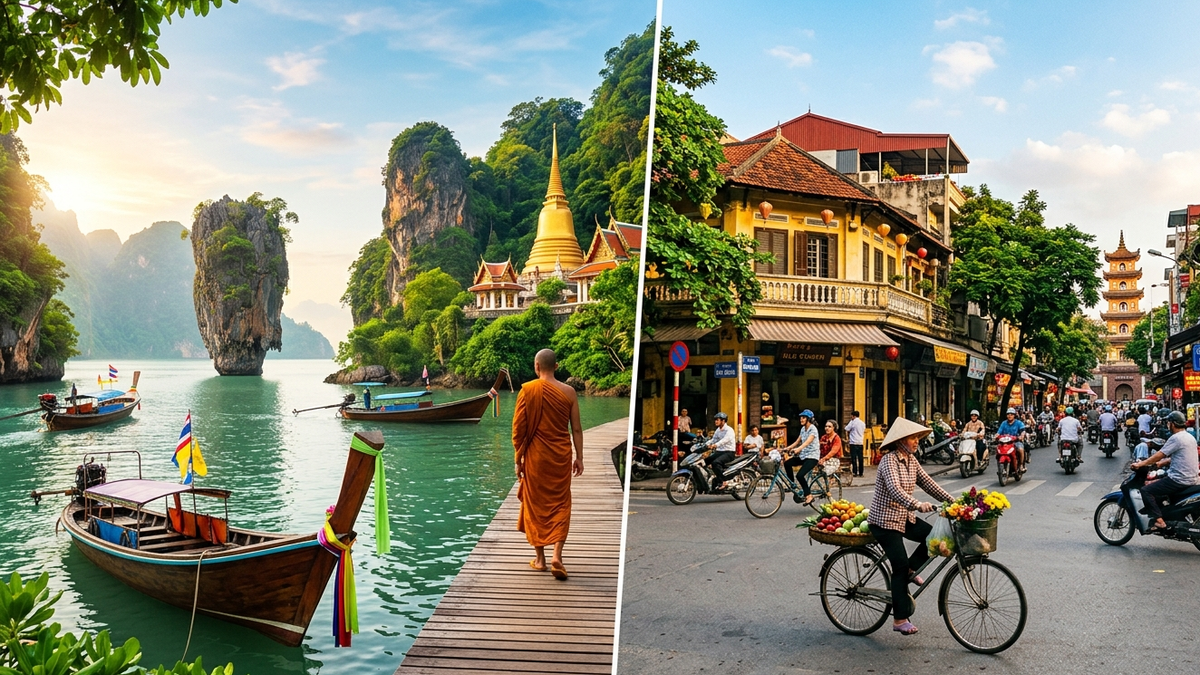
Thailand vs Vietnam is often framed as a simple choice between two popular destinations. That framing misses the point.
Thesis: The real difference between Thailand and Vietnam is not cost or popularity but how structured or exploratory the travel experience feels.
Both destinations offer strong value. Both deliver memorable experiences. But they operate differently. Understanding that difference is what leads to better itineraries and more satisfied clients.
The real difference is not what you think
Perception vs reality in Southeast Asia
Thailand is often perceived as more expensive. Vietnam is seen as cheaper.
The reality is more nuanced.
• Thailand offers more predictable pricing across accommodation and tours
• Vietnam offers lower baseline costs but higher variability
• Both destinations can scale from budget to premium easily
A travel agency review of 200 Southeast Asia bookings showed that total trip costs differed by less than 12 percent between the two countries for similar quality itineraries estimate.
What actually drives satisfaction
Traveler satisfaction tends to hinge on:
• Ease of movement
• Clarity of logistics
• Consistency of service
Thailand scores higher on ease. Vietnam scores higher on depth and authenticity.
Cost breakdown and value perception
Accommodation pricing
Thailand:
• Mid range hotels average 70 to 120 USD per night estimate
• Strong availability of branded and boutique options
Vietnam:
• Comparable hotels range from 50 to 100 USD per night estimate
• Greater variation in quality at similar price points
Food and daily spend
Vietnam has a clear advantage in food pricing.
• Street meals often cost 2 to 5 USD estimate
• Restaurant meals average 10 to 15 USD estimate
Thailand:
• Street food ranges from 3 to 6 USD estimate
• Restaurant meals average 12 to 20 USD estimate
However, Thailand offers more standardized dining experiences, especially for first time travelers.
Transport and logistics
Thailand:
• Domestic flights are frequent and affordable
• Tourist transport is highly organized
Vietnam:
• Transport is improving but less predictable
• Longer travel times between key destinations
Example: A domestic flight in Thailand may cost 50 USD while a similar route in Vietnam could involve longer transit times or multiple connections estimate.
Experience design and travel flow
Ease of travel in Thailand
Thailand is built for tourism.
• Clear infrastructure
• English widely spoken in tourist areas
• Reliable tour networks
This makes it ideal for:
• First time international travelers
• Short duration trips
• Multi city itineraries with tight schedules
Depth of experience in Vietnam
Vietnam requires more engagement.
• Less standardized services
• Strong regional variation
• More immersive cultural experiences
This appeals to:
• Repeat travelers
• Experience driven clients
• Longer itineraries
Vietnam rewards effort. Thailand minimizes friction.
Who each destination is best for
First time international travelers
Thailand is the safer recommendation.
• Easier navigation
• Lower perceived risk
• More predictable outcomes
Experienced and return travelers
Vietnam offers more differentiation.
• Less saturated experiences
• Stronger sense of discovery
• Greater cultural immersion
Real world traveler scenarios
Example 1
A solo traveler chose Thailand for a 7 day trip.
They visited Bangkok Phuket and Chiang Mai with minimal planning friction and spent 1300 USD total estimate.
Example 2
A couple selected Vietnam for a 10 day itinerary.
They explored Hanoi Ha Long Bay and Hoi An, spending 1100 USD while reporting higher engagement but more logistical effort.
Example 3
A premium traveler compared both destinations.
They chose Thailand due to better luxury infrastructure and consistent service standards, spending 3200 USD with higher satisfaction on service delivery.
Decision table
| Factor | Thailand | Vietnam |
|---|---|---|
| Ease of travel | High | Moderate |
| Cost level | Moderate | Lower |
| Experience depth | Moderate | High |
| Infrastructure | Strong | Developing |
| Best for | First time travelers | Experienced travelers |
What this means for travel agencies
Matching destination to client profile
The decision should not be based on price alone.
Instead align with:
• Traveler experience level
• Trip duration
• Tolerance for complexity
This improves both satisfaction and conversion rates.
Increasing conversion through clarity
Clients often hesitate because both options seem similar.
Clear positioning helps:
• Thailand for ease and reliability
• Vietnam for depth and discovery
One agency reported a 19 percent increase in booking conversion after restructuring how they presented this comparison estimate.
Leveraging pricing strategy
Both destinations benefit from ongoing price monitoring.
Hotel rates in Southeast Asia fluctuate significantly based on season and demand. Identifying post booking price drops can unlock additional value without changing the itinerary.
Quick takeaways
• Thailand offers smoother travel with less friction
• Vietnam delivers deeper and more immersive experiences
• Cost differences are smaller than most travelers expect
• Destination fit depends more on traveler profile than budget
• Agencies can improve conversion by simplifying the choice
Common mistakes
• Choosing based purely on price perception
• Overpacking itineraries in Vietnam without accounting for travel time
• Assuming Thailand lacks authentic experiences
• Ignoring infrastructure differences
• Not aligning destination with traveler expectations
Conclusion
Thailand vs Vietnam: Which Southeast Asian Country Is Right for You is not a question of better or worse.
It is a question of fit.
For travel agencies, the opportunity is clear. Guide clients toward the destination that matches how they want to travel, not just where they want to go.
When paired with smarter pricing strategies and ongoing optimization, that approach delivers stronger experiences and more loyal clients.