January 16, 2026
The Future of Corporate Travel Policies
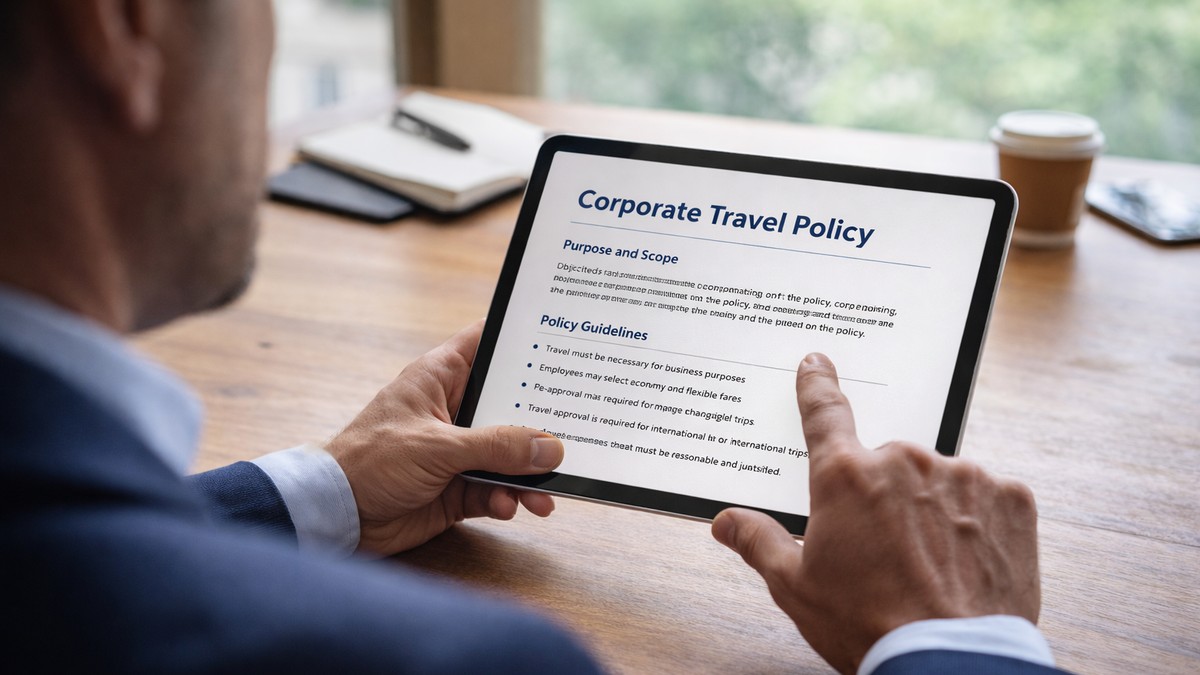
Thesis: Corporate travel policies are evolving from cost control documents into behavioral frameworks that shape trust, wellbeing, and decision quality.
The Future of Corporate Travel Policies is not about tightening rules. It is about redefining purpose.
For years policy language focused on restriction. Lowest logical fare. Mandated suppliers. Approval layers. Compliance percentages. That structure worked when travel behavior was predictable and volume was the primary variable.
That world no longer exists.
Business travel today is shaped by hybrid work, traveler autonomy, risk awareness, and rising expectations around experience. Policies that ignore this reality are not just outdated. They actively fail.
Why Traditional Policies Are Breaking
Cost control no longer enough
Most legacy corporate travel policies were built around one assumption. If you control spend, you control outcomes.
That assumption is now incomplete.
Research suggests that more than 70 percent of business travelers now prioritize flexibility over price when booking trips estimate. Employees who feel over restricted often bypass policy using personal bookings or unmanaged channels. That creates more risk, not less.
Policies designed purely for savings increasingly produce the opposite result.
Behavior has changed permanently
Hybrid work altered the rhythm of business travel.
Trips are shorter. Purpose driven. More intentional. Fewer road warriors. More occasional travelers who lack familiarity with systems and rules.
A policy written for frequent flyers does not serve the modern employee population. It creates confusion, hesitation, and quiet non compliance.
What Modern Travel Policies Actually Prioritize
Flexibility and wellbeing
Modern policies increasingly recognize that travel is not just operational. It is human.
Many companies now allow travelers to select slightly higher fares for better flight times, direct routes, or improved recovery time. Surveys indicate that companies that support traveler comfort see higher satisfaction and lower burnout risk estimate.
Flexibility is no longer a perk. It is part of duty of care.
Simplicity and trust
The most effective policies today are shorter, clearer, and more principle based.
Instead of listing hundreds of rules they define intent. Travel must be reasonable. Choices must be justifiable. Employees are trusted to act responsibly.
This shift reduces friction and increases compliance because the policy feels supportive rather than punitive.
How This Shows Up in Real Organizations
Example one technology firm
A mid size technology company simplified its travel policy from twenty pages to six pages. Approval layers were reduced. Flexible fare classes were permitted.
The result was a 22 percent reduction in off channel bookings estimate and a measurable increase in employee satisfaction with travel processes.
Example two consulting organization
A global consulting firm introduced wellbeing focused policy adjustments. These included hotel quality minimums and limits on early morning departures after long haul travel.
Total spend increased slightly. Attrition among frequent travelers declined. Client delivery consistency improved. Leadership accepted the tradeoff as operationally sound.
Example three finance company
A financial services company shifted from strict preferred hotel enforcement to a value band approach.
Instead of mandating specific properties they defined acceptable price ranges. Booking speed increased. Approval requests declined by more than thirty percent estimate.
What Smarter Policies Get Right
Balance between control and autonomy
The strongest policies today do not remove structure. They redesign it.
They provide guardrails rather than walls. They clarify outcomes rather than dictate behavior. They assume professionalism rather than enforce suspicion.
This balance produces better compliance because it aligns policy with how people actually behave.
Policies that adapt over time
Static policies fail quickly in a dynamic environment.
Modern travel leaders now review policies quarterly rather than annually. They incorporate feedback from travelers. They monitor data patterns rather than relying on assumptions.
Policy becomes a living tool rather than a forgotten document.
What This Means for Travel Agencies
Advisory role becomes more valuable
Agencies are no longer just implementers of corporate rules. They are increasingly advisors on policy design.
Companies need external perspective on what is realistic, what is competitive, and what supports traveler satisfaction. Agencies that can contribute insight rather than just execution deepen their client relationships.
Operational advantage matters more
Modern policies often emphasize flexibility. Flexible hotel bookings. Changeable fares. Fewer prepaid constraints.
This creates opportunity and risk.
Opportunity exists because flexible bookings allow agencies to optimize after confirmation. Risk exists because without process discipline margins can erode.
This is where tools like Rebookify support agencies behind the scenes. By monitoring hotel prices after booking and rebooking when rates drop, agencies protect margin while honoring flexible policy intent. The traveler experiences support. The client company sees value. The agency preserves profitability.
Common mistakes
-
Writing policies for finance teams rather than for travelers
-
Over complicating rules in the name of control
-
Ignoring feedback from actual travelers
-
Treating flexibility as a cost rather than an enabler
-
Allowing policy to remain unchanged for years
-
Measuring compliance without measuring experience
Quick takeaways
-
Corporate travel policies are shifting from restriction to guidance
-
Flexibility and wellbeing now influence policy design
-
Simpler policies often achieve stronger compliance
-
Agencies play a growing role as strategic advisors
-
Operational tools can protect margins in flexible environments
The bottom line
The Future of Corporate Travel Policies will be shaped less by spreadsheets and more by behavior.
Organizations that design policies around trust, clarity, and realistic traveler needs will see better compliance, stronger engagement, and fewer unmanaged risks.
Agencies that understand this shift will become more than vendors. They will become partners in policy evolution.
This is not about abandoning control. It is about applying control where it matters and releasing it where it does not.
The companies that get this right will not just manage travel better. They will travel smarter.