February 26, 2026
The Psychology of Travel Discounts
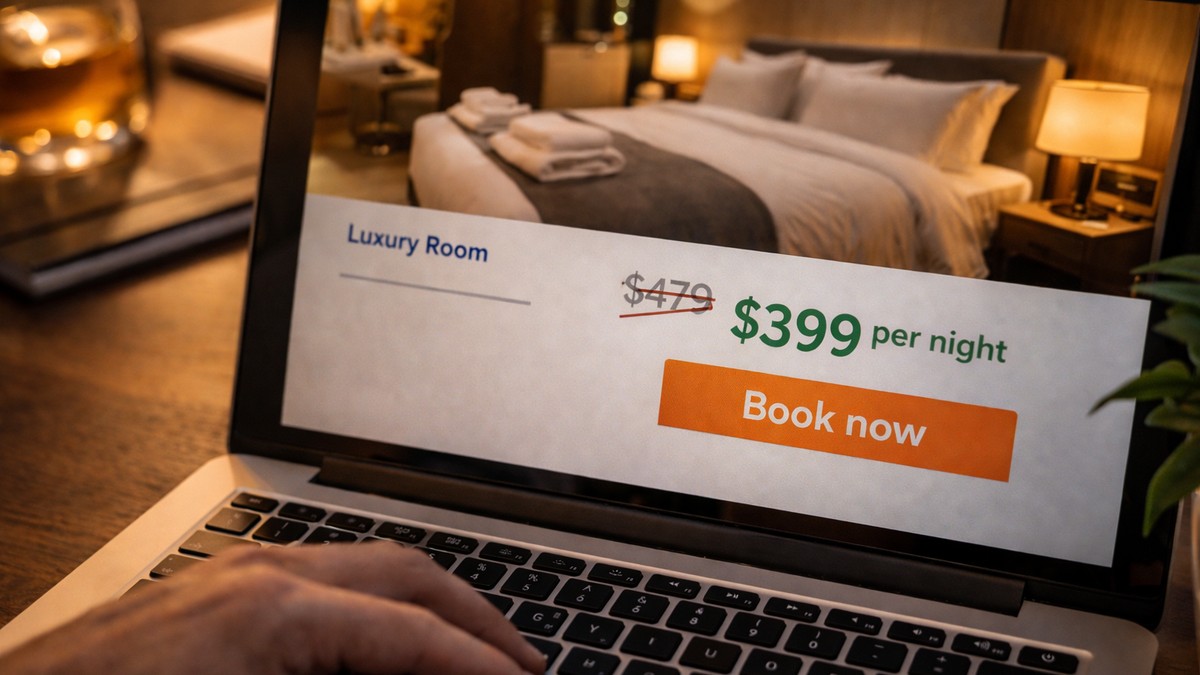
The Psychology of Travel Discounts is less about math and more about perception.
Here is the thesis: travel discounts increase conversions not because they lower price, but because they change the reference point against which value is judged.
For agencies and tour operators, that distinction is critical. The wrong discount erodes brand and margin. The right one strengthens both.
Why discounts feel irresistible
The anchoring effect
Behavioral economists have long demonstrated that consumers rely heavily on the first number they see. That is the anchor.
If a hotel room is presented as 450 dollars reduced to 349 dollars, the client does not evaluate 349 in isolation. They compare it to 450. The savings feel substantial even if 349 was always close to market rate.
Research from behavioral science suggests anchoring can influence decision making by more than 20 percent estimate in controlled environments. In travel, where price points are large, the effect compounds.
Example one. A regional agency tested two email campaigns for a Mediterranean cruise.
Campaign A promoted cabins at 2,199 dollars.
Campaign B promoted cabins at 2,799 dollars now 2,199 dollars.
The product was identical. Campaign B generated 27 percent higher click through and 18 percent higher bookings. The discount framing altered perception, not actual value.
Scarcity and urgency
Limited time offers activate fear of missing out. Travel is emotional. Add a deadline and emotion accelerates.
According to industry marketing benchmarks estimate, limited time travel offers can increase conversion rates by 10 to 15 percent compared to evergreen pricing.
However, false urgency damages trust. If every week is a final sale, clients stop believing it.
The Psychology of Travel Discounts in action
Percentage versus absolute savings
A 200 dollar discount on a 4,000 dollar safari feels modest. A 5 percent discount sounds even smaller. Yet 500 dollars off a 2,500 dollar city break feels dramatic.
Clients process percentages and absolute numbers differently. For higher ticket items, absolute savings often resonate more. For lower ticket items, percentage framing may appear stronger.
Example two. An agency tested two offers for a 6,000 dollar escorted tour.
Version one advertised 10 percent off.
Version two advertised save 600 dollars per couple.
The second version converted 22 percent better. The number felt tangible.
Framing and reference price
Discounts work best when the reference price is credible.
If clients routinely see a five star hotel at 300 dollars and it is advertised at 280 dollars as a flash sale, the perceived value is minimal.
But if that same hotel normally prices at 420 dollars in peak season and appears at 320 dollars in shoulder season, the discount feels meaningful because the anchor is real.
Loyalty and sunk cost
Travelers who have already invested emotionally or financially in a trip are more sensitive to post booking price drops.
If a client books a hotel at 400 dollars per night and later discovers it selling for 350 dollars, dissatisfaction can outweigh the joy of booking.
Research in consumer psychology estimate shows that perceived unfair pricing can reduce repeat purchase intent significantly. In travel, repeat booking is everything.
When discounts increase profit
Strategic discounting
Discounting is not inherently destructive. It is context dependent.
Early booking incentives can smooth demand curves. Shoulder season promotions can fill otherwise empty inventory.
Example three. A European DMC offered a 7 percent early booking incentive for departures booked six months in advance. This allowed better supplier negotiation and improved cash flow. Even after the discount, net margin increased by 2.5 percent due to earlier confirmations and reduced last minute marketing costs.
Discount used strategically becomes an operational lever.
Post booking price drops
There is another layer to The Psychology of Travel Discounts that agencies often ignore.
Clients love discovering savings after booking even more than before booking. It feels like a bonus.
Hotel rates fluctuate frequently in major markets. Industry observations estimate that 15 to 20 percent of hotel reservations may experience at least one price drop before arrival in volatile cities.
Platforms like Rebookify monitor hotel prices after booking and enable agencies to rebook at lower rates when available. The client experiences a pleasant surprise. The agency can share part of the savings or retain part as improved margin.
This type of discount feels earned, not forced.
A quick comparison
| Discount Type | Emotional Impact | Margin Risk | Best Use Case |
|---|---|---|---|
| Public flash sale | High urgency | Medium to high | Filling short term gaps |
| Early booking incentive | Moderate reassurance | Low | Demand smoothing |
| Value add inclusion | High perceived gain | Low | Premium positioning |
| Post booking reprice | Positive surprise | Low | Margin optimization |
Not all discounts are equal.
What this means for travel agencies
Designing offers that convert
Anchor intelligently. Show original pricing where credible. Use real comparisons.
Choose framing based on ticket size. Absolute numbers for high value trips. Percentages for mid range products.
Avoid constant blanket discounting. It trains clients to wait.
Protecting perceived value
Premium brands should favor value adds over visible price cuts. Complimentary upgrades, included experiences, or flexible terms maintain rate integrity while enhancing appeal.
Discounts that undermine brand positioning are expensive in the long term.
Monitoring price changes
Do not treat booking as the final act. Monitor rates post booking.
If a hotel drops from 380 dollars to 330 dollars per night over four nights, that is 200 dollars in potential savings. Sharing part of that with the client builds loyalty. Retaining part protects margin.
Operational discipline transforms discount psychology from reactive to proactive.
Quick takeaways
• Discounts work by shifting reference points
• Anchoring and framing matter more than raw percentage
• Scarcity increases urgency but must be credible
• Post booking savings generate strong positive emotion
• Strategic discounting can improve margin
Common mistakes
• Discounting without a clear demand objective
• Using fake urgency repeatedly
• Ignoring the emotional impact of post booking price drops
• Training clients to expect perpetual sales
• Confusing value adds with price cuts
Conclusion
The Psychology of Travel Discounts reveals a simple truth. People do not buy cheaper travel. They buy perceived advantage.
Agencies that understand how anchoring, framing, and timing influence behavior can design smarter offers that convert without eroding brand value. Combine that with disciplined monitoring of hotel rates after booking and discounts become a strategic asset rather than a reflex.
Price is a number. Perception is power.