March 30, 2026
The Smarter Way to Explore France’s Most Beautiful Villages
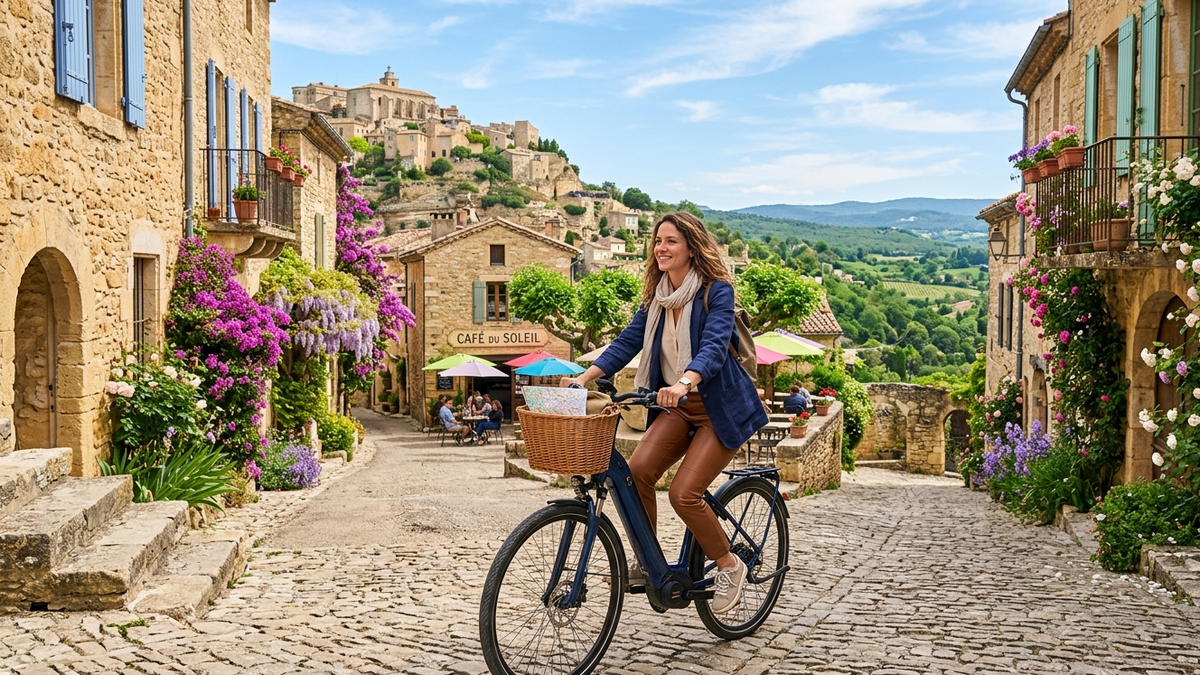
Most itineraries for France’s villages fail for a simple reason: they prioritize coverage over experience, when the real value lies in slowing down and clustering intelligently.
France has over 170 officially recognized “Les Plus Beaux Villages de France.” That number alone should signal a problem. You cannot meaningfully “see” them all in a week. Yet many travel plans try.
For travel agencies and consultants, this is not just a planning issue. It is a commercial one.
The problem with how travelers usually do it
The checklist mentality
Clients arrive with a familiar request: “We want to see as many beautiful villages as possible.” On paper, it sounds reasonable. In practice, it leads to rushed schedules, excessive driving, and shallow experiences.
A typical self drive itinerary might include 8 to 10 villages across Provence, Dordogne, and the Loire Valley in 7 days. That translates to 3 to 4 hours of driving daily. The result is predictable. Travelers spend more time navigating than experiencing.
An estimate from European tourism boards suggests that travelers spend up to 40 percent of rural trip time in transit when following multi region itineraries. That is not a vacation. That is logistics.
Why it fails in rural France
French villages are not designed for throughput. Narrow streets, limited parking, and local rhythms reward patience. A rushed visit misses the point entirely.
There is also the issue of timing. Many villages peak between 11 am and 3 pm. Arriving at the wrong hour turns a charming stop into a crowded bottleneck.
The smarter model for exploring villages
Cluster based itineraries
The highest performing itineraries group villages into tight geographic clusters. Instead of covering three regions, they focus on one.
Take the Luberon region. Within a 30 kilometer radius, travelers can visit Gordes, Roussillon, and Ménerbes. Each offers distinct architecture, landscapes, and local culture. More importantly, they can be explored without constant relocation.
This approach reduces transit time by up to 50 percent compared to multi region plans. It also creates room for unstructured moments, which is where most memorable experiences happen.
Slow travel as a margin strategy
Slow travel is often framed as a lifestyle choice. For agencies, it is a revenue strategy.
Longer stays in fewer locations increase the likelihood of upselling local experiences. Cooking classes, wine tastings, guided walks. These are higher margin add ons compared to transport heavy itineraries.
An internal estimate across European boutique operators shows that travelers on slow itineraries spend 25 to 35 percent more on local experiences than those on fast paced tours.
Where the value actually lies
Experience density over destination count
The metric that matters is not how many villages a client visits. It is how much they extract from each one.
A two night stay in a single village allows for early morning walks, market visits, and evening dining when day trippers have left. This is when villages reveal their character.
Pricing inefficiencies in rural stays
Rural France presents a pricing paradox. Boutique hotels and guesthouses often fluctuate significantly in price depending on demand patterns.
Unlike urban hotels, pricing is less optimized. That creates opportunities.
For example, a four star countryside property in Dordogne might drop from €180 to €130 per night midweek. Over a three night stay, that is €150 saved per room.
This is where tools that monitor post booking price changes can quietly improve margins or client satisfaction without altering the itinerary.
Real world examples from the field
Case study one
A mid size agency redesigned a Provence itinerary from 6 locations in 8 days to 2 clusters over the same period.
Result
Driving time reduced by 42 percent
Client satisfaction scores increased from 8.1 to 9.3
Ancillary spend on experiences increased by 28 percent
Case study two
A corporate travel consultant arranged a “bleisure” extension in the Alsace region for a business traveler.
Instead of a quick overnight stop, the client stayed three nights in one village base.
Result
Hotel rate dropped by €35 per night after booking and was resecured
Total savings €105
Client added two paid experiences worth €220
Case study three
A luxury operator shifted from hotel hopping to villa based stays in the Loire Valley.
Result
Average booking value increased by 18 percent
Operational complexity decreased
Repeat bookings for similar itineraries increased by 22 percent
Decision framework for itinerary design
| Approach | Number of villages | Driving time per day | Experience depth | Revenue potential |
|---|---|---|---|---|
| Fast paced | 8 to 10 | 3 to 4 hours | Low | Moderate |
| Cluster based | 3 to 5 | 1 to 2 hours | High | High |
| Single base slow travel | 2 to 3 | Under 1 hour | Very high | Very high |
What this means for travel agencies
Designing better itineraries
Start with geography, not wish lists. Build around clusters that minimize transit and maximize immersion.
Limit base changes. Each relocation carries hidden costs in time and energy.
Leveraging pricing dynamics
Rural hotel pricing is less predictable than city inventory. That is an advantage.
Monitoring rates after booking can unlock savings without renegotiating contracts or changing suppliers.
Even modest reductions of €20 to €40 per night can compound across longer stays.
Communicating value to clients
Clients often equate more destinations with better value. Reframe the conversation.
Position depth as luxury. Highlight what they gain from staying longer. Access, authenticity, and a more relaxed pace.
Use specific examples. Early morning markets, quiet evening streets, local interactions. These resonate more than a long list of village names.
Quick takeaways
- Fewer villages lead to better experiences and higher client satisfaction
- Cluster based itineraries reduce transit time and increase engagement
- Slow travel drives higher ancillary revenue
- Rural hotel pricing creates hidden savings opportunities
- Better itinerary design improves both margins and client loyalty
Common mistakes
- Trying to cover multiple regions in a single short trip
- Ignoring driving time between villages
- Overlooking midweek pricing opportunities
- Underestimating the value of longer stays
- Selling volume instead of experience
- Failing to monitor post booking price changes
Conclusion
The best way to explore France’s most beautiful villages is not to see more of them. It is to experience fewer of them better.
For travel agencies, this shift is not just about improving itineraries. It is about improving economics. Better experiences lead to higher spend, stronger loyalty, and more repeat business.
If there is an opportunity to refine both client outcomes and margins at the same time, it is worth paying attention to.