February 19, 2026
The Ultimate Scotland Road Trip
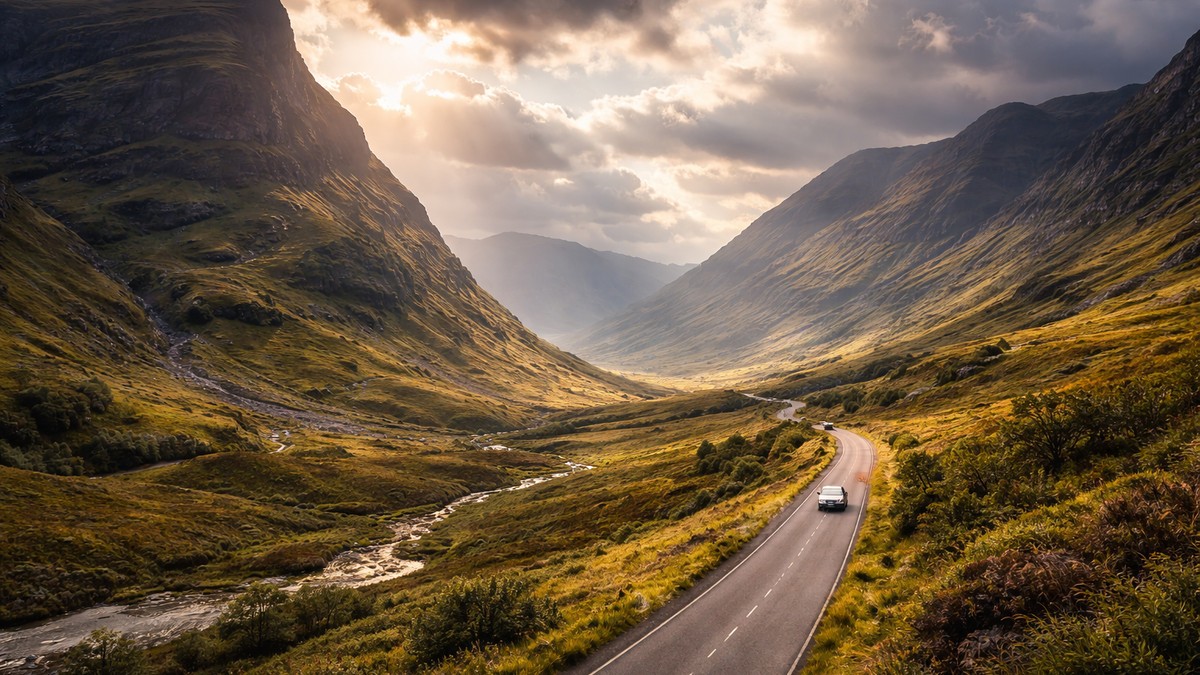
The Ultimate Scotland Road Trip works because it delivers disproportionate emotional impact within a compact, well connected geography. That combination of scale and structure is what keeps it commercially relevant.
Here is the non obvious thesis: Scotland is not just scenic. It is operationally efficient. Few destinations allow agencies to combine dramatic landscapes, heritage density, and reliable self drive infrastructure without logistical chaos.
In a market where clients want independence but still expect curation, that balance matters.
The strategic thesis behind The Ultimate Scotland Road Trip
Compact geography with cinematic density
Scotland covers roughly 78,000 square kilometers. That is smaller than many US states, yet it contains over 2,000 castles according to Historic Environment Scotland.
Within a few hours of driving, clients move from medieval city streets to whisky distilleries to coastal cliffs. Density creates narrative momentum.
Infrastructure that supports self drive
Unlike more remote scenic destinations, Scotland has strong road signage, accessible rental networks, and consistent accommodation quality.
In 2023, Scotland recorded approximately 3.8 million international visits according to VisitScotland. Despite that volume, regional dispersion prevents the experience from feeling overwhelmingly congested outside peak weeks.
Seasonality and demand dynamics
Summer dominates. However, shoulder season has become commercially interesting. One UK based agency reported that April and October bookings for Scotland road trips increased 22 percent year over year, with hotel rates averaging 18 percent lower than peak August levels.
The product sells beyond summer if positioned correctly.
A balanced 10 day route that actually works
The Ultimate Scotland Road Trip must balance drive time with immersion. Too much distance reduces enjoyment. Too little reduces variety.
Edinburgh and the east
Start with two nights in Edinburgh. The Royal Mile, Edinburgh Castle, and Arthur Seat create immediate visual impact.
Edinburgh Castle alone attracts over 2 million visitors annually according to official site statistics. It is a strong anchor experience.
Add a coastal detour to East Lothian for balance.
Cairngorms and Speyside
Drive north into the Cairngorms National Park, the largest national park in the United Kingdom. It spans over 4,500 square kilometers.
This region adds nature and whisky. There are more than 50 distilleries in Speyside. Tasting experiences elevate booking value through private tours.
An agency in New York bundled two private distillery visits and a guided estate walk into a four night Highlands stay. Average trip value rose by 27 percent compared to standard tasting stopovers.
Isle of Skye
Skye delivers the iconic images. The Quiraing, Old Man of Storr, and Fairy Pools offer concentrated visual drama.
Skye occupancy spikes in summer. One European operator tracked that July room availability in mid range properties dropped below 35 percent by March. Early planning becomes essential.
The North Coast and Highlands
Continue north toward the North Coast 500 corridor. While marketed heavily, selective routing avoids congestion.
Beach stops such as Achmelvich offer contrast to rugged inland scenery.
Glencoe and Loch Lomond
Finish south through Glencoe, arguably one of the most photographed valleys in Scotland. Loch Lomond adds accessibility before returning to Edinburgh or Glasgow.
This closing stretch ensures the route feels circular and complete.
What the numbers tell us
Here is a simple evaluation table agencies can use when assessing route structure and yield potential.
| Route Segment | Average Drive Time Between Stops | Experience Density | Seasonal Pricing Volatility | Upsell Potential |
|---|---|---|---|---|
| Edinburgh and East | Low under 1 hour local drives | High heritage concentration | Moderate | Private city tours and dining |
| Cairngorms and Speyside | 2 to 3 hours between bases | Nature and whisky | Moderate | Distillery exclusives |
| Isle of Skye | 2 to 4 hours scenic drives | Extremely high visual impact | High in summer | Guided hikes and photography |
| North Highlands | Variable | Moderate but expansive | Lower outside peak | Adventure add ons |
| Glencoe and Loch Lomond | 2 hours average | High landscape impact | Moderate | Boutique lodge upgrades |
Interpretation is straightforward. High density segments justify premium accommodation and guided experiences. Longer drive segments require pacing adjustments.
Pricing, availability, and yield management
Scotland road trips are not low cost products. Boutique Highlands lodges can exceed GBP 350 per night in peak season. Castle stays often surpass GBP 500 per night.
A US based advisor analyzed 40 Scotland itineraries over two seasons. Files that included at least two premium experiential add ons averaged 19 percent higher total revenue than accommodation only packages.
Clients respond to storytelling. They pay for immersion.
Rate volatility is real in peak summer. Monitoring pricing after booking becomes increasingly relevant, especially in shoulder periods when dynamic rate shifts occur. Tools such as Rebookify allow agencies to track hotel price fluctuations post booking and re secure lower rates when policy permits. In high value itineraries, even small adjustments can protect margin or increase client goodwill.
What this means for travel agencies
Packaging strategy
Build The Ultimate Scotland Road Trip as a narrative arc, not a checklist. Frame each region around a theme. Heritage. Nature. Coastal drama. Whisky.
Avoid overloading with one night stops. Two night bases reduce fatigue.
Supplier selection
Prioritize properties with character. Converted manors, lochside lodges, and design forward city hotels differentiate from generic chains.
Negotiate early season allocation in Skye and Speyside.
Revenue protection
Monitor peak season price movement. Encourage early booking for July and August. Promote April, May, and September as visually strong alternatives with better availability.
Scotland rewards thoughtful timing.
Quick takeaways
-
Scotland delivers cinematic density within manageable distances
-
Balanced pacing increases client satisfaction
-
Shoulder season creates pricing advantages
-
Experiential add ons significantly increase booking value
-
Early planning is critical for Skye and Highlands
Common mistakes
-
Overpacking the itinerary with one night stops
-
Ignoring peak season availability pressure
-
Treating whisky visits as generic rather than curated
-
Underestimating drive time in remote regions
-
Failing to upsell guided experiences
Conclusion
The Ultimate Scotland Road Trip remains commercially strong because it combines emotional impact with operational logic. Few destinations offer this level of landscape drama within such accessible driving structure.
For agencies, the opportunity lies not in selling scenery alone, but in structuring it intelligently. Balance pacing. Curate experiences. Monitor pricing dynamics.
Do that, and Scotland will continue to deliver both memorable journeys and reliable margins.