March 6, 2026
Top Attractions in Amsterdam
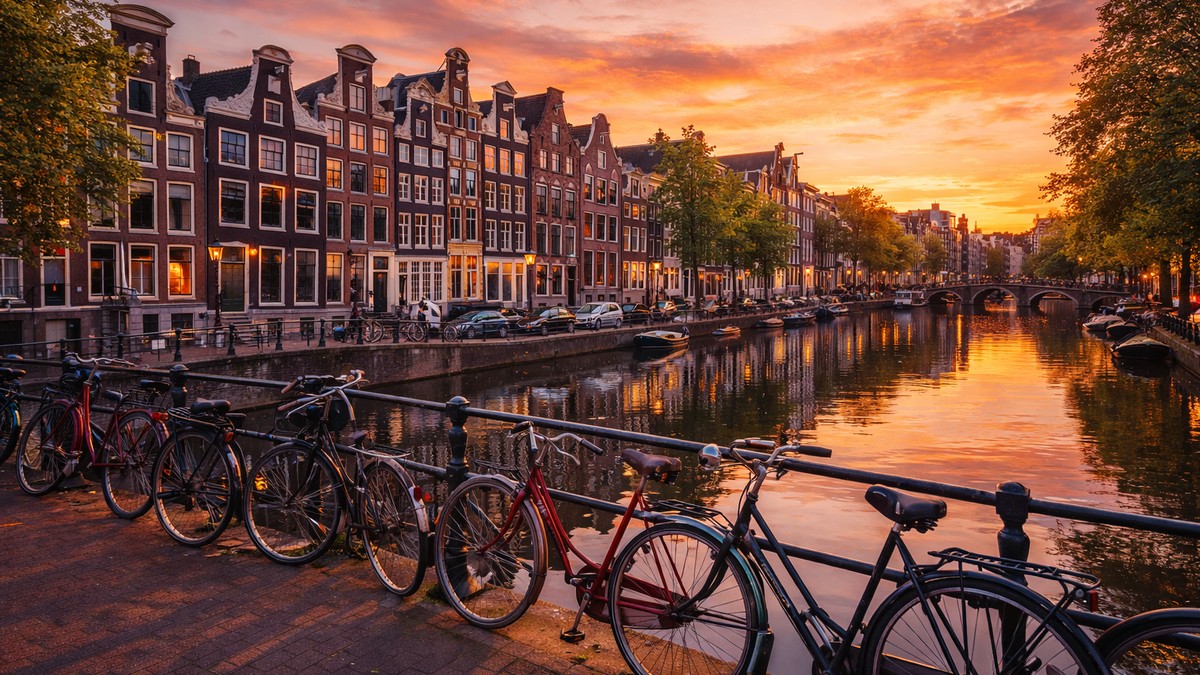
Amsterdam looks compact on a map. It is. That is also its greatest advantage.
Here is the thesis: the top attractions in Amsterdam are most powerful when experienced within a walkable urban rhythm, where museums, canals, and neighborhoods unfold gradually rather than through rushed sightseeing.
Amsterdam rewards patience.
Amsterdam works best when experienced slowly
Why density shapes the visitor experience
Amsterdam receives roughly twenty million visitors annually estimate, a number significantly higher than the city’s resident population.
Despite this demand, the historic center remains surprisingly manageable. The canal ring, constructed during the Dutch Golden Age in the seventeenth century, creates a compact urban structure recognized as a UNESCO World Heritage site estimate.
Attractions sit within walking or cycling distance of each other.
The city built for walking and cycling
The Netherlands maintains one of the world’s most extensive cycling infrastructures. Amsterdam alone has hundreds of kilometers of bicycle paths estimate.
Visitors quickly realize that cycling often becomes faster than taxis or public transport in the historic center.
Movement defines the experience.
Top Attractions in Amsterdam
Rijksmuseum
The Rijksmuseum anchors Amsterdam’s Museumplein district. Its collection spans Dutch Golden Age masterpieces including works by Rembrandt and Vermeer.
The museum attracts millions of visitors each year estimate, making it one of Europe’s most visited cultural institutions.
Example one. A London based travel advisor scheduled an early morning private entry for a small group of eight travelers. The experience cost roughly 1,200 euros but dramatically improved visitor satisfaction because guests avoided peak crowds around the famous Night Watch painting.
Timing shapes perception.
Anne Frank House
Few sites resonate as deeply as the Anne Frank House. The preserved hiding place where Anne Frank wrote her diary during World War II receives over one million visitors annually estimate.
Demand regularly exceeds availability.
Example two. A North American agency reserved timed entry tickets two months in advance for a family group. Tickets cost under 20 euros each estimate, but the emotional impact became the defining moment of the entire trip.
Some experiences cannot be replicated elsewhere.
Canal district
The canal ring defines Amsterdam visually and historically. More than one hundred kilometers of canals cross the city estimate.
Canal cruises provide a different perspective on merchant houses, bridges, and narrow streets.
Example three. A small corporate group booked a private evening canal cruise priced at approximately 450 euros for twelve guests. Compared with daytime group boats, the evening cruise delivered a quieter and more atmospheric experience.
Perspective matters.
Van Gogh Museum
Located near the Rijksmuseum, the Van Gogh Museum houses the world’s largest collection of works by Vincent van Gogh.
More than two hundred paintings and hundreds of drawings illustrate the artist’s development from early sketches to vibrant masterpieces estimate.
Advance booking is essential due to demand.
Jordaan neighborhood
The Jordaan district offers a different kind of attraction.
Originally a working class neighborhood, Jordaan now blends independent galleries, boutique shops, cafes, and quiet canals.
Travelers often find that wandering Jordaan becomes their favorite Amsterdam memory precisely because nothing is scheduled.
The numbers behind Amsterdam tourism
Snapshot of typical costs
| Category | Typical cost estimate |
|---|---|
| Four star hotel central Amsterdam | 280 euros per night |
| Museum entry ticket | 15 to 25 euros |
| Canal cruise | 20 to 45 euros per person |
| Private walking guide | 150 to 250 euros |
Prices vary depending on season and demand.
Demand patterns
Spring remains one of Amsterdam’s busiest seasons due to tulip tourism and mild weather. Summer attracts international leisure travelers while autumn and winter draw cultural visitors seeking lower crowd levels estimate.
Hotel pricing often rises significantly during peak months.
What this means for travel agencies
First, prioritize timed entry reservations for major attractions. High demand sites such as the Anne Frank House and Van Gogh Museum regularly sell out.
Second, structure itineraries geographically. Museumplein attractions combine easily in a single day, while canal districts and Jordaan work best together.
Third, include unstructured exploration time. Clients frequently discover their favorite cafes or galleries during relaxed wandering.
Fourth, monitor hotel pricing after booking. Amsterdam hotel rates fluctuate heavily with seasonal demand and events. Tools such as Rebookify allow agencies to track price drops and automatically rebook lower rates when available, improving profit margins or client value.
Fifth, recommend cycling or walking tours early in the trip. Orientation improves navigation confidence.
Quick takeaways
• Amsterdam works best when explored slowly
• Museum reservations should be booked in advance
• Canal cruises offer valuable perspective on the city
• Neighborhood exploration often becomes a highlight
• Hotel rate monitoring improves margins in high demand seasons
Common mistakes
• Over scheduling multiple museums in one day
• Waiting too long to reserve Anne Frank House tickets
• Ignoring neighborhood exploration outside major attractions
• Using taxis instead of walking or cycling in the historic center
• Booking hotels without monitoring price changes
Conclusion
Top Attractions in Amsterdam extend beyond famous museums and canals.
The city’s true charm emerges through rhythm, where art, architecture, and everyday life blend seamlessly within a walkable landscape.
For travel agencies, thoughtful pacing and smart reservation planning transform Amsterdam from a crowded checklist destination into a layered cultural experience.