February 27, 2026
Tour Packages vs Booking Activities Separately
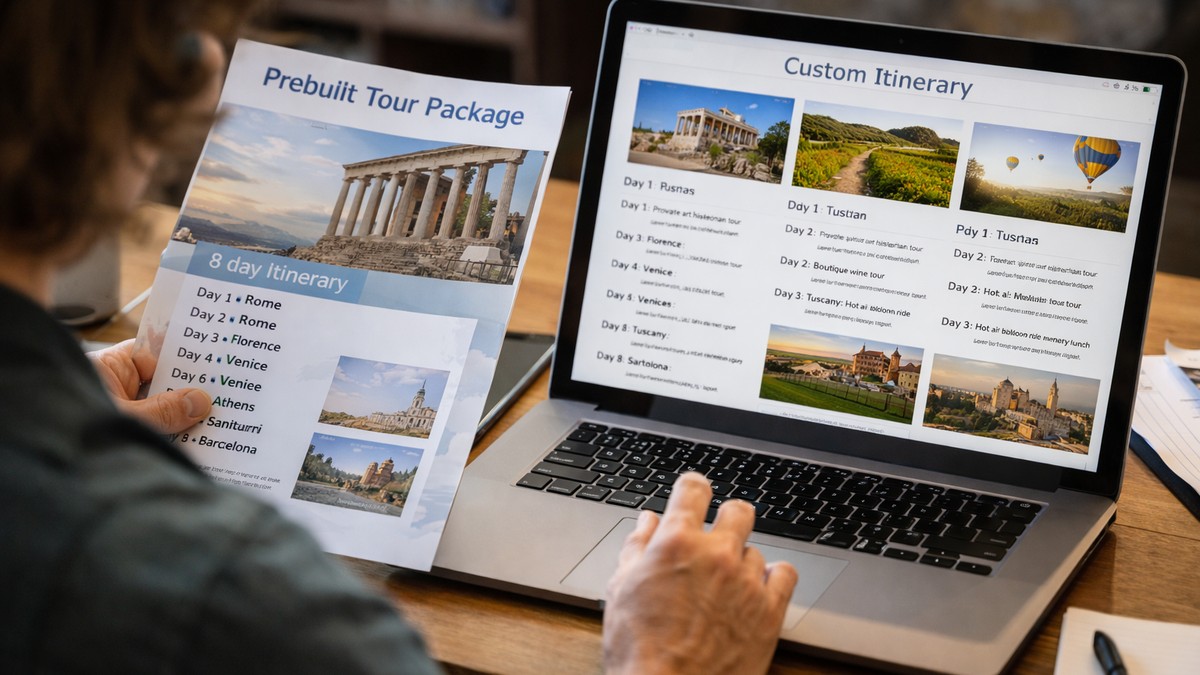
Tour Packages vs Booking Activities Separately is often framed as a philosophical debate. It is not. It is a margin and control question disguised as a consumer preference discussion.
Here is the thesis: the real advantage of tour packages is not lower price but risk consolidation, while the true power of booking activities separately lies in strategic flexibility and margin optimization.
For travel agencies and operators, understanding that difference changes how you build and sell.
The false choice between bundle and bespoke
Why this debate still matters
The global tours and activities sector is estimated to be worth hundreds of billions of dollars annually according to various industry reports estimate. Consumers have more booking channels than ever.
Meanwhile, packaged tours remain strong in segments such as escorted group travel and multi country circuits.
Clients assume that packages are cheaper and separate bookings are more expensive. That assumption is not consistently true.
Control versus convenience
Tour packages consolidate flights, accommodation, transfers, and experiences into one contract. This reduces friction. It also reduces transparency.
Booking activities separately offers flexibility. It increases operational complexity.
The question is not which is better. It is which is better for this client and this itinerary.
Tour Packages vs Booking Activities Separately
Pricing transparency
Packages often mask component level pricing. That can be beneficial when negotiated rates are strong. It can also obscure margin compression.
Example one. An agency compared a seven night guided Italy package priced at 3,400 dollars per person with a semi custom itinerary using boutique hotels and private transfers.
The custom build priced at 3,650 dollars per person. However, hotel selection improved and group size dropped from 30 to 12 travelers.
Conversion rate for the custom version reached 41 percent versus 28 percent for the large group package among affluent clients. Higher price, higher perceived value.
Transparency builds trust.
Risk and logistics management
Packages centralize responsibility. Missed transfers and supplier changes are handled by the operator.
When booking activities separately, agencies assume coordination risk. That can be positive when control is required. It can be operationally heavy without strong systems.
According to industry surveys estimate, travelers rank reliability and smooth logistics among the top drivers of satisfaction. Packages perform well here when operated by experienced providers.
Experience cohesion
Bundled tours often follow fixed pacing. That consistency works for first time travelers or time poor clients.
Separate bookings allow experience density control. Agencies can remove filler and prioritize high impact moments.
Example two. A corporate incentive group in Spain compared a standard Barcelona package with fixed daily excursions against a modular design with two premium private experiences and additional free time.
The modular design increased per person land cost by 8 percent but improved post event satisfaction scores by 1.2 points on a ten point scale. The client renewed the program the following year.
Cohesion is not about more activities. It is about better sequencing.
Margin structure
Packages provide pre set commission structures. Margins are predictable but capped.
Separate bookings allow agencies to manage markup across components. Accommodation, transfers, guides, and experiences each carry different margin profiles.
Example three. A mid size agency processed 120 bookings for Southeast Asia over one season.
For fixed operator packages, average gross margin was 11 percent.
For semi custom builds with individually sourced hotels and tours, average gross margin reached 16 percent.
However, staff time per booking increased by approximately 20 percent.
Margin opportunity must be weighed against labor cost.
The numbers behind each model
Comparison snapshot
| Factor | Tour Package | Separate Booking |
|---|---|---|
| Pricing clarity | Lower | Higher |
| Operational control | Lower | Higher |
| Risk consolidation | High | Medium |
| Margin ceiling | Moderate | Higher potential |
| Customization | Limited | Extensive |
Each model has strengths. Neither is universally superior.
Operational workload
Separate bookings require contract management, supplier vetting, and rate monitoring.
Packages reduce administrative burden but reduce pricing agility.
Technology changes the equation. Hotel rate volatility remains present in both models. Even packaged itineraries may include flexible components. Monitoring accommodation pricing after booking can protect margin regardless of structure.
Platforms such as Rebookify allow agencies to track hotel price drops and automatically rebook when rates decrease. In modular itineraries, this can directly improve profitability. In packaged scenarios with flexible hotel components, it can add incremental gains.
What this means for travel agencies
First, segment clients. Budget sensitive first time travelers may value bundled predictability. High value repeat clients often prefer curated flexibility.
Second, calculate labor cost. If custom builds increase margin by five percentage points but double planning time, profitability may narrow.
Third, mix models. Offer a base package with optional premium modules. This retains risk consolidation while introducing upsell potential.
Fourth, implement rate monitoring discipline. Whether selling packages or separate components, accommodation pricing is dynamic. Capturing post booking rate drops protects margin without altering client experience.
Fifth, communicate value clearly. Explain why a semi custom itinerary costs more and what that delivers. Clients respond to rationale.
Quick takeaways
• Packages consolidate risk but cap flexibility
• Separate bookings increase control and margin potential
• Pricing transparency influences conversion
• Labor cost must be factored into customization
• Hotel rate monitoring benefits both models
Common mistakes
• Assuming packages are always cheaper
• Underestimating operational workload of custom builds
• Over customizing without margin discipline
• Ignoring risk exposure in separate bookings
• Failing to monitor accommodation pricing post booking
Conclusion
Tour Packages vs Booking Activities Separately is not a binary decision. It is a strategic lever.
Agencies that understand when to bundle for stability and when to unbundle for flexibility gain a competitive edge. Combine thoughtful segmentation with operational discipline and the choice becomes less ideological and more commercial.
The smartest model is the one that aligns with client expectations and your internal capacity to manage risk and pricing.