March 6, 2026
Travel Guide to Cappadocia
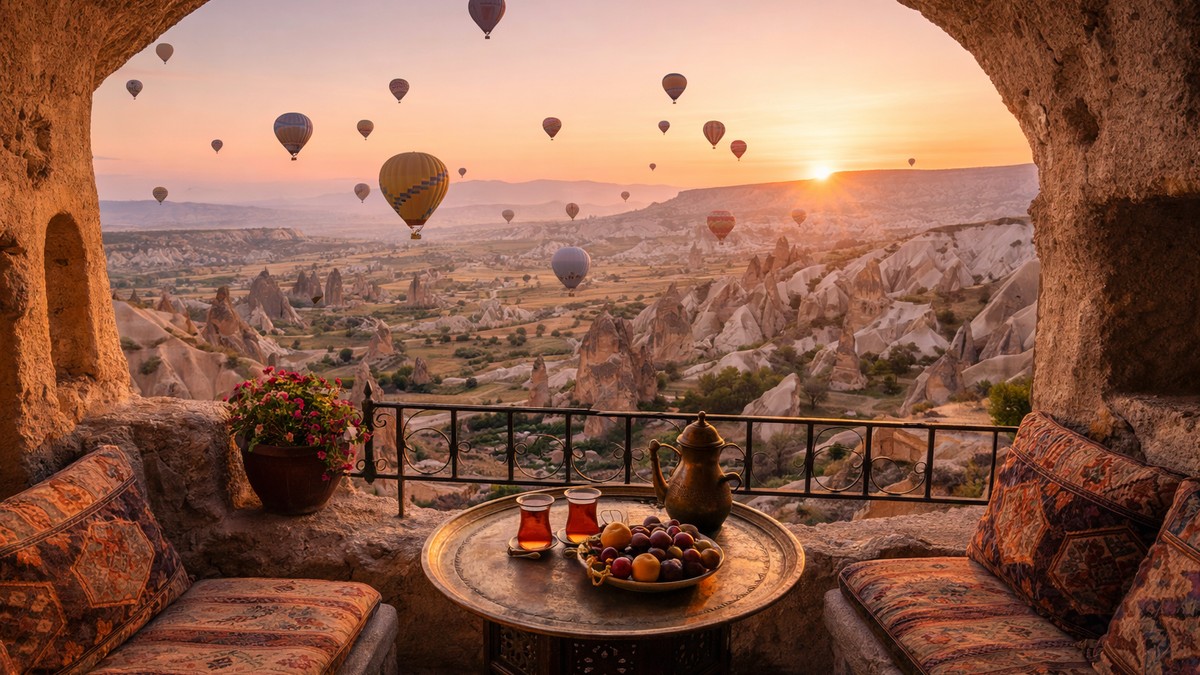
Cappadocia looks surreal in photographs. In person it feels even stranger.
Here is the thesis: Cappadocia succeeds as a destination not because of a single attraction but because the entire landscape operates as an immersive experience where geology, history, and hospitality intersect.
This is the essence of a strong Travel Guide to Cappadocia.
Visitors arrive expecting balloons and fairy chimneys. They leave remembering valleys, cave hotels, and quiet mornings in a landscape that looks almost lunar.
Why Cappadocia works best as an experience based destination
Landscape shaped by geology and history
Millions of years ago volcanic eruptions covered this region of central Türkiye with ash that hardened into soft rock known as tuff. Wind and water slowly sculpted that rock into the tall cones and ridges known as fairy chimneys.
Humans then carved homes, churches, and tunnels into the landscape.
The result is a destination where natural and cultural history are inseparable.
Why travelers remember Cappadocia
Unlike many destinations where attractions sit apart from each other, Cappadocia’s geography creates immersion.
Travelers wake up in cave rooms, watch balloons rise over valleys, and explore rock carved monasteries.
Example one. A travel agency from Germany booked a four night stay for a couple at a boutique cave hotel costing about 340 euros per night. The property included sunrise terrace views and guided valley hikes. The clients rated the hotel experience higher than the balloon ride itself.
Accommodation becomes part of the destination.
Travel Guide to Cappadocia
Goreme and the open air museum
Goreme functions as the region’s tourism hub.
The Goreme Open Air Museum contains rock cut churches dating back to the tenth century with remarkably preserved frescoes estimate.
Visitors can walk between monasteries carved directly into cliff faces.
This site remains one of Cappadocia’s most visited cultural landmarks.
Sunrise hot air balloon flights
Hot air ballooning defines the visual identity of Cappadocia.
Hundreds of balloons rise over the valleys most mornings depending on weather conditions.
Flights usually last about sixty minutes estimate and provide aerial views of valleys and rock formations.
Example two. A small corporate group booked six balloon flights priced at roughly 260 euros per person. Weather delayed the flight one day but the operator rescheduled successfully. The experience became the defining highlight of the trip.
Underground cities
Cappadocia also hides entire cities below the surface.
Sites such as Derinkuyu and Kaymakli extend multiple levels underground.
These cities once sheltered thousands of residents during invasions.
Visitors can walk through narrow tunnels connecting storage rooms, kitchens, and ventilation shafts.
Valleys and hiking routes
Many travelers underestimate Cappadocia’s hiking opportunities.
Rose Valley, Love Valley, and Pigeon Valley offer trails that wind through colorful rock formations and small orchards.
Example three. A North American family spent two days exploring valley trails with a private guide costing approximately 180 euros per day. The slower pace allowed them to avoid large tour groups while learning about local agriculture and geology.
Cave hotels
Cave hotels remain one of Cappadocia’s most distinctive features.
Rooms carved into rock provide natural insulation. Many boutique properties combine traditional architecture with modern comforts such as terraces and pools.
Staying in a cave hotel transforms a simple overnight stay into an experience.
The numbers behind Cappadocia travel
Snapshot of typical costs
| Category | Typical cost estimate |
|---|---|
| Boutique cave hotel | 220 to 400 euros per night |
| Balloon flight | 220 to 320 euros per person |
| Private valley guide | 150 to 200 euros per day |
| Museum entry ticket | 15 to 20 euros |
Prices vary based on season and demand.
Visitor patterns
Cappadocia attracts several million visitors each year estimate.
Spring and autumn offer the most comfortable temperatures for hiking while summer brings the largest visitor numbers.
Balloon flights operate year round but depend heavily on weather conditions.
What this means for travel agencies
First, build Cappadocia itineraries around experiences rather than a checklist of sights. Balloon flights, valley walks, and cave hotel stays should anchor the trip.
Second, book balloon flights early. Capacity fills quickly during peak seasons.
Third, schedule flexible mornings. Balloon flights may shift due to wind conditions.
Fourth, combine guided exploration with free time. The region’s small towns reward relaxed wandering.
Fifth, monitor hotel rates after booking. Cappadocia hotel pricing changes frequently due to seasonal demand and balloon tourism. Tools such as Rebookify allow agencies to monitor price changes and automatically rebook lower rates when available, improving margins or creating savings for clients.
Quick takeaways
• Cappadocia works best as an immersive landscape experience
• Balloon flights remain the region’s signature activity
• Cave hotels transform accommodation into a highlight
• Valley hiking offers quieter alternatives to crowded sites
• Monitoring hotel rates protects agency margins
Common mistakes
• Booking balloon flights too late during peak season
• Treating Cappadocia as a rushed one night stop
• Ignoring hiking routes that showcase the landscape
• Over scheduling early morning activities after balloon flights
• Choosing hotels without terrace views or location advantages
Conclusion
A thoughtful Travel Guide to Cappadocia reveals a destination far deeper than its famous balloon photographs.
The real experience emerges from the rhythm of the region. Sunrise skies filled with balloons, quiet valleys, underground cities, and evenings on cave hotel terraces.
For travel agencies, designing trips around these moments transforms Cappadocia from a quick photo stop into one of the most memorable journeys in Türkiye.