October 8, 2026
Travelers Are Spending More but Travelling Less
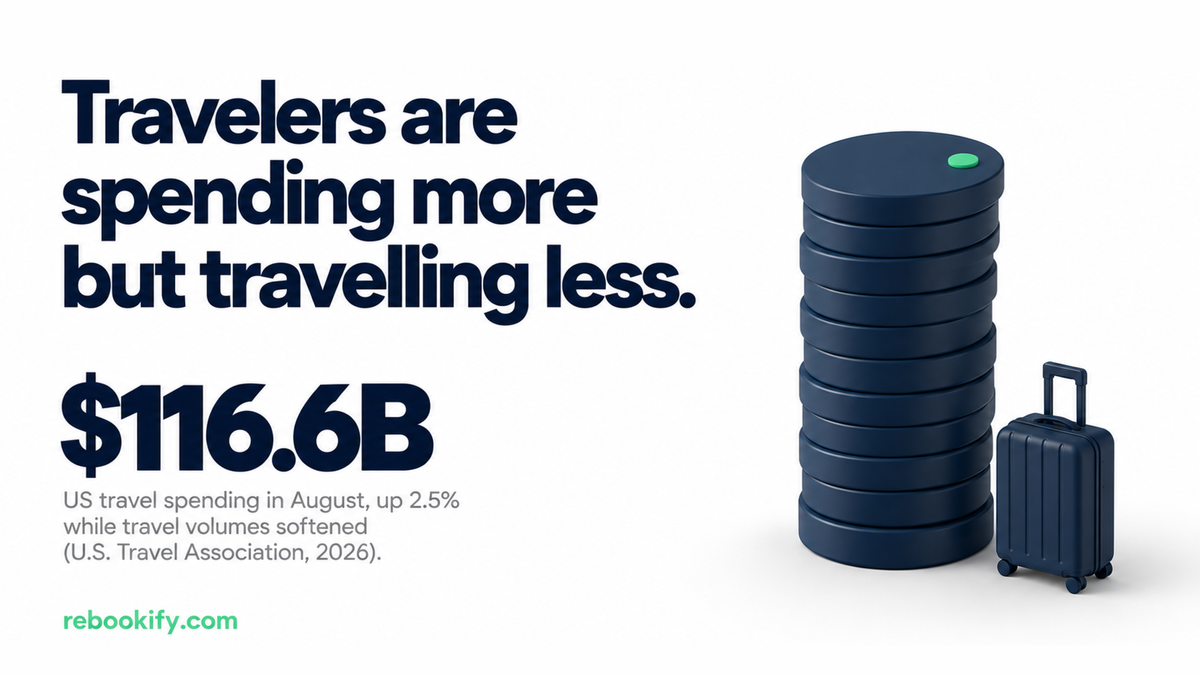
In the US, travelers are spending more and travelling less.
According to the U.S. Travel Association's latest dashboard, travel spending has risen year over year every month in 2026. August hit $116.6 billion, up 2.5%. But volumes told a softer story, and travel prices kept rising faster than overall consumer prices.
More money. Fewer trips. The growth is coming from price, not from people.
The forward numbers are just as interesting. Corporate hotel bookings for the final quarter are already running ahead of last year: 5.2% for October, 7.7% for November, 11.2% for December. Those reservations are made weeks or months before check-in.
Europe doesn't have the same dataset, so it would be wrong to copy these numbers across the Atlantic. But the ingredients look familiar. HOTREC's 2026 European Hotel Distribution Study, covering 2,713 properties, found that 44% of hotels see their rates or availability redistributed through other platforms, which can lead to price inconsistencies. Booking Holdings and Expedia Group control more than 85% of OTA bookings in Europe.
Put those together. Bookings made early. Rates moving through several channels. Prices rising faster than inflation.
That's a long window in which the same room, at the same hotel, on the same dates, can quietly become cheaper than what the guest already paid.
At Rebookify, that's the window we watch. We monitor every refundable reservation an agency manages and send a notification the moment a lower rate appears on the same hotel, room, and dates.
When a market grows on price rather than volume, every euro on a booking that's already made matters more.