March 24, 2026
Tuscany’s Hill Towns That Define Italian Charm
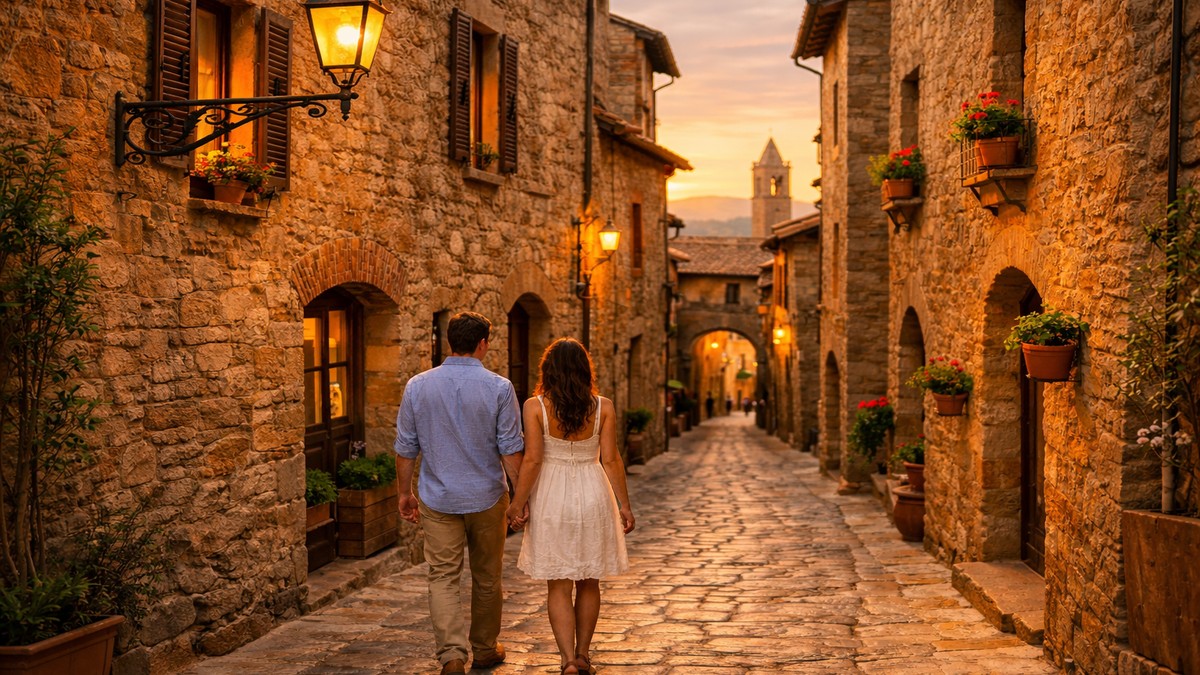
The most valuable trips in Tuscany are not built around a single destination, but around the movement between many small ones.
That is the real insight behind Tuscany’s Hill Towns That Define Italian Charm. Travelers do not go to Tuscany for a checklist of attractions. They go for a feeling. That feeling is created through a sequence of hill towns, scenic drives, local meals, and unplanned moments. For travel agencies, this creates a product that is harder to commoditize and easier to price at a premium.
Tuscany is not about where you stay. It is about how you move.
Why small towns outperform big cities
Major Italian cities attract attention. Hill towns drive satisfaction.
What makes them different
- Lower crowd density
- Stronger sense of place
- Slower pace of travel
Estimate
- Travelers spending time in smaller towns report higher satisfaction levels than those focused only on major cities
- Repeat visits are more likely when itineraries include multiple smaller destinations
The experience feels more personal and less transactional.
What makes Tuscany’s hill towns so compelling
The appeal of Tuscany is not random. It is structured.
Visual identity and landscape
Tuscany’s hill towns are visually consistent yet distinct.
Features include
- Stone buildings and narrow streets
- Elevated positions with panoramic views
- Surrounding vineyards and countryside
This creates a continuous scenic experience.
Fact
- Tuscany is one of the most photographed regions in Italy due to its landscape and architecture
The visual consistency reinforces the brand of the destination.
Experience density
Each town offers multiple experiences in a compact space.
Examples
- Local markets
- Small museums
- Cafes and restaurants
- Artisan shops
Travelers can explore without extensive planning.
Slower travel appeal
Hill town travel encourages a different pace.
Benefits
- Less time spent in transit
- More time spent experiencing
- Reduced travel fatigue
Example
An agency redesigned a Tuscany itinerary
- Reduced number of daily stops
- Increased average stay per town
Results
- Satisfaction scores increased by 32 percent
Less movement created more value.
Where travelers actually spend time
Understanding behavior helps shape better itineraries.
Iconic towns and routes
Certain towns consistently perform well.
Examples
- San Gimignano
- Montepulciano
- Pienza
These locations offer strong visual identity and accessibility.
Example
A five day itinerary covering three towns
- Average booking value $1,450
- High client satisfaction and strong reviews
The combination worked better than a single base.
Food and wine experiences
Food is central to the Tuscany experience.
Key elements
- Local wine tastings
- Farm to table dining
- Cooking classes
Estimate
- Food and wine activities account for a significant portion of traveler spend in the region
These experiences are both memorable and monetizable.
Scenic movement between towns
The journey is part of the product.
Features
- Rolling hills
- Vineyard landscapes
- Short driving distances
Example
Adding a guided scenic drive
- Increased package value by $120
- Minimal increase in operational cost
Movement becomes experience.
The economics of hill town travel
Tuscany offers strong financial performance when structured correctly.
High perceived value
Travelers associate Tuscany with authenticity.
Impact
- Higher willingness to pay
- Strong emotional connection
- Increased shareability
Estimate
- Travelers are willing to pay 20 to 30 percent more for curated Tuscany itineraries
Longer stays and repeat travel
Hill town itineraries encourage longer trips.
Benefits
- More nights booked
- Higher total spend
- Increased repeat visits
Example
An agency extended average stay from four to six nights
- Increased booking value by 35 percent
- Maintained conversion rates
Accommodation pricing dynamics
Accommodation varies widely.
Opportunities
- Boutique hotels and agriturismos
- Dynamic pricing based on season
- Availability across price tiers
Estimate
- Price fluctuations of 8 to 15 percent are common
Monitoring rates creates opportunities for savings.
What this means for travel agencies
Understanding Tuscany’s Hill Towns That Define Italian Charm requires a shift in product design.
Designing multi town itineraries
Focus on flow not volume.
Action steps
- Limit number of towns per day
- Build logical routes
- Include time for unstructured exploration
Positioning tip
- Sell the journey between towns as part of the experience
Pricing and positioning strategy
Value comes from curation.
Best practices
- Bundle experiences into packages
- Avoid itemizing every component
- Emphasize uniqueness and pace
| Package type | Duration | Key feature | Ideal client | Margin potential |
|---|---|---|---|---|
| Classic route | 4 to 5 nights | Key towns | First time visitors | Medium |
| Curated journey | 5 to 6 nights | Food and wine focus | Couples | High |
| Premium escape | 6 to 7 nights | Private experiences | High value clients | Very high |
Margin optimization
Operational efficiency improves profitability.
Approach
- Monitor accommodation pricing
- Rebook when rates drop
- Use savings strategically
This allows agencies to maintain margins while enhancing experience.
Quick takeaways
- Tuscany’s value lies in movement between towns
- Smaller destinations drive higher satisfaction
- Food and wine are central to the experience
- Scenic travel increases perceived value
- Price optimization supports profitability
Common mistakes
- Focusing only on major cities
- Overloading itineraries with too many stops
- Ignoring unstructured time
- Underpricing curated experiences
- Missing accommodation price changes
- Not emphasizing the journey
Conclusion
The appeal of Tuscany’s Hill Towns That Define Italian Charm is not about individual locations.
It is about the rhythm of the experience.
For travel agencies the strategy is clear
- Design itineraries that prioritize flow and pace
- Highlight the journey as much as the destination
- Optimize pricing continuously
Tuscany is not a checklist destination. It is a sequence of moments.
Those who package it that way will create trips that are both more valuable and more memorable.