March 26, 2026
A Walking Guide to Prague That Maximizes Experience
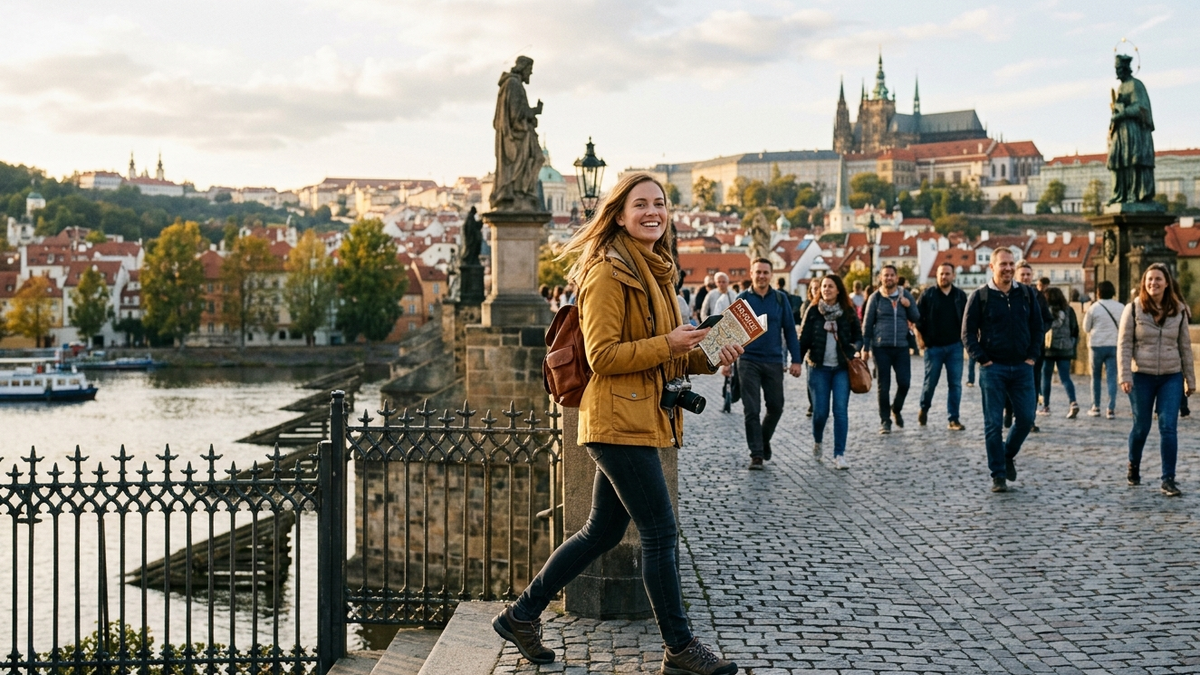
Prague is not a city you visit. It is a city you move through.
That is the central idea behind A Walking Guide to Prague. Unlike many European capitals where distances force reliance on transport, Prague compresses history, architecture, and atmosphere into a walkable core. The result is a destination where the journey between landmarks is just as valuable as the landmarks themselves.
For travel agencies, this creates a rare advantage.
You can deliver a high impact experience with minimal logistics and low operational cost.
Why Prague is best experienced on foot
Prague’s layout works in your favor.
Key characteristics
- Compact historic center
- High concentration of landmarks
- Pedestrian friendly streets
Estimate
- Most major attractions are within a three kilometer radius
- Walking times between key sites often range from 10 to 25 minutes
This density creates continuous engagement.
There are no long gaps between experiences.
The logic of a well designed walking route
A walking itinerary is only as good as its structure.
Flow and geography
Routes should follow natural progression.
Best practice
- Move in one direction
- Avoid backtracking
- Use landmarks as anchors
Example
An agency redesigned its Prague walking route
- Reduced unnecessary walking by 35 percent
- Improved client satisfaction scores by 18 percent
Efficiency improves perception.
Experience density
Every segment should offer value.
Focus on
- Visual highlights
- Cultural moments
- Rest opportunities
Prague delivers consistently if structured correctly.
Avoiding fatigue
Walking can become tiring if poorly planned.
Key considerations
- Limit total distance
- Include breaks
- Balance activity levels
Estimate
- Ideal walking distance per day is 8 to 12 kilometers
Beyond that, experience quality drops.
The ideal one day walking route
This route consistently delivers strong results.
Old Town and Astronomical Clock
Start early.
Highlights
- Old Town Square
- Astronomical Clock
- Historic streets
Morning timing reduces crowd pressure.
Example
A guided morning start
- Reduced waiting time by 40 percent
- Improved overall experience
Charles Bridge and Lesser Town
Move toward the river.
Key moments
- Charles Bridge views
- Street performers
- Transition into Lesser Town
This is one of the most visually impactful segments.
Prague Castle and viewpoints
End with elevation.
Highlights
- Prague Castle complex
- Panoramic city views
- Scenic walk back down
The sequence builds toward a strong finish.
Enhancing the walking experience
The route is only part of the story.
Timing and crowd management
Timing changes everything.
Best practices
- Start early
- Avoid peak midday congestion
- Use late afternoon for viewpoints
Estimate
- Peak crowd times can increase walking time by 20 to 30 percent
Smart timing improves flow.
Local experiences along the route
Add depth without adding distance.
Options
- Local cafes
- Small museums
- Food stops
Example
Adding a food stop
- Increased satisfaction scores by 24 percent
- Minimal cost increase
Break points and pacing
Rest is part of the experience.
Include
- Scenic stops
- Cafes
- Quiet areas
This maintains energy levels.
The economics of walking based itineraries
Walking itineraries are efficient.
Cost efficiency
Lower operational costs.
Advantages
- Minimal transport expenses
- Reduced logistics complexity
- Higher margins
Example
A walking based itinerary
- Reduced operational costs by 15 percent
- Maintained high client satisfaction
Upsell opportunities
Walking routes support add ons.
Options
- Guided tours
- Food experiences
- Private experiences
Example
Adding a guided component
- Increased package value by $90
- Maintained conversion rates
Value perception
Walking increases perceived value.
Reasons
- Continuous engagement
- Authentic exploration
- Personal discovery
Clients feel more connected to the destination.
What this means for travel agencies
Understanding A Walking Guide to Prague allows for better product design.
Designing walking itineraries
Focus on simplicity and flow.
Action steps
- Map logical routes
- Limit total distance
- Prioritize key experiences
Positioning tip
- Sell the journey not just the landmarks
Packaging experiences
Structure packages carefully.
Best practices
- Bundle walking routes with guided elements
- Highlight key moments
- Avoid overloading schedules
| Package type | Duration | Key feature | Ideal client | Margin potential |
|---|---|---|---|---|
| Essential walk | 1 day | Core landmarks | First time visitors | Medium |
| Curated Prague | 2 to 3 days | Added experiences | Couples | High |
| Premium city | 3 to 4 days | Private tours and dining | High value clients | Very high |
Margin optimization
Efficiency creates opportunity.
Approach
- Monitor hotel pricing after booking
- Rebook when rates drop
- Use savings to enhance walking experiences
Small optimizations improve profitability.
Quick takeaways
- Prague is ideal for walking based itineraries
- Route design impacts experience quality
- Timing and pacing are critical
- Walking reduces operational costs
- Upsells enhance value without complexity
Common mistakes
- Overloading the walking route
- Ignoring flow and geography
- Starting too late in the day
- Skipping rest points
- Missing upsell opportunities
- Not optimizing hotel pricing
Conclusion
The strength of A Walking Guide to Prague lies in simplicity.
It is a city that rewards movement at a human pace.
For travel agencies the opportunity is clear
- Design routes that flow naturally
- Enhance the journey with meaningful stops
- Optimize pricing behind the scenes
Do that well, and Prague becomes one of the easiest high value city products you can sell.