February 1, 2026
When Is The Best Time To Visit Bangkok?
Introduction
When Is The Best Time To Visit Bangkok? Most guides obsess over temperature charts. The smarter question is timing for value. My thesis is simple. Bangkok has no bad season. It only has expensive weeks and cheap weeks. Travelers who align their purpose with pricing cycles often save hundreds while enjoying quieter streets and better service.
Bangkok works year round because the city runs indoors as much as outdoors. Skytrain lines, malls, cafés, temples, and river ferries keep things moving even in heat or rain. If you understand the rhythm, you can sell a better trip, not just a drier one.
Bangkok by season explained
Cool season
November through February
This is peak season. Lower humidity, tolerable evenings, and postcard weather.
Average highs around 30 C. Minimal rainfall.
Hotels know it. Rates spike.
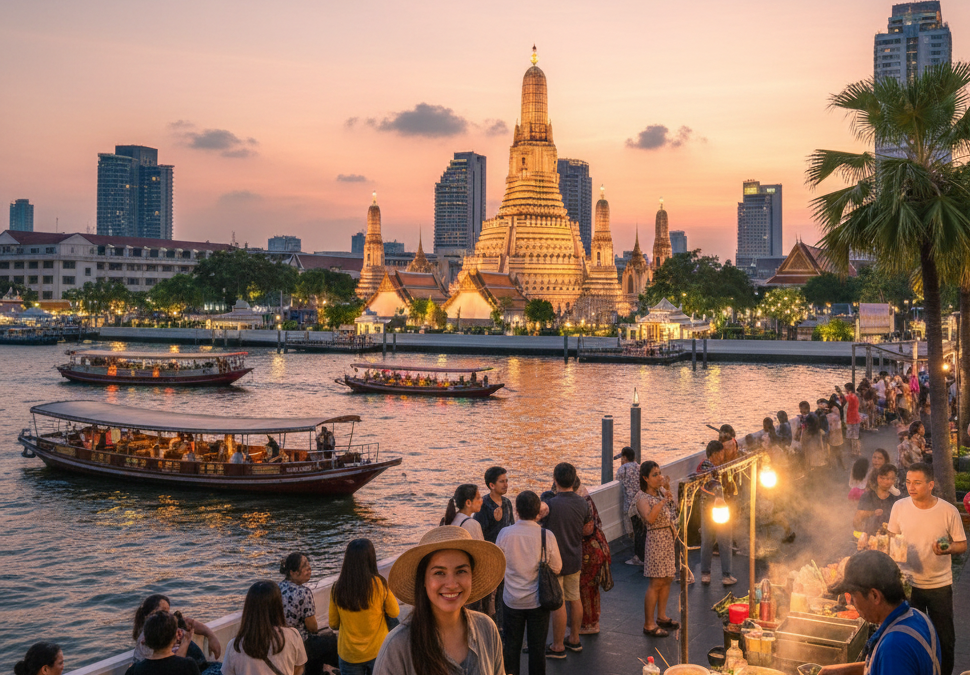
Expect river cruises, night markets, and temple visits to feel effortless. It is the most comfortable time for first timers and families.
Tradeoff is price.
Hot season
March through May
Bangkok turns into a sauna. Temperatures regularly hit 35 C or higher.
Afternoons can feel brutal.
But something interesting happens. Hotel demand dips outside of major holidays.
Malls, museums, rooftop bars, and river ferries become your friends.
Songkran in April turns the heat into a citywide water fight and cultural event.
If travelers pace mornings and evenings well, this can be one of the cheapest times to visit.
Rainy season
June through October
Monsoon sounds dramatic. Reality is less so.
Storms are usually short bursts rather than all day washouts.
Expect heavy rain for an hour, then sunshine.
Greenery improves. Crowds thin out. Hotel rates soften.
For photographers and repeat visitors, this is arguably the most atmospheric time.
What prices really do through the year
Most travelers assume prices rise and fall smoothly. They do not. Bangkok behaves in spikes.
Peak holidays and events push rates sharply higher.
Random midweek dates can be surprisingly affordable.
A few useful benchmarks.
Hotel rates in Southeast Asia can swing 20 to 40 percent between high and low seasons. Estimate.
Weekend occupancy in Bangkok often exceeds 80 percent during cool season. Estimate.
Shoulder periods frequently drop occupancy below 65 percent. Estimate.
That gap is opportunity.
One mid size agency I spoke with rebooked 60 Bangkok stays last year after monitoring rates and captured an average 18 percent savings per booking. That translated to roughly 120 dollars per room night saved across a three night stay.
Multiply that across a group. Real money.
Matching timing to traveler type
First timers
Cool season wins. November to January offers the easiest experience.
Budget travelers
Late May or September. Lower hotel rates and manageable crowds.
Cultural travelers
Rainy season is underrated. Temples, markets, and neighborhoods feel more local.
Business travelers
Year round works. Bangkok infrastructure is strong. Short stays matter less.
Luxury travelers
Shoulder season plus rebooking tools often delivers five star hotels at four star prices.
Decision table
| Traveler goal | Best months | Why it works | Price level | Crowd level |
|---|---|---|---|---|
| First visit sightseeing | Nov to Jan | Comfortable weather | High | High |
| Budget savings | May to Jun Sep | Lower demand discounts | Low | Medium to low |
| Food and culture focus | Aug to Oct | Local feel fewer tourists | Medium to low | Low |
| Luxury deals | Late May or Sep | Premium hotels discount rooms | Medium | Medium |
| Festivals | April or Nov | Songkran and Loy Krathong | Medium to high | High |
Quick takeaways
• Bangkok has value all year if expectations match the season
• Rain rarely ruins whole days
• Shoulder season often delivers the best hotel deals
• Short stays benefit most from smart timing
• Price monitoring after booking can unlock surprise savings
What this means for travel agencies
This is where timing turns into margin.
Action steps
• Sell shoulder season itineraries more aggressively
• Educate clients that rain is usually brief not constant
• Package indoor experiences like food tours and river cruises
• Monitor hotel rates after booking and rebook when prices drop
• Block flexible inventory during low demand months
One agency example
A Southeast Asia specialist shifted 40 percent of Bangkok bookings from December to early June. Average nightly rates fell from 210 dollars to 145 dollars. Over three nights and 80 clients that saved roughly 15,600 dollars total. Estimate.
Another example
A corporate travel desk rebooked executive stays twice during monsoon season and saved 320 dollars per trip across 25 trips. Estimate.
Small margins add up fast.
Common mistakes
• Avoiding rainy season entirely
• Overpacking daily itineraries in extreme heat
• Booking only weekends in peak months
• Ignoring dynamic hotel pricing after confirmation
• Treating Bangkok as a quick stop instead of a base
Conclusion
So When Is The Best Time To Visit Bangkok? It depends less on the sky and more on strategy. Cool months feel easiest. Shoulder months feel smartest. Rainy months feel authentic. There is no wrong answer, only mismatched expectations.
For agencies and planners, the win is simple. Book early, monitor rates, and adjust when prices fall. Tools that automate that work quietly protect profit without changing the traveler experience.
Better timing beats better weather almost every time.