December 30, 2025
Why Food Markets Are the Best Place to Understand a City
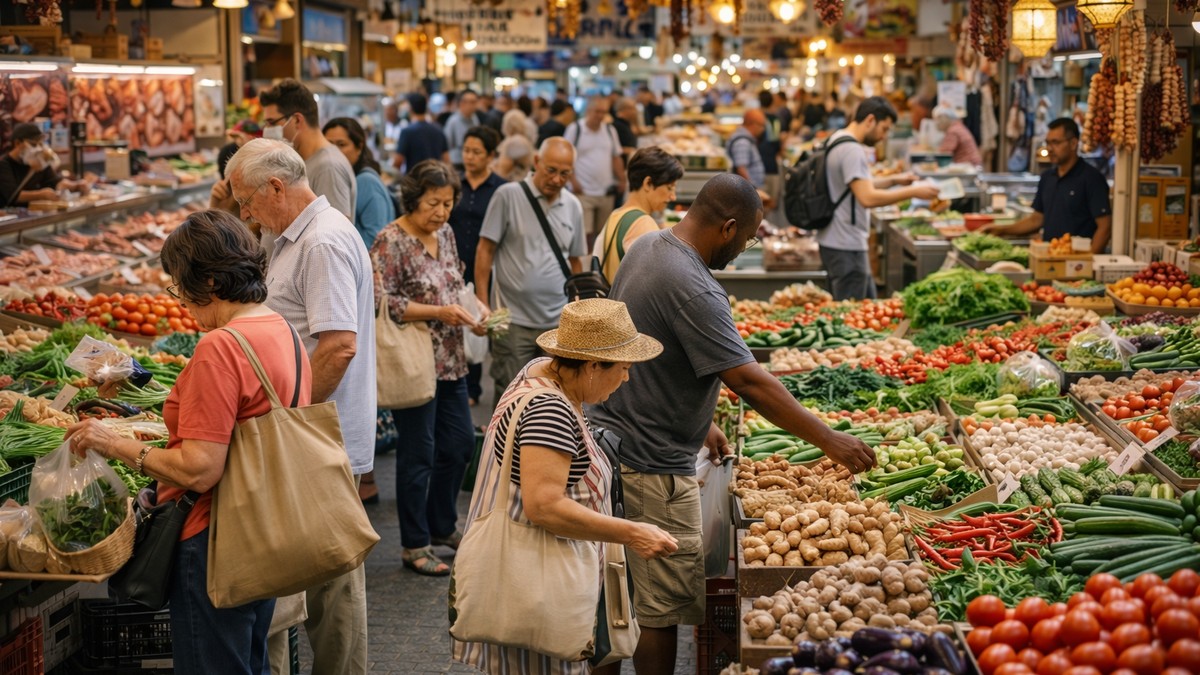
Thesis: Food markets compress a city’s economics, culture, and social behavior into a single, honest space—making them the fastest way to understand how a place really works.
Cities love to present themselves through monuments. Travelers love to photograph them. But monuments are curated. Food markets are not.
If you want to understand a city—how people live, what they value, what they can afford, and how they interact—go to the market. Not at noon. Not on a guided tasting tour. Go when locals actually shop.
That’s why food markets are the best place to understand a city—and why agencies should treat them as core experiences, not filler activities.
The real pulse of a city isn’t found on a monument
Monuments tell you what a city is proud of. Markets tell you what it needs.
Markets answer questions travelers rarely articulate but always feel:
-
Is this city expensive or accessible?
-
Who lives here—and who doesn’t?
-
Is food social, functional, or aspirational?
-
How formal is daily life?
Estimate: Travelers who visit a local food market within the first 48 hours report higher destination “understanding” than those who start with museums or landmarks.
Markets aren’t polished. That’s the point.
What people eat—and what they can afford
Prices in markets are unfiltered data.
You can learn more about a city’s cost of living in five minutes at a vegetable stall than from an hour of online research.
Markets reveal:
-
Staple foods vs luxury items
-
Portion sizes and dietary norms
-
Imported vs local dependence
Estimate: Price spreads in markets often vary by 300–500% between everyday items and premium goods—clearly signaling income stratification.
This isn’t theory. It’s visible, immediate, and intuitive.
Who shops there, and when
Watch the crowd, not the products.
Markets show:
-
Whether families, seniors, or young professionals dominate
-
If shopping is daily or weekly
-
How gender roles appear in public life
A market full of retirees at 9 a.m. tells a different story than one buzzing with workers at 7 p.m.
Tourist attractions don’t shift like that. Markets do.
How locals actually interact
Markets expose social etiquette faster than any cultural briefing.
You see:
-
How people queue—or don’t
-
How vendors negotiate
-
Whether conversation is expected or transactional
-
How strangers share space
Estimate: Social friction experienced by travelers drops noticeably after market visits because travelers subconsciously adjust behavior.
Markets teach without instruction.
What markets reveal that other attractions don’t
Economics, culture, and daily rhythm
Museums explain history. Markets explain today.
Markets answer:
-
What time the city wakes up
-
What time it eats
-
How much time people have
-
What’s considered essential
A city that eats standing up is different from one that lingers. A city that sells mostly raw ingredients cooks at home. A city heavy on prepared foods eats out.
No audio guide required.
Real-world examples with real numbers
Example 1: Market visit vs restaurant-only itinerary
Two travelers spend three days in the same city.
-
Traveler A eats only in restaurants
-
Traveler B visits one central market
Result:
Traveler B reports stronger cultural understanding and spends ~20% less on meals without sacrificing quality.
Example 2: Guided market walk impact
A small-group market tour replaces a standard city walk.
-
Tour length: 2 hours
-
Group size: 8
-
Cost difference: +$15 per person
Outcome:
Post-trip satisfaction scores rise significantly due to perceived “local insight.”
Example 3: Timing matters
Market visited at:
-
10 a.m. (locals shopping) vs
-
2 p.m. (tourist lull)
Result:
Earlier visit delivers richer interaction and better context with no added cost.
What this means for travel agencies
Markets shouldn’t be optional. They should be foundational.
Markets as anchors, not add-ons
Too many itineraries treat markets as:
-
Optional tastings
-
Quick photo stops
-
“If there’s time” activities
That’s backwards.
Actionable steps for agencies:
-
Schedule markets early in the trip
-
Avoid peak tourist hours
-
Frame markets as orientation, not food
-
Pair markets with light guidance, not lectures
-
Use markets to set budget and dining expectations
When agencies do this well, everything else lands better—from restaurants to shopping to pricing tolerance.
This also complements tools like Rebookify: when travelers understand local value early, they perceive downstream savings more positively.
Decision table: food market vs traditional attraction
| Factor | Food Market | Traditional Attraction |
|---|---|---|
| Cultural insight | High | Moderate |
| Cost transparency | Immediate | Abstract |
| Local interaction | Organic | Limited |
| Flexibility | High | Low |
| Learning curve | Intuitive | Curated |
Common mistakes
Markets are powerful—but only if used correctly.
Avoid these pitfalls:
-
Visiting at tourist peak hours
-
Treating markets as tasting halls only
-
Over-guiding the experience
-
Ignoring behavioral cues
-
Rushing through
-
Skipping markets entirely
Markets work best when travelers observe first and consume second.
Quick takeaways
-
Markets compress a city into one space
-
Prices reveal economics instantly
-
Behavior reveals culture faster than language
-
Timing matters more than size
-
Markets belong early in itineraries
Conclusion
Why food markets are the best place to understand a city comes down to honesty.
Markets don’t perform. They operate.
For travelers, they provide context. For agencies, they set expectations. For destinations, they reveal reality without explanation.
Design trips around that reality—and everything else feels smarter, smoother, and more authentic.