January 4, 2026
Why Hotel Prices Are Never Final (And How Rebooking Fixes That)
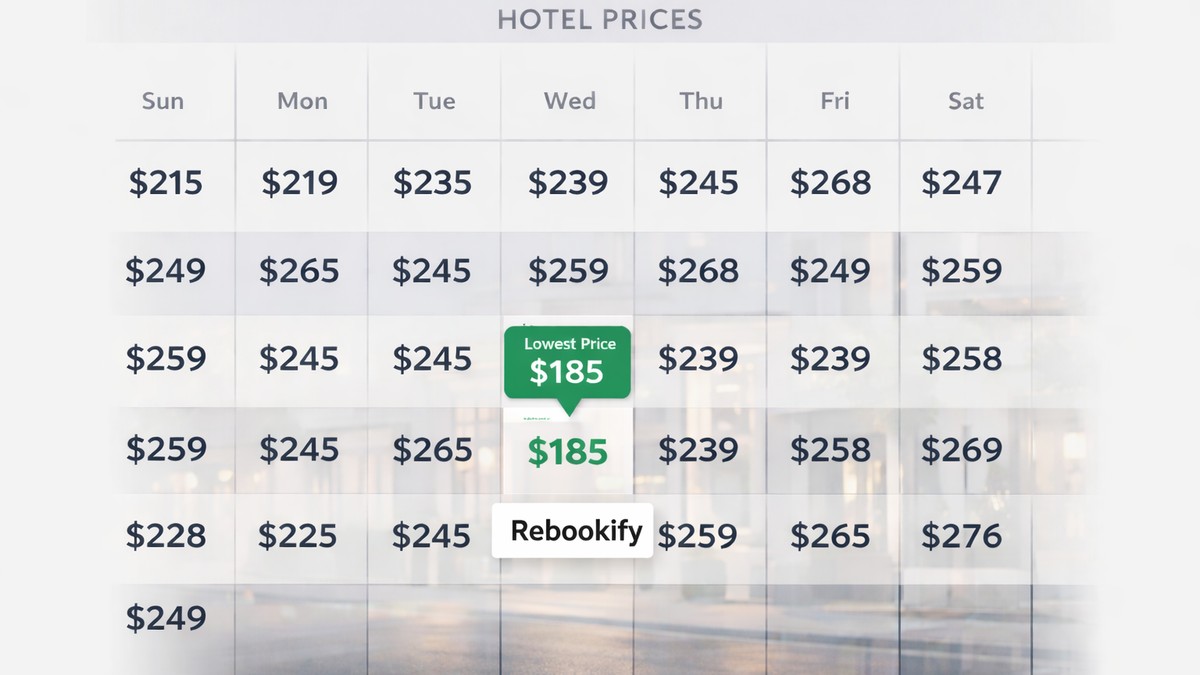
Thesis: Hotel prices aren’t broken or unpredictable—they’re behaving exactly as designed, and the real problem is treating the first booked rate as final when it never was.
Most travelers—and many agencies—still approach hotel pricing like airline tickets circa 2005: buy once, lock it in, move on. That mental model is outdated. Hotel rates are fluid until check-in day, shaped by demand, competition, and algorithms that update constantly. The surprise isn’t that prices drop after booking. The surprise is that we still pretend they don’t.
The Core Misunderstanding About Hotel Pricing
Hotels Sell Inventory, Not Rooms
A hotel room unsold tonight is revenue lost forever. Unlike flights, hotels can reprice the same physical inventory dozens of times before arrival. That flexibility is the foundation of modern revenue management.
According to an estimate based on revenue management software vendors, most mid-to-large hotels update pricing at least 3–5 times per day, and during volatile periods, far more frequently.
Revenue Systems Never Stop Adjusting
Hotel pricing engines ingest pace data, competitor pricing, cancellation trends, and booking windows in near real time. When demand softens—even slightly—rates adjust downward to stimulate bookings.
The system does not care that someone already booked at a higher price.
Why Prices Change After a Booking Is Made
Demand Signals and Pace Reports
If a hotel expected to be 80% full two weeks out and is sitting at 62%, prices drop. Quietly. Often overnight.
Estimate: Hotels miss forecasted occupancy targets 20–30% of the time, particularly outside peak season.
Competitor Undercutting and OTA Pressure
One nearby hotel drops rates to fill rooms. Others follow. OTAs amplify the effect by surfacing cheaper alternatives instantly, forcing price corrections across the market.
Three Real-World Pricing Scenarios
1. Urban Business Hotel, Midweek Softening
-
Original booking: €310/night
-
Repriced rate 9 days later: €265/night
-
Stay length: 3 nights
-
Savings realized via rebooking: €135
Cause: Corporate demand failed to materialize midweek.
2. Resort Shoulder Season Repricing
-
Original booking: $420/night
-
Repriced rate after cancellation spike: $365/night
-
Stay length: 5 nights
-
Savings: $275
Cause: Weather forecast softened demand; cancellations rose.
3. Event Compression—Then Collapse
-
Citywide event expected; rates inflated early
-
Event downsized; demand fell
-
Original rate: £480/night
-
Repriced rate: £390/night
-
Savings: £180 over two nights
Cause: Overestimated event impact—a classic pricing error.
What Rebooking Actually Solves
Separating “Booked” From “Optimized”
Booking confirms availability. Rebooking confirms value.
Those are not the same thing.
Rebooking doesn’t fight hotel pricing systems—it cooperates with them, capturing downward corrections when they occur.
Why Manual Monitoring Doesn’t Scale
Refreshing rates manually is inconsistent, time-consuming, and error-prone. By the time someone notices a price drop, the window often closes.
Automation isn’t a luxury here. It’s table stakes.
What This Means for Travel Agencies
Actionable Steps
-
Stop selling price certainty. Sell price vigilance.
-
Build rebooking into standard workflows, not as an exception.
-
Use savings as a retention lever, not just a margin tool.
-
Educate clients that price drops are normal—not mistakes.
Agencies using automated monitoring (industry estimate) recover 2–6% of total hotel spend post-booking without changing supplier mix.
That’s profit hiding in plain sight.
Decision Snapshot
| Approach | Initial Price | Final Price | Outcome |
|---|---|---|---|
| Static booking | €1,200 | €1,200 | Overpaid |
| Monitored booking | €1,200 | €1,050 | Optimized |
| Difference | — | — | €150 saved |
Quick Takeaways
-
Hotel prices are dynamic until arrival day
-
Booking early doesn’t guarantee best value
-
Price drops are structural, not rare
-
Rebooking captures volatility, not discounts
-
Agencies win by managing after booking, not just before
Common Mistakes
-
Treating hotel pricing like airline pricing
-
Assuming “non-refundable” means “non-adjustable”
-
Relying on manual checks
-
Ignoring post-booking value opportunities
-
Believing price drops are exceptions
Conclusion
Hotel prices were never final—we just lacked the tools to treat them that way.
Rebooking doesn’t undermine hotels, disrupt suppliers, or complicate workflows. It simply acknowledges reality: pricing moves, and value should move with it.
For agencies, that shift—from booking-centric to optimization-centric—is where modern profitability lives.
If you’re already booking well, the next step is booking smarter.