January 8, 2026
Why Travelers Research More but Trust Less
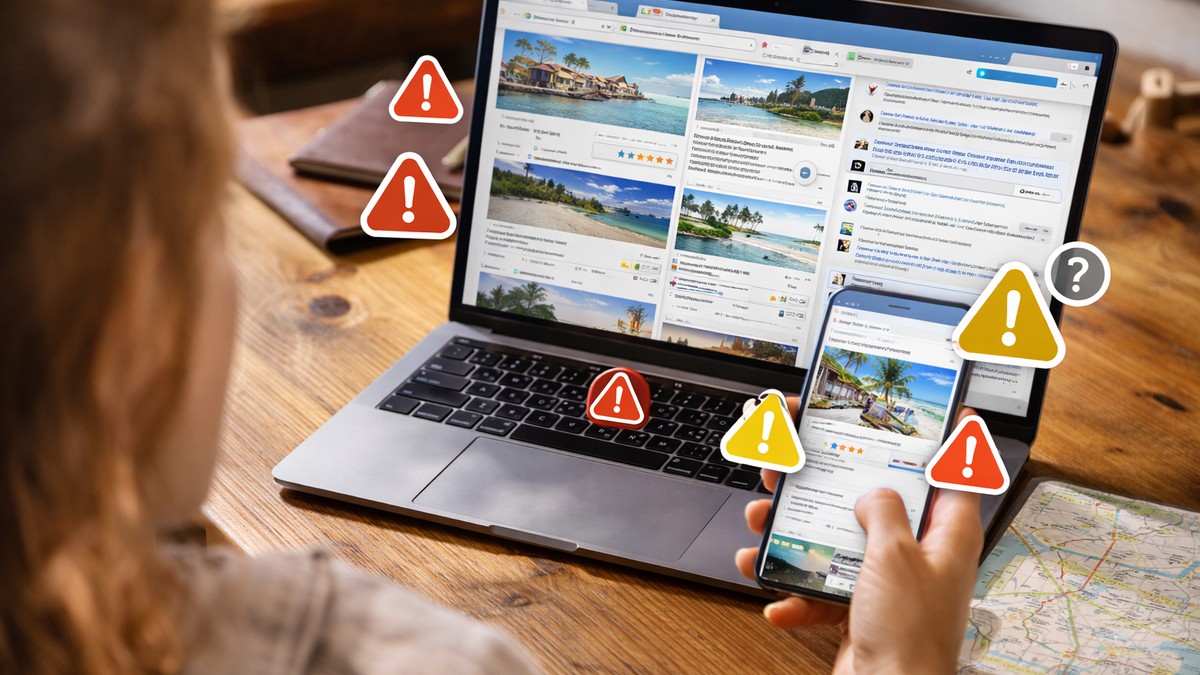
Thesis: Travelers aren’t overwhelmed by lack of information—they’re overwhelmed by too much information with no clear signal of what deserves trust.
Modern travelers research obsessively. They read reviews. Watch videos. Compare maps. Scroll forums at midnight. And then, increasingly, they hesitate.
The paradox is clear: access to information has exploded, but confidence has collapsed. More research doesn’t lead to faster decisions—it leads to doubt, second-guessing, and stalled bookings.
For travel agencies, this is not a content problem. It’s a trust problem.
The Research Explosion
Infinite sources, finite attention
A single hotel search now surfaces:
-
OTA listings
-
Meta-search comparisons
-
Review platforms
-
Social media posts
-
Influencer videos
-
Reddit threads
According to consumer research, over 70% of travelers consult at least five sources before booking (estimate). Many consult ten or more.
The result isn’t clarity. It’s cognitive overload.
Psychologists call this choice paralysis. The travel industry calls it “the client who won’t decide.”
The Collapse of Authority
Reviews, influencers, and conflicting advice
Once, authority in travel was clear. Guidebooks. Experts. Trusted agents.
Today:
-
Reviews conflict wildly
-
Influencers are incentivized
-
Algorithms reward extremes
-
“Authentic” content is often sponsored
Studies show nearly 40% of online reviews are suspected to be fake or manipulated across major platforms (estimate). Travelers sense this—even if they can’t articulate it.
So they keep researching. Not to learn more—but to feel safer.
What This Looks Like in Real Bookings
Example 1: The stalled luxury trip
A mid-market agency quoted a $9,800 two-week Europe itinerary. The client researched independently for three weeks, returned with screenshots, and delayed booking.
Final outcome: booked the original itinerary—unchanged—but only after reassurance calls and social proof.
Time lost: 18 days. Revenue risk: high. Decision blocker: trust, not price.
Example 2: The “better deal” illusion
A corporate traveler found a hotel online for $40 less per night after receiving an agency proposal. The agency verified: same property, worse room category, stricter cancellation.
Client still hesitated.
Why? Because price felt like proof, even when details contradicted it.
Example 3: The review spiral
A family planning a Maldives trip rejected three resorts after reading mixed reviews. Eventually booked the first option—after the advisor reframed reviews as signal noise and explained typical complaint bias.
Booking closed after confidence was restored, not new data added.
Why Trust Now Matters More Than Price
The psychology behind hesitation
Research shows negative information carries 2–3x more psychological weight than positive information (estimate). One bad review can outweigh fifty good ones.
In an environment where:
-
Everyone claims expertise
-
Information is flattened
-
Incentives are opaque
Travelers don’t know who to believe.
So they default to:
-
More research
-
More delays
-
More screenshots
Not because they want control—but because they lack confidence.
What This Means for Travel Agencies
1. Trust is now the product
Information is free. Judgment is not.
Agencies that win today don’t out-research clients—they out-contextualize them.
That means:
-
Explaining why reviews conflict
-
Framing trade-offs clearly
-
Saying “no” to bad ideas
2. Consistency beats persuasion
Every operational detail sends a trust signal:
-
Clear pricing logic
-
Transparent cancellation terms
-
Proactive communication
Even post-booking behavior matters. When agencies monitor hotel prices and rebook lower rates automatically—using tools like Rebookify—clients see alignment, not self-interest.
That builds trust without a sales pitch.
3. Fewer options, better framing
Presenting five hotels instead of fifteen is not limiting choice—it’s reducing anxiety.
Confidence grows when travelers feel guided, not flooded.
Common mistakes
-
Trying to “out-Google” the client
-
Defending every recommendation emotionally
-
Overloading proposals with options
-
Ignoring post-booking follow-through
-
Treating hesitation as price resistance
-
Assuming more information equals more trust
Quick takeaways
-
Travelers research more because they trust less
-
Reviews create noise, not clarity
-
Trust beats price in final decisions
-
Confidence comes from framing, not volume
-
Operational integrity builds silent credibility
The Bottom Line
Why Travelers Research More but Trust Less is the defining question of modern travel selling.
This isn’t about competing with the internet. The internet already won that fight.
The opportunity now is different: to become the filter, the interpreter, and the backstop in a noisy system. Agencies that do this well shorten decision cycles, reduce friction, and earn repeat business.
And when trust is reinforced not just in words—but in actions, pricing integrity, and post-booking optimization—clients stop researching and start deciding.
Trust doesn’t come from knowing more.
It comes from knowing who to rely on.